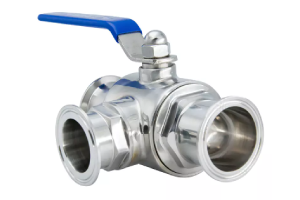
Selecting the correct hygienic connections dictates your operational success. A single standard mismatch can cause severe batch contamination. It can also trigger automated cleaning validation failures. Ultimately, these engineering errors force expensive unplanned downtime. You must get the component selection right the first time.
Facility engineers often face a frustrating reality when upgrading process lines. Regional standard components look deceptively similar. DIN, SMS, and 3A unions might appear identical at a quick glance. However, they utilize entirely incompatible thread pitches. They rely on different dimension metrics, pitting inner diameters against outer diameters. They also demand completely different gasket compression profiles.
This guide provides a definitive, engineering-grade comparison of these dominant designs. We will break down the mechanical differences between DIN, SMS, and 3A standards. You will learn how to identify them in the field. Armed with this knowledge, procurement teams and facility managers can standardize their process lines securely and efficiently.
Key Takeaways
- 3A Fittings are the North American standard for dairy and food, driven by OD (Outside Diameter) measurements and heavily reliant on Tri-Clamp or butt-weld connections.
- DIN 11851 Fittings are robust, high-pressure European metric unions featuring a D-shaped seal and round slotted nuts, ideal for continuous-run applications.
- SMS Fittings are Nordic-origin metric unions utilizing a square seal, designed for faster disassembly and lower-pressure environments compared to DIN.
- Mixing Standards is a Catastrophic Risk: Forcing connections between DIN, SMS, or 3A creates tolerance stacks, mismatched gasket compression, and dead legs that harbor biofilms.
- Selection Criteria: The decision must be dictated by existing plant infrastructure, regional compliance (FDA/3-A vs. EU 1935/2004), operating pressures, and local supply chain availability.
The Baseline: Why Standardizing Your Sanitary Fittings Matters
Hygienic systems require strict end-to-end thinking. You cannot focus solely on individual component specifications. A single mismatched union compromises your entire production line. Process fluids do not forgive poorly mated joints. If you introduce an incompatible ferrule, you instantly break the sanitary seal of the system.
Engineers often fall victim to the "metric" misunderstanding. People assume two metric components are naturally interchangeable. This assumption is dangerous. DIN unions use an Inner Diameter (ID) baseline for their measurements. Meanwhile, other standards rely on an Outer Diameter (OD) baseline. A 50mm DIN union will never align perfectly with a 50mm OD-based standard. The varying wall thicknesses guarantee a misalignment.
The real-world consequences of mixing these standards are severe. You will face immediate mechanical and sanitary failures.
- Mechanical Consequences: Forcing incompatible threads together causes immediate thread stripping. The misaligned faces create eccentric compression on the joint. This uneven pressure leads to premature gasket wear and sudden blowouts during production runs.
- Sanitary Consequences: Mismatched internal diameters create surface discontinuities. These ledges cause flow turbulence and disrupt fluid dynamics. Turbulence prevents cleaning chemicals from reaching every surface. This inadequate Clean-in-Place (CIP) performance leaves product residue behind. Dead legs form, harbor biofilms, and ultimately ruin your product batches.
3A Sanitary Fittings: The North American Standard
The US dairy industry originally developed the 3A standard decades ago. Today, it serves as the absolute baseline for general food, beverage, and light chemical processing. If you operate a facility in North America, you will encounter 3A standards almost everywhere.
The design characteristics of 3A components are highly specific. They utilize Imperial measurements based strictly on the Outside Diameter (OD) of the tube. They also maintain a strict baseline surface finish requirement. Standard 3A components must achieve a finish of ≤32 Ra. Manufacturers typically achieve this through mechanical polishing. Operators most commonly associate this standard with Tri-Clamp and butt-weld end connections.
The operational strengths of 3A components center around convenience and availability. The North American supply chain is highly standardized around these parts. You can procure replacements rapidly. Furthermore, the Tri-Clamp variants offer rapid, tool-free assembly. You simply mate two flanged ferrules, insert a gasket, and tighten the hinged clamp by hand. This tool-free design proves ideal for facilities requiring frequent batch changeovers. Your maintenance teams can tear down and inspect process lines swiftly.
DIN vs. SMS Sanitary Fittings: The European Metric Heavyweights
European process facilities generally rely on two dominant metric standards. While they share a continent of origin, they serve different operational philosophies.
DIN 11851 Overview
The German institute developed DIN 11851 specifically for ruggedness. It is the heavy-duty workhorse of the European food and beverage sector.
The DIN union consists of four distinct components. It uses a slotted round nut, a threaded male section, a weld liner, and a unique D-shaped gasket. The male section features coarse, robust threads. You secure the connection using a specialized C-spanner wrench.
The primary strength of DIN 11851 is its high-pressure tolerance. Depending on the tube size, these unions comfortably handle 10 to 40 bar of pressure. They excel in continuous-run processing plants. If your facility runs 24/7 with infrequent manual disassembly, DIN provides unmatched mechanical security.
SMS Overview
The Swedish dairy industry developed the SMS standard. Engineers optimized this design for easier routine maintenance and inspection.
An SMS union features a slightly different anatomy. It utilizes a six-hole round nut, a flat-faced female liner, a flanged male section, and a square-shaped gasket. The design profile is notably shorter than a DIN union.
SMS parts are easier and faster to decouple than DIN unions. The shorter profile allows maintenance teams to slip components out of tight piping matrices without bending the pipes. However, this convenience brings limitations. SMS unions carry lower working pressure ratings. They typically max out around 6 bar, making them unsuitable for high-pressure injection lines.
The Incompatibility Warning
You must explicitly separate DIN and SMS components on your factory floor. They absolutely cannot mate. They feature radically different seal geometries. The DIN D-shaped seal requires a specific grooved seat. The SMS square seal relies on a flat-face compression. Furthermore, they utilize incompatible thread pitches. DIN relies on a specific 2mm thread pitch. If an operator attempts to force a DIN nut onto an SMS male thread, the threads will bind and strip permanently.
Head-to-Head Evaluation: DIN vs. SMS vs. 3A
To make an informed engineering decision, you must compare these standards across critical performance metrics. The chart below outlines the fundamental differences.
| Feature | 3A (Tri-Clamp) | DIN 11851 | SMS |
| Measurement Basis | Imperial (Outer Diameter) | Metric (Inner Diameter baseline) | Metric (Outer Diameter baseline) |
| Standard Pressure Rating | ~10 bar (ambient temperature) | 10 to 40 bar (size dependent) | ~6 bar maximum |
| Baseline Surface Finish | ≤32 Ra (mechanically polished) | Standard metric hygienic finish | Standard metric hygienic finish |
| Assembly Tooling | Tool-free (hand tightened) | Requires specific C-spanner | Requires specific hook spanner |
| Gasket Profile | Flanged standard gasket | D-shaped seal | Square-shaped seal |
The measurement basis dictates your pipeline layout. 3A uses Imperial OD, creating a straightforward sizing model. DIN and SMS introduce metric variances that require careful calculation of wall thicknesses. Always verify the inner diameter to ensure smooth fluid transitions.
Pressure ratings differentiate standard applications. Bolted and threaded DIN unions demonstrate extreme high-pressure resilience. Standard 3A Tri-Clamps often limit out around 10 bar at ambient temperatures. SMS falls even lower. If you run high-temperature CIP regimes under pressure, DIN provides the safest margin of error.
When reviewing surface finish and purity, 3A establishes a strict 32 Ra baseline. European metric equivalents offer similar hygienic finishes. However, note that none of these standard food-grade unions reach the extreme purity of pharmaceutical BPE standards. BPE requires 15-20 Ra finishes and electropolishing. You must custom-specify your orders if you require pharmaceutical-grade smoothness.
Maintenance realities heavily influence your tooling choices. 3A Tri-Clamps require absolutely no tools. Operators can break down a line using only their hands. DIN and SMS unions require specific C-spanners. You must train your staff appropriately. Using improper tools, like standard pipe wrenches, quickly crushes the nut slots and causes permanent torque damage.
Decision Framework: How to Specify the Right Fittings
You need a structured approach when ordering Sanitary Fittings. Guessing leads to leaks, contamination, and failed audits. Follow these structured guidelines to specify your components correctly.
We recommend a strict four-step sequence for any facility expansion:
- Audit your existing infrastructure to document the exact standard currently in use.
- Identify the specific regulatory and audit requirements for your target market.
- Determine the maximum operating pressure and temperature of your CIP/SIP cycles.
- Evaluate local supply chain lead times for replacement gaskets and ferrules.
Your regulatory and audit requirements act as the ultimate filter. You must match the standard to the auditor. If you operate in the US market, look for the official 3-A symbol authorization. You must also ensure your gaskets are strictly FDA-compliant. If you export to European markets, your components must carry EU 1935/2004 compliance documentation. Missing these certificates guarantees a failed inspection.
Process line dynamics dictate your mechanical choices. You must evaluate whether you run batch or continuous processes. We strongly recommend 3A Tri-Clamp or SMS connections for breweries and dynamic food lines. These facilities require daily inspection, manual breakdown, and frequent reconfiguration. Conversely, we recommend DIN for high-temperature, high-pressure continuous processing networks. If your plant relies entirely on automated CIP/SIP and rarely dismantles the piping, DIN offers superior longevity.
Procurement location and lead times deeply impact plant uptime. Evaluate your local supply chain resilience carefully. Specifying DIN components for a facility in the rural US can exponentially increase your lead times. Conversely, mandating 3A Tri-Clamps in central Europe might complicate local sourcing. You will face extended delays waiting for simple replacement gaskets or ferrules. Align your plant specifications with your regional supply realities.
Finally, you must specify your material grades accurately. Never just ask for "stainless steel." You must clarify between 304 and 316L grades. Base this decision on the corrosiveness of your fluid product and the temperature of your cleaning chemicals. 316L contains molybdenum, providing crucial resistance against harsh chlorides found in aggressive CIP detergents.
Conclusion
There is no universally superior connection standard. Your optimal choice depends entirely on your operational context. 3A offers unmatched convenience and rapid teardown capabilities in North America. DIN provides rugged, high-pressure durability for continuous European processing lines. SMS successfully balances European metric sizing with easier, faster maintenance access.
Take immediate action to secure your facility. First, audit your existing piping infrastructure to definitively identify your dominant standard. Second, strictly prohibit the mixing of different thread types or metric systems on the factory floor. Keep your spares segregated. Finally, always consult with a certified sanitary component supplier before finalizing your expansion P&IDs. Proper planning prevents catastrophic contamination.
FAQ
Q: Can you adapt DIN or SMS to a 3A Tri-Clamp system?
A: Yes, but only by using specially manufactured, hygienically validated transition adapters. Never attempt to force-thread or clamp mismatched ferrules. Doing so creates misaligned joints and dangerous dead legs. Always install a machined reducer or adapter to ensure a perfectly smooth internal transition.
Q: How do you accurately measure and identify an unknown sanitary fitting on-site?
A: Use digital calipers to perform a three-step field identification. First, measure the flange outside diameter (OD). Second, measure the exact inner diameter (ID). Third, verify the thread pitch using a standardized thread gauge. Checking the thread pitch is the only reliable way to differentiate DIN from SMS.
Q: Are 3A sanitary fittings suitable for pharmaceutical applications?
A: Generally, no. While 3A is ideal for food, beverage, and dairy, pharmaceutical applications require stricter controls. Biopharma plants usually specify ASME BPE standard fittings. BPE mandates tighter manufacturing tolerances, extended tangents for orbital welding equipment, lower Ra surface finishes, and strict MTR material traceability.