Xusheng and Compass provide a variety of stainless steel food grade valves, including of butterfly valves, ball valves, diverter valves, sampling valves, sampling valves, check valves, diaphragm valves, safety valves, pressure relief valves, angle seat valves, mixproof valves, tank bottom valves, flow control valves, Constant Pressure Valves, Level Gauges.
They are widely used in food, beverage, brewing, pharmacy, biological industry, oil refinery, cosmetic, chemical industries, lithium battery equipment, ect. All products can be made according to different materials and industrial standard, such as SMS, DIN, 3A, ISO, RJT, BS, DS, BPE. All technical aspects have reached the international leading level and in conformance with GMP requirements. Our stainless steel material includes of SS304, SS304L, SS316, SS316L, SS2205, SS904L, SS2507 as per customer's demonds.
Available Size is from 1/2" to 12", DN10 to DN300
Available material is SS304, SS316L
Available standard: SMS, 3A, DIN
Available gasket: Silicone, EPDM, Buna, Viton (FKM), PTFE for ball valve
Normal Pressure: 0 to 10bar, max. pressure is often 10bar
Normal Temperature: -10 ℃ to 120 ℃

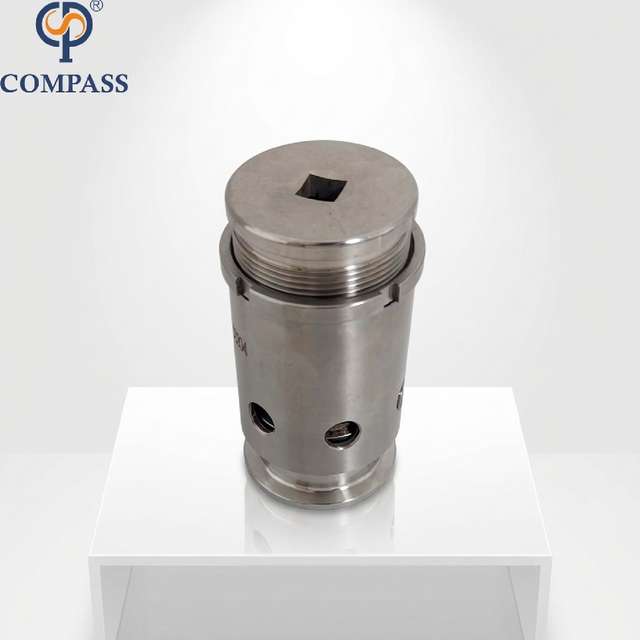
Sanitary safety valve is the sanitary stainless steel valve, its safety design make it protect the equipment, so it installed in the return circuit of discharge pressure, it’s good for safety protect function in pipeline, pump, device, storage tank. Extensively applied to food, beverage, dairy, beer industry, etc.
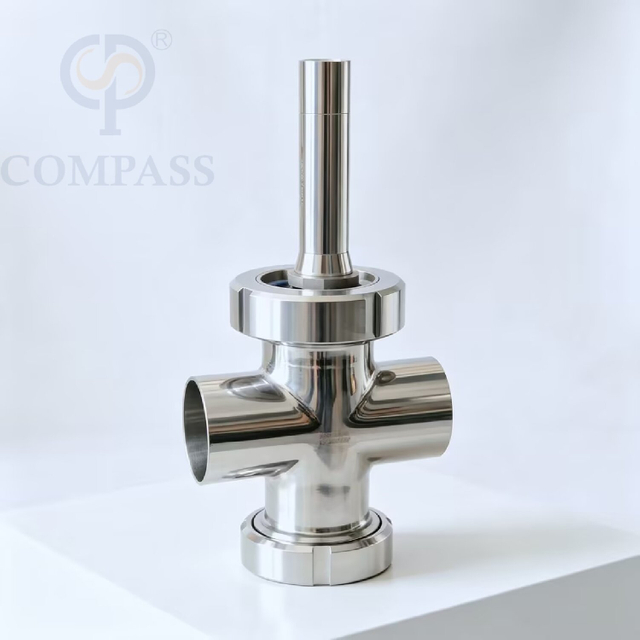
Aseptic Flush Bottom Valve is used for the discharge of reaction containers in clean industries such as pharmaceuticals, biology, fine chemicals, and food processing. This valve has the advantages of discharging materials, no residue, no leakage, and good sealing performance. When using an agitator, the bottom material of the container can fully rotate with the water flow when the agitator is opened to evenly mix the material. The valve is installed at a 35 degree angle to provide self-cleaning function for material discharge, making equipment maintenance more convenient in space. The valve is polished with a mirror surface with a roughness of 0.2-0.45 μ m. The use of valves is cleaner.
Learn how ASME BPE standards ensure sterility in biopharma fluid handling, covering material traceability, surface finishes, and sanitary valves.
**Learn how sanitary valve surface finish (Ra) impacts hygiene, seal wear, and compliance with 3-A and ASME BPE standards. Optimize your specs.** (141 characters)
An engineering guide to choosing sanitary valve seals. Compare EPDM, PTFE, Silicone, and FKM for FDA/USP compliance and CIP/SIP durability.
Choose the right hygienic stainless steel (304, 316L) for flow equipment to prevent contamination, ensure compliance, and avoid costly downtime.
Select the right sanitary valves for dairy processing to ensure hygienic compliance, prevent contamination, and maximize continuous plant uptime.
Compare DIN, SMS, and 3A sanitary fittings. Understand mechanical differences, pressure ratings, and how to select the right hygienic connection.
You should choose a pump based on how thick your liquid is. Think about how fast you want to move the liquid. You also need to know what pressure your process needs. The temperature of the liquid matters too. If there are solids in the fluid, that is important. You should also consider how gentle th
Multi-port flow control is no longer a luxury in hygienic processing—it is a necessity. Whether you are diverting raw milk to one of two pasteurizers, rerouting CIP solution back to a recovery tank or switching between product and water phases in a bioreactor suite, a single 3 way sanitary butterfly
Every batch of infant formula, every vial of mRNA vaccine and every tank of craft beer has one spec in common: the process touches a sanitary valve. Global sales of hygienic flow components exceeded US $7.8 billion in 2023 and are projected to grow 6.2 % CAGR through 2030, driven by stricter FDA and
Sanitary pumps are an essential component in many industrial sectors, especially those where hygiene, safety, and quality control are of utmost importance.
Sanitary valves are essential components in many industries, particularly in brewing and biotechnology, where cleanliness, hygiene, and product integrity are of the utmost importance.
In the food and beverage industry, maintaining strict hygiene and safety standards is paramount. With products that directly impact human health, it is essential to ensure that the equipment used in production, processing, and packaging meets the highest sanitary standards.
Sanitary pumps are specialized pieces of equipment designed to transfer hygienic liquids and semi-liquids through industrial processing systems while maintaining strict hygiene standards.
Sanitary valves are a crucial component in many industries, especially those that require strict hygiene and cleanliness standards, such as food processing, pharmaceuticals, beverages, and biotechnology.
How much do you know about the sanitary stainless steel sight glass?The sanitary stainless steel sight glass can be used in high temperature, strong corrosive, poisonous, dangerous, and easy to crystallize chemical towers to ensure their safe production. What is the production principle of sanitary.
How much do you know about the food grade sanitary ball valve?As the name suggests, food grade sanitary ball valves refer to valves that meet hygiene standards (medical or food standards).The valve body shall conform to the hygiene standards of stainless steel.
What's the stainless steel sanitary butterfly valve?The stainless steel sanitary butterfly valve is suitable for fresh water, sewage, seawater, salt water, steam, natural gas, food, medicine and oil, which require a complete sealing, no gas test leak, a high life expectancy and a working temperature.
What is the usage of stainless steel sanitary butterfly valves?The stainless steel sanitary butterfly valves are suitable for flow regulation. Since the pressure loss of the seal valve in the pipe is relatively large, which is about three times the pressure loss of the shut-off valve.