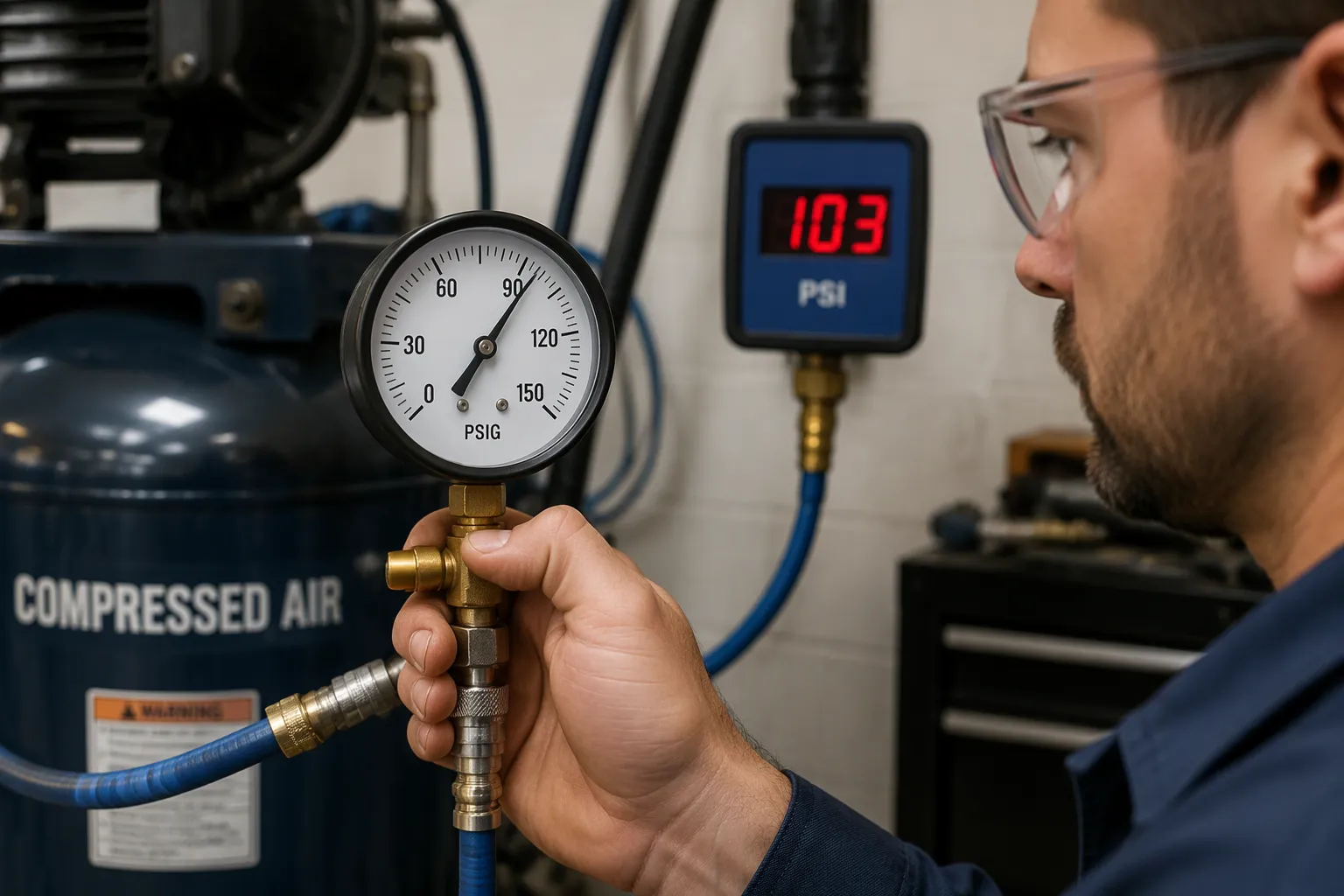
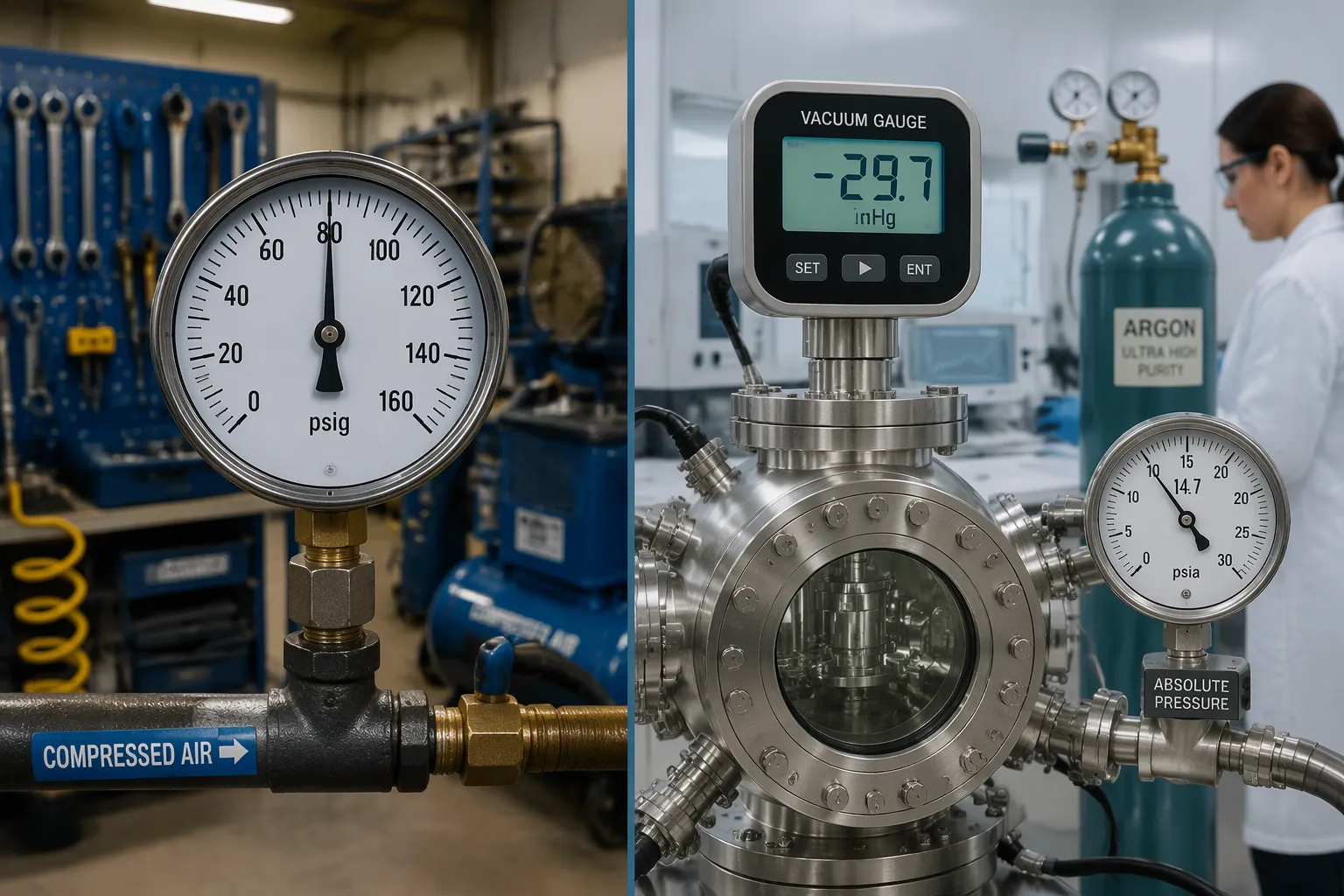
PSI is a general unit for pressure. PSIG measures gauge pressure compared to atmospheric pressure. The difference matters because the two terms use different starting points.
A plain PSI reading often means PSIG in practice. A tire gauge shows PSIG, for example, even when the label says only PSI. The gauge reports pressure above the surrounding atmosphere, not against a vacuum.
Knowing psi vs psig helps readers understand readings correctly. Using the right unit for the job prevents misreads and errors. A technician who knows the difference avoids costly mistakes on gauges, specifications, and maintenance records.
Key Takeaways
PSI is a common pressure unit, and it does not use a set starting point.
PSIG measures pressure above the pressure of the atmosphere. This is common in everyday gauges.
PSIA measures pressure compared to absolute zero, and it is used in science and industry.
To change PSIG to PSIA, add 14.7 at sea level.
Always label pressure units clearly to prevent dangerous mistakes.
PSI vs PSIG: The Basic Difference
PSI Defined
PSI means pounds per square inch. It is the most common pressure term people use. The unit describes force per square inch without a set reference point. A psi reading tells you how much force pushes on each square inch of surface. However, it does not say what the force is measured against. That missing reference point causes much confusion in the psi vs psig discussion.
Engineers also use psi to describe a pressure difference between two points. In that role, the unit works like pounds per square inch differential, often written as psid. A filter across an air line, for example, may show a pressure difference of a few psi. The number describes the drop from one side to the other. It does not describe a level against any outside reference. This flexibility makes psi a useful general label, but a vague one when precision matters.
PSIG Defined
PSIG means pounds per square inch gauge. The term answers the question of what psig is. It is the difference between the measured pressure and the surrounding atmospheric pressure. A gauge pressure reading of 30 psig means the system holds 30 psi more than the air around it. The instrument ignores the weight of the atmosphere entirely. It reports only the amount above it.
This design matches how people experience pressure. A tire, a compressor tank, and an HVAC line all push outward against the surrounding air. A gauge compares the inside push to the outside push and shows the gap. That gap is the pressure relative to atmospheric pressure. It is the number a technician actually needs for inflation, leak checks, and safety limits.
The difference becomes clear with a simple contrast. PSI shows the total force of air, while PSIG shows the force of air above the atmosphere. A vessel under full vacuum holds air at a pressure far below the atmosphere. Yet a plain psi label cannot express that condition well. The difference between psi, psig, and psia grows important in such cases. Only an absolute scale can describe pressures below the atmospheric line.
Readers who keep this basic difference between psi, psig, and psia in mind will read gauges with more confidence. The general unit describes force. The gauge unit describes force above the surrounding air. Each term fits its own job. Each one carries a meaning the other cannot replace.
PSI, PSIA, and PSIG Explained
PSIA and Absolute Zero
PSIA stands for pounds per square inch absolute. This unit measures pressure against a perfect vacuum, which scientists call absolute zero pressure. A psia reading counts all the force on a surface, including the weight of the atmosphere above it. The scale starts at zero, and zero means no pressure at all.
The oil and gas industry depends on psia for pipeline and reservoir work. Engineers there need a true count of the gas inside a line, not just the amount above the outside air. A pipeline spec written in psia leaves no doubt about the starting point. Anyone who asks what is psia should picture a scale that begins at empty space and climbs from there.
Reference Points Compared
The three units differ only in where their scales begin. PSIG, or pounds per square inch gauge, starts at the local atmosphere. PSIA starts at absolute zero. Plain psi names no reference at all, so it says nothing about the starting line.
This contrast explains the psia vs psig distinction in daily work. A gauge pressure of 20 psig sits about 34.7 psia at sea level, because the atmosphere adds its own weight on top. The definitions of psia and psig therefore describe two views of the same gas. One view ignores the air outside. The other counts it.
A technician who mixes the units can misjudge a system by a full atmosphere. The difference between psi, psia, and psig looks small on paper. In the field, it decides whether a vessel sits within its limit. Clear labels and careful reading keep absolute pressure and gauge pressure in their proper places.
How to Convert Between PSIG and PSIA
The 14.7 PSI Reference
Atmospheric pressure is approximately 14.7 psi at sea level. This figure is the weight of the air column above a surface. It is also the gap between gauge and absolute readings. A gauge ignores the atmosphere, while an absolute scale counts it. That single value of 14.7 psi separates the two scales.
The gap shifts with altitude and weather. A site high in the mountains holds less air above it, so the local atmosphere weighs less than 14.7 psi. Most field work still uses the sea-level figure as a standard reference. Technicians who convert between psig and psia at sea level can rely on this number. A note on the site elevation keeps the math honest.
Conversion Formulas
Two simple formulas handle most psig to psia conversions. To find absolute pressure, add the atmosphere: PSIA = PSIG + 14.7. To go the other way, subtract it: PSIA minus 14.7 equals PSIG. Both formulas assume sea-level conditions and a reading in pounds per square inch.
A short example shows the math. A compressor gauge reads 100 psig. The absolute pressure is 100 + 14.7, or 114.7 psia. A pipeline spec lists 50 psia. The gauge reading is 50 − 14.7, or 35.3 psig. These steps let a technician convert psig to psia and back with confidence.
The same steps work for any psia to psig check. A vacuum vessel at 5 psia sits at 5 − 14.7, or −9.7 psig. The negative sign shows a pressure below the atmosphere. Readers who practice these psig to psia conversions will spot unit errors fast. A quick mental check of the 14.7 gap catches most mistakes before they reach a log sheet.
When Should You Use PSI vs PSIG vs PSIA?
Everyday and Industrial Uses
Most everyday readings use gauge pressure. A tire gauge, an HVAC service manifold, and a compressor tank dial all show psig. These tools compare the inside pressure to the air outside. That comparison is exactly what a driver or technician needs. A tire filled to 32 psig holds 32 pounds per square inch above the surrounding air. The atmosphere pushes back with its own weight, and the gauge skips that weight on purpose.
Industrial work follows the same habit. Pneumatic lines, hydraulic systems, and steam headers usually carry psig on their tags. Maintenance crews read these numbers against the local atmosphere every day. The gauge pressure tells them how much push the system adds beyond normal air. That figure drives safety limits and equipment settings. A plain psi label on such a gauge usually means the same thing in practice.
The question of when should you use psi vs psig vs psia has a simple answer for this group. Field work defaults to psig. Plain psi appears as a loose label, and readers should treat it as gauge pressure unless a spec says otherwise. The psi vs psig vs psia choice matters most when a document crosses between field and engineering use.
Vacuum and Scientific Uses
Vacuum work flips the picture. A vacuum system pulls pressure below the atmosphere, so a gauge scale runs into negative numbers. Those negative readings confuse people fast. Absolute pressure avoids the problem. A psia reading starts at a perfect vacuum and climbs from there. A vessel at 5 psia holds a small amount of gas, and the number says so without a minus sign.
Scientific work leans on psia for the same reason. Laboratory chambers, cryogenic systems, and gas analysis all measure against absolute zero. Researchers need a true count of the gas present. The psia vs psig gap of one atmosphere would distort every result if the units were mixed. A spec written in pounds per square inch absolute leaves no room for doubt.
Oil and gas pipelines also favor psia for reservoir and flow calculations. Engineers there track the full gas content, not just the amount above the outside air. A technician who converts psig to psia before logging a vacuum reading keeps the record consistent. The absolute pressure scale fits any job where the atmosphere is part of the measurement, not a baseline to ignore.
Why Units Matter in PSI vs PSIG vs PSIA
Common Misreads
A mixed unit can skew a reading by a full atmosphere. A technician who reads a tire spec of 32 psi as absolute pressure would inflate the tire far past its limit. The gauge shows gauge pressure, so the tire actually holds about 46.7 psia. The reverse error deflates a tire and harms handling. Either way, the driver trusts a number that means something else.
HVAC work carries the same risk. A service manifold reads psig, and a spec sheet written in psia describes a different starting point. A technician who logs the wrong unit misjudges refrigerant charge and system balance. Industrial systems raise the stakes further. A pressure vessel rated in psia may sit near its limit when a crew reads the gauge value as absolute. The gap between absolute and gauge pressure decides whether the vessel stays inside its safe range.
Labeling Best Practices
Clear labels prevent most of these errors. Every gauge, tag, and spec sheet should name the exact unit, either psig or psia. A dial marked only with psi invites a guess. A dial marked psig tells the reader the scale starts at the local atmosphere. The same rule applies to maintenance logs and work orders. A record that states the unit lets the next technician repeat the reading without doubt.
Digital tools help here. Many modern gauges display the unit on screen and let the user switch between scales. Even so, the written record should carry the unit in plain text. A short note on site elevation also keeps conversions honest, since the atmosphere weighs less at altitude. Teams that label every reading with psi vs psig vs psia in mind catch errors before they spread. The habit costs a few seconds and protects equipment, budgets, and people.
PSI is the general pressure term, PSIG measures pressure against the atmosphere, and PSIA measures against absolute zero. That one reference point is what separates all three units.
The psi vs psig difference rewards a simple habit. Every gauge, label, and specification should name its exact unit. A dial marked psig tells the next reader where the scale begins. A spec written in psia removes all doubt about the starting line.
Matching the unit to the job keeps readings accurate and safe. Field work calls for gauge pressure, while vacuum and scientific work call for psia. Teams that state the unit plainly protect equipment, budgets, and people.
FAQ
Does a plain PSI reading always mean PSIG?
A plain psi label does not name a starting point. In real use, most field gauges show gauge pressure, so a tire gauge or compressor dial marked psi usually reads psig. Still, a reader should check the spec sheet. Papers that cross into engineering work may use psi loosely for absolute pressure.
Can a PSIG reading go negative?
Yes. A gauge shows a negative number when the system pressure drops below the local atmosphere. A vacuum vessel may read a negative psig value. Technicians often switch to psia in these cases, because an absolute scale starts at zero and skips the minus sign entirely.
Why do engineers prefer psia for gas calculations?
Gas laws count every molecule in a space, including the weight of the atmosphere. A gauge scale skips that weight, so engineers add it back. Working in psia gives a true count of the gas present. This habit keeps reservoir, pipeline, and lab calculations consistent.
Does altitude change the PSIG to PSIA conversion?
Yes. The 14.7 psi gap holds at sea level. A site high in the mountains has less air above it, so the local atmosphere weighs less. Technicians who convert at altitude should use the local barometric reading instead of the standard sea-level figure.
Which unit belongs on a maintenance log?
The log should name the exact unit, either psig or psia. A bare psi entry makes the next reader guess. A short note on site elevation also keeps later conversions honest. Clear records protect equipment and the people who service it.