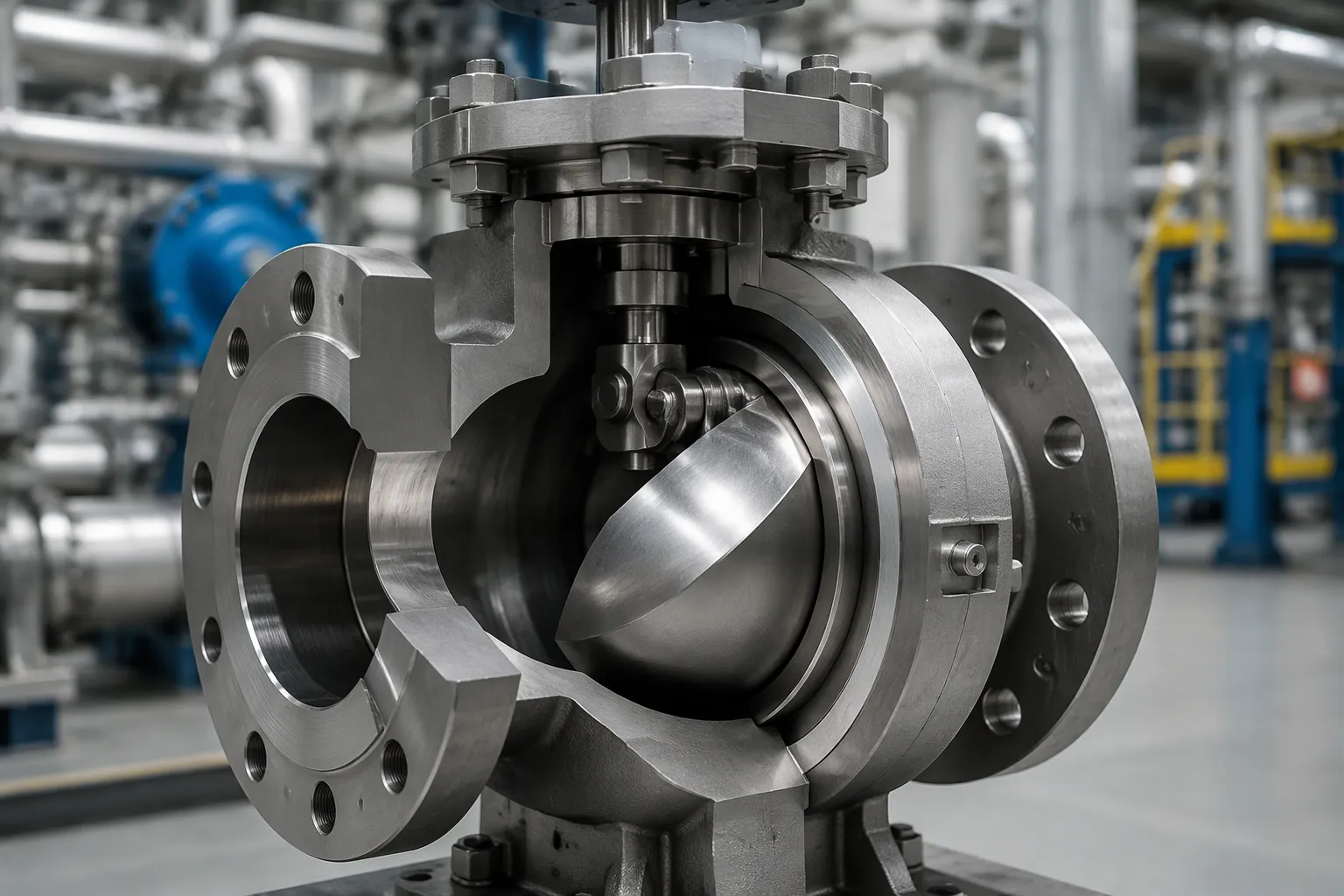
An eccentric hemispherical valve is a kind of quarter-turn valve. It uses an offset, or eccentric, half-round ball to control flow in high-pressure service. The offset design gives this valve a clear structural advantage. The sealing surface lifts away before the disc rotates, so metal parts move without friction.
Engineers call eccentric hemispherical valves a fairly new and fast-growing valve type. Their non-friction operation sets them apart from older designs. This article explains the design and mechanism, the key features, how the valve compares with other options, and where it fits in real service.
Key Takeaways
The disc lifts off the seat before it turns, so the seal never rubs and wear is very low.
This valve gives a tight seal and needs little force to turn, which saves energy and money.
It works best for high-pressure on-off jobs in oil and gas, power, and mining.
Other valves like butterfly or V-type ball valves are better for low pressure or flow control.
When choosing, check pressure, temperature, media type, and how often the valve will cycle.
Design and Mechanism of Eccentric Hemispherical Valve
Offset Rotation Center
The design and mechanism of eccentric hemispherical valve operation start with one geometric choice: the disc's rotation center sits at a precise eccentricity from the valve seat's center. This offset is small, but it controls everything the valve does. The eccentric shaft carries the disc on an axis that does not pass through the seat centerline. As a result, the disc travels along an arc instead of spinning in place. Engineers machine this offset to a tight tolerance, because the sealing performance depends on it. A larger offset gives more clearance during rotation. A smaller offset keeps the seal closer to the seat throughout the stroke. The half-spherical plug itself is not centered on its shaft. This off-center mounting produces the eccentric action, and it separates this valve from a conventional ball valve. In a standard ball valve, the ball rotates about its own center. In an eccentric hemispherical valve, the eccentrically mounted hemispherical disc swings around a point outside itself. That single difference reshapes the whole operating cycle.
Non-Friction Opening and Closing
The quarter-turn mechanism turns this geometry into motion. An operator rotates the stem 90 degrees to move the valve from fully open to fully closed. The sequence matters more than the angle. As the stem turns, the hemispherical disc first lifts off the seat. Only after this lift does the disc begin to rotate across the flow path. The sealing surface therefore never drags across the seat during travel. On the closing stroke, the reverse happens. The disc swings back toward the seat and makes contact only at the final moment of closing. The final few degrees of rotation press the seal into place. This sequence eliminates friction between the disc and seat during most of the stroke. It also means the contact between the disc and seat happens under controlled pressure, not under sliding wear. The eccentric hemispherical disc acts like a door that swings clear before it presses shut. Operators feel this difference right away. The stem turns freely for most of the stroke, and resistance appears only at the end. This behavior explains why the eccentric hemispherical valve holds up well in high-pressure service. The seal does its work in one brief moment, and the rest of the cycle leaves it undisturbed. The design and mechanism of eccentric hemispherical valve operation this way tie directly to service life. Less sliding means less wear on the sealing elements. The eccentric shaft, the offset disc, and the quarter-turn stroke all work together as one system. Each part depends on the others, and the offset is the feature that makes the system work.
Characteristics of Eccentric Hemispherical Valve
Tight Shutoff and Low Torque
The characteristics of eccentric hemispherical valve performance start with how the disc meets the seat. The non-friction operation described earlier gives two linked benefits: a tight seal and low operating torque. During closing, the hemispherical disc swings toward the seat without touching it. Contact happens only in the last few degrees of rotation. So the seal presses into place under controlled force instead of sliding in. This action creates a leak-proof seal that holds against high pressure. The same geometry keeps the torque demand low. An operator turns the stem freely for most of the quarter-turn stroke. Resistance appears only at the end, when the seal seats. A low operating torque lets smaller actuators drive the valve and cuts the effort needed for manual operation. The two traits support each other. A seal that forms without sliding needs less force to close. Less closing force means less stress on the stem and the seat. Engineers who study the characteristics of eccentric hemispherical valve behavior often point to this pairing as the design's main strength. The valve delivers shutoff performance that rivals a conventional ball valve, yet it asks far less of the actuator. That combination matters in large-diameter, high-pressure lines, where actuator size and cost grow quickly.
Durability and Reduced Wear
Reduced seat friction extends service life in demanding duty. Every opening and closing cycle leaves the sealing surfaces untouched during travel. The hemispherical disc lifts clear before it rotates, so the seal never drags across the seat. Wear therefore concentrates in one brief contact moment per cycle, not across the full stroke. This low-torque, low-wear design keeps the sealing faces smooth over many cycles. A smooth face maintains zero leakage for longer. In abrasive or high-cycle service, this advantage compounds. A valve that slides its seal on every stroke grinds away material a little at a time. An eccentric hemispherical valve avoids that grinding almost entirely. Maintenance teams see the result in longer intervals between seal replacements and fewer unplanned outages. The eccentric shaft and bearing also benefit. Lower torque means lower load on the stem packing and the bearings. These parts last longer and demand less attention. Operators of eccentric hemispherical valves in tough duty report stable performance over extended campaigns. The design does not rely on soft, forgiving seat materials to absorb sliding friction. It removes the friction at the source. That is why the valve holds its tight sealing and its low operating torque together as the service life advances.
Comparison with Other Valves
Ball, Butterfly, and Gate Valves
When you compare eccentric hemispherical valves with other valve types, start with the shape of the flow path. A V-type ball valve opens through a V-shaped notch. That notch gives fine control over flow. An eccentric hemispherical valve does not have this V-shaped opening. Its half-round disc works much better for simple on-off isolation than for precise flow control. Buyers who need accurate control should look at a V-port ball valve. Buyers who need tight shutoff at high pressure should look at the eccentric design.
Each classic valve type keeps its own strengths. A standard ball valve seals well and turns easily, and it fits many general lines. A butterfly valve weighs little and costs less in large sizes, so it suits big water lines and low-pressure air. A gate valve offers a straight flow path and almost no resistance, and it works well for simple isolation on large pipes. The eccentric hemispherical valve adds a fourth option. It brings tight sealing and low torque to high-pressure duty, and it does so without sliding its seat.
Application Fit and Cost
Comparing eccentric hemispherical valves with other valve types also means weighing fit and cost. The table below shows where each option serves best.
No single row wins everywhere. A plant with tight budget limits and low pressure may prefer a butterfly valve. A control loop needs the V-type ball. The eccentric hemispherical valve earns its place where pressure runs high and cycling runs often.
Applications and Selection of Eccentric Hemispherical Valves
Industries and Service Conditions
Eccentric hemispherical valve technology is used in three heavy industries. Oil and gas operators use these valves on wellheads, pipelines, and separation units. Power plants install them on feedwater, steam, and ash handling lines. Mining sites depend on them for slurry transport and tailings lines. Every one of these settings shares one trait: high pressure plus abrasive media.
These valves handle liquids, gases, and slurries with equal confidence. The hemispherical disc moves away from the seat before it turns, so grit cannot grind the sealing faces. That trait works especially well for thick, dirty, or gritty liquids. Plants facing harsh and dirty service conditions often pick this design for isolation duty. The use of eccentric hemispherical valve hardware in high-pressure, high-wear industrial settings keeps growing for this reason.
Selection Checklist
Buyers should check several factors before ordering. A short checklist keeps the decision on track:
Pressure and temperature ratings must match the line's worst-case conditions.
Media type matters: clean gas, thick oil, and abrasive slurry each need different seat materials.
Actuation choice depends on valve size and how often it cycles; manual handles work for small valves, while air or electric actuators serve large ones.
Maintenance access affects long-term cost, so plan room for seal inspection and replacement.
Each factor affects the others. A high cycle rate, for example, pushes the buyer toward a durable actuator and easy service access. Teams that weigh all four points together pick a valve that lasts.
An eccentric hemispherical valve gives tight sealing, low torque, and long service life. The eccentric, non-friction design makes all three possible. The disc lifts off the seat before it turns, so the seal never drags. This valve works well for tough shutoff and isolation jobs in oil and gas, power, and mining. Other valve types still serve different needs well. Butterfly valves fit large low-pressure lines, and V-type ball valves handle control loops. Eccentric hemispherical valves are a strong choice for high-pressure isolation with frequent cycling. Teams that want zero leakage and a leak-proof shutoff should think about this design early. Contact our engineers to pick the right valve for the line.
FAQ
What is an eccentric hemispherical valve best suited for?
This valve shines in high-pressure isolation duty. It delivers tight shutoff and low torque. Oil and gas, power, and mining lines use it for on-off service with frequent cycling.
How does the offset design cut wear on the seat?
The half-round disc lifts off the seat before it turns. The seal touches down only at the final moment of closing. Sliding friction drops, so the valve seat lasts longer.
Where does an eccentric hemispherical valve fit next to a V-type ball valve?
A V-type ball valve throttles flow with its V-shaped notch. An eccentric hemispherical valve lacks that notch. It suits isolation, not fine control. Each valve serves its own job well.
What is an eccentric hemispherical valve not the right pick for?
Fine throttling and control loops call for a V-port ball valve. This valve works best for shutoff. Buyers with control needs should look elsewhere.
Which factors matter most during selection?
Eccentric hemispherical valves reward careful planning. Buyers should match pressure and temperature ratings to worst-case conditions. Media type guides seat material choice. Actuation depends on size and cycle rate. Maintenance access affects long-term cost.