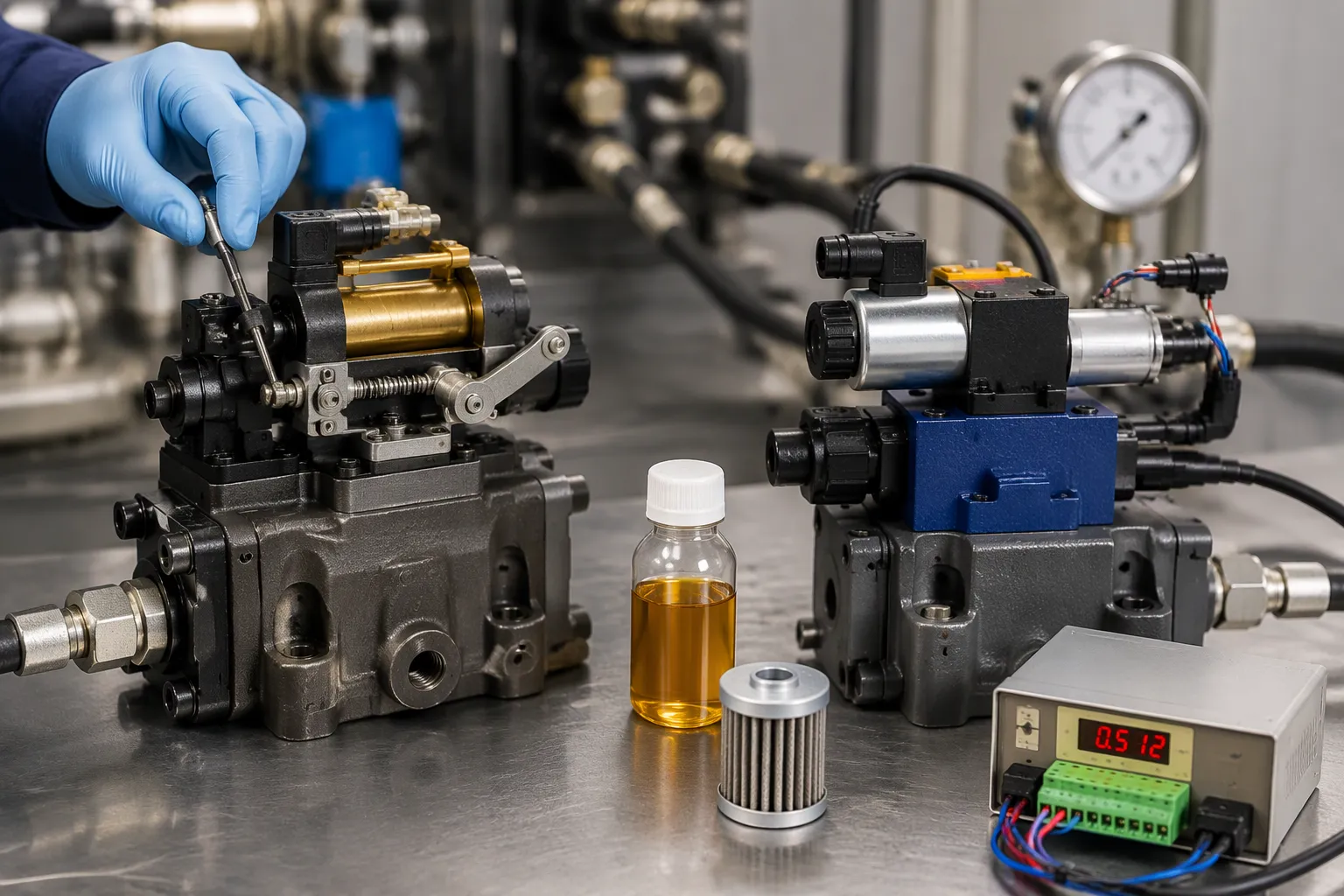
Servo valves use mechanical feedback to achieve high-precision closed-loop control. Proportional valves rely on electrical feedback, often from an LVDT, to deliver cost-effective proportional control. That single design difference shapes every practical trade-off between servo and proportional valves.
A proportional valve vs servo valve decision rests on four factors: precision, response time, fluid cleanliness requirements, and budget. Each factor shifts the balance toward one design.
The sections below explain how hydraulic servo and proportional valves operate, then compare them directly. Readers can use that comparison to match the right valve to their system. Both designs serve fluid power control well, and each fits different demands.
Key Takeaways
Servo valves use mechanical feedback to get high precision and a fast response.
Proportional valves use electrical feedback to provide affordable, moderate control.
Servo valves need cleaner fluid and cost more to buy and take care of.
Proportional valves can handle more contamination and work well for systems with tight budgets.
Pick a valve based on how exact it needs to be, how fast it works, how clean the fluid is, and how much you can spend.
How the Servo Valve Operates
Torque Motor and Mechanical Feedback
A servo valve uses a torque motor or a voice coil as its drive element. The coil assembly connects to the spool through an internal mechanical feedback device, such as a feedback spring or a flexure tube. This link forms the heart of the valve's core structure and working principle. When the coil moves, the feedback device senses the spool displacement and pushes back against the coil. The valve reaches equilibrium only when the commanded signal and the actual spool position agree.
This mechanical link is what makes servo valves different from designs that use only electrical feedback. The spool position follows the input signal with very little delay. This setup gives high accuracy and repeatable output over millions of cycles. It also keeps hysteresis low. Hysteresis is the gap between the valve output when the input goes up and the output when the input comes back down to the same point. A low-hysteresis valve gives nearly the same flow for the same command every time.
Closed-Loop Precision Control
The mechanical feedback closes the loop inside the valve itself. This internal loop gives closed-loop control systems a fast, steady inner stage to build on. The valve keeps correcting spool position, so precise control of flow and pressure becomes possible. Frequency response describes how fast the valve reacts to a changing command signal. Servo valves give high frequency response, with response times as fast as 5–10 milliseconds. That speed works well for precise position or speed control in dynamic machinery.
These operating principles explain why servo valves hold such tight tolerances. The internal feedback fixes errors before they reach the actuator. Engineers who understand this behavior can predict valve performance and size the surrounding system with confidence.
How Proportional Valves Operate
Solenoid Drive and LVDT Feedback
A proportional valve uses a proportional solenoid to move the spool. The solenoid makes a force that grows with the electrical command signal. An LVDT feedback device sits on the valve and measures spool position. This electrical signal sends position data back to the amplifier. There is no feedback link between the coil assembly and the spool, and that missing link defines the design.
The LVDT feedback device gives the amplifier position data without any mechanical connection. The controller compares the commanded position with the measured position and adjusts the current. This setup allows continuously variable control of flow, pressure and actuator action. So a proportional valve adjusts output smoothly across its full range. Proportional hydraulic valves give up some of the servo valve's internal precision in exchange for simpler construction and lower cost.
Open-Loop and Simple Closed-Loop Modes
Proportional valves run in two control modes. In open-loop mode, the amplifier sends current to the solenoid and assumes the spool reaches the commanded position. This mode fits tasks where exact position matters less than smooth, repeatable motion. Simple closed-loop mode adds the LVDT signal to the control path. The amplifier then corrects for friction, flow forces, and temperature drift.
The mode choice affects proportional valve performance in direct ways. Open-loop operation keeps the circuit simple and cheap. Closed-loop operation improves accuracy and cuts error from load changes. Many proportional valves support both modes, so one valve can serve different duties. This flexibility makes proportional valves a practical fit for flow control tasks that need moderate precision at a reasonable cost.
Proportional Valve vs Servo Valve: Key Differences
Precision, Response, and Fluid Requirements
The two designs differ first in how they use feedback. A servo valve closes its loop with a mechanical link between the coil and the spool. A proportional valve closes its loop with electricity, using an LVDT signal sent to the amplifier. This technical difference causes most of the performance gap.
Mechanical feedback fixes spool position inside the valve before any error reaches the actuator. The result is high control accuracy, tight repeatability, and low hysteresis. Electrical feedback fixes position at the amplifier instead. That approach still gives smooth, repeatable output, but it leaves a small amount of error that the internal link would have removed.
Response speed follows the same pattern. Servo valves react in as little as 5–10 milliseconds, so they fit fast position and speed loops. Proportional valves respond more slowly, which suits steady motion and gradual ramps.
Fluid cleanliness also sets the two designs apart. Servo valves have fine clearances and narrow orifices, so they need cleaner oil and finer filtration. Proportional valves handle more contamination, and that tolerance lowers filtration cost and upkeep.
Cost, Maintenance, and Comparison Table
Cost follows the construction. A servo valve has a torque motor, a precision feedback device, and tight machining tolerances, so it costs more up front. A proportional valve uses a solenoid and an LVDT, so it costs less to buy and less to service. Servo valves also need cleaner fluid and skilled setup, which adds to ownership cost. Proportional valves accept dirtier oil and simpler electronics, so routine maintenance stays modest.
Servo valves are still essential where advanced electronics and fast closed-loop control are required. Proportional valves are still the practical choice where moderate precision and budget control matter. Neither option is better in every case. The table below sums up the key differences.
Factor
Servo Valve
Proportional Valve
Feedback
Mechanical link between coil and spool
Electrical, typically an LVDT
Precision and repeatability
Very high, with low hysteresis
Moderate and repeatable
Response time
As fast as 5–10 milliseconds
Slower than servo
Fluid cleanliness
Requires cleaner fluid and finer filtration
Tolerates more contamination
Cost
Higher purchase and ownership cost
Lower purchase and ownership cost
Maintenance
Skilled setup, cleaner oil, careful service
Simple service, modest upkeep
Readers weighing a proportional valve vs servo valve should check this table against their own duty cycle. The differences between servo and proportional valves become clear once precision, speed, and fluid quality are fixed. A fair judgment of performance, accuracy, reliability and cost-effectiveness rests on those same factors.
Matching Proportional Valves and Servo Valves to Applications
Best Fits for Servo Valves
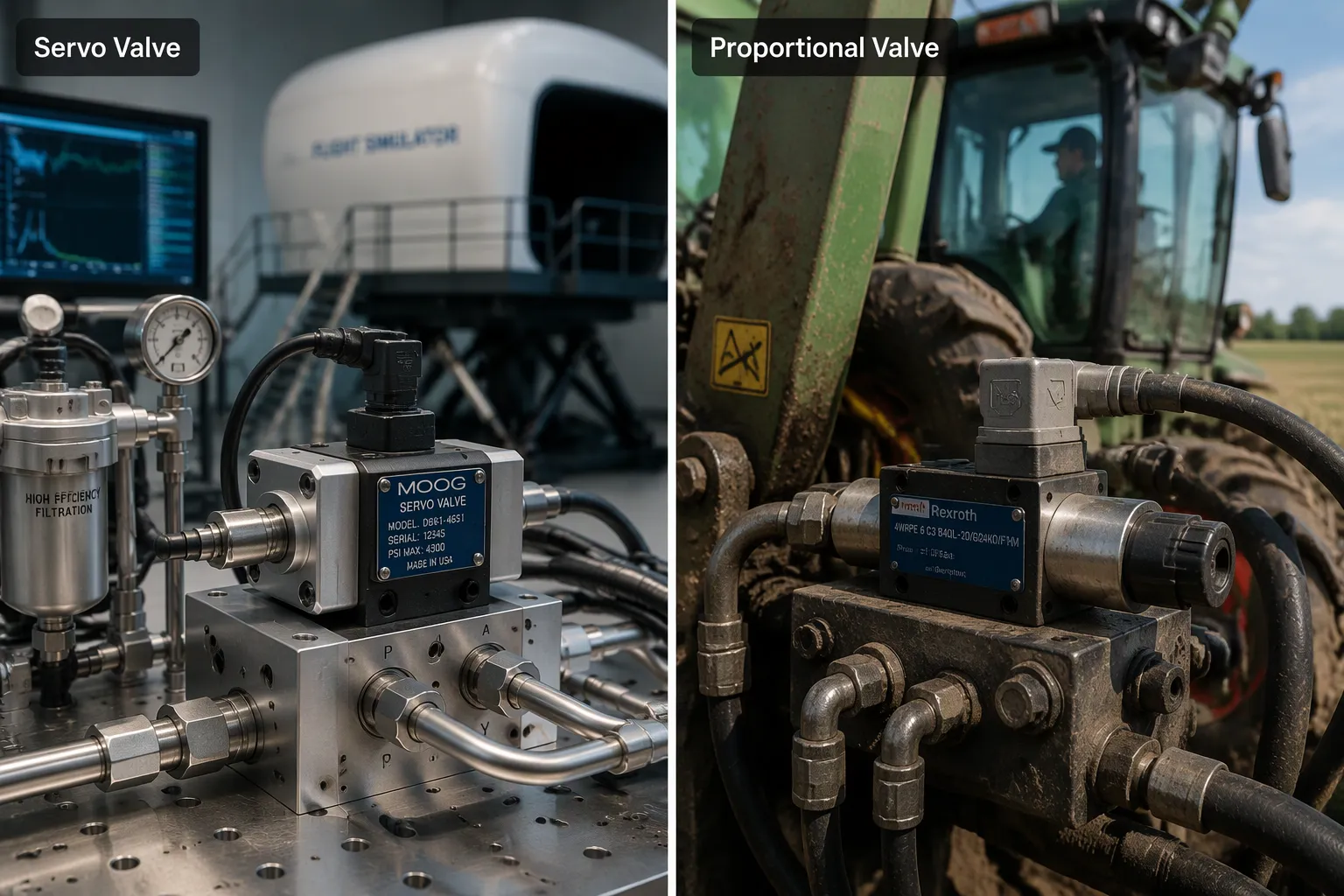
Servo valves work best in jobs where precision and speed make the difference. A servo valve does great in fast closed-loop position or speed control, like flight simulators, turbine governors, and high-speed test stands. These systems need tight repeatability and low hysteresis, and the mechanical feedback link gives both. The 5–10 millisecond response time also matches fast motion profiles that a slower valve cannot follow.
Fluid cleanliness matters here. A servo valve needs cleaner oil and finer filtration, so the hydraulic system must have proper filter placement and regular oil analysis. Users who accept that upkeep get the highest control accuracy available. Advanced electronics also work well with servo valves, because the internal loop handles fast corrections and leaves the outer controller free to manage the load. A servo valve fits best when the task cannot allow position error and the maintenance budget covers clean fluid and skilled setup.
Best Fits for Proportional Valves
Proportional valves fit a wide range of flow control jobs where moderate precision and steady motion matter more than millisecond response. Mobile equipment, agricultural machinery, and industrial presses often use a proportional valve for smooth ramps and repeatable speed changes. Open-loop mode keeps these circuits simple and affordable. Simple closed-loop mode adds the LVDT signal when the task needs correction for friction or load drift.
These valves handle more contamination, so filtration costs stay modest and service intervals stretch longer. A proportional valve also costs less to buy and maintain, which makes it a practical fit for high-volume machines and budget-sensitive projects. The design gives up some precision and speed, yet it covers most general motion tasks well. Teams that match the valve to the duty cycle find proportional valves reliable and cost-effective across many applications.
The choice between servo and proportional valves comes down to the job. Servo valves earn their cost where precision, response, and clean fluid are already part of the plan. Proportional valves win where moderate accuracy, simpler upkeep, and lower cost drive the decision. Both valve types serve modern fluid power well, and each one fits the applications that match its strengths.
The trade-off is clear. Servo valves give high precision and fast response by using mechanical feedback. Proportional valves work well for cost-sensitive systems that need moderate precision, using electrical feedback.
Readers can use a short checklist before choosing between proportional valves and servo valves:
Decide how much precision and repeatability you need.
Set the response speed your system requires.
Confirm the fluid cleanliness level your hydraulic system can keep.
Set the budget for purchase and maintenance.
A servo valve is worth its cost when precision and speed drive the design. A proportional valve fits when moderate accuracy and lower cost lead the decision. Both servo and proportional valves are still essential and work well together in modern fluid power systems.
FAQ
How fast does a servo valve respond compared with a proportional valve?
A servo valve reacts in as little as 5–10 milliseconds. A proportional valve responds more slowly. That gap matters for fast position and speed loops. Steady motion and gradual ramps can handle the slower response without a problem.
Why do servo valves need cleaner hydraulic fluid?
Servo valves have fine clearances and narrow orifices. Cleaner oil and finer filtration keep those passages clear. Proportional valves handle more contamination, so filtration costs stay lower. Users should match fluid cleanliness to the valve they install.
What is the main feedback difference between servo and proportional valves?
A servo valve closes its loop with a mechanical link between the coil and the spool. A proportional valve uses electrical feedback, usually an LVDT signal sent to the amplifier. The mechanical link removes more error inside the valve.
When should a team choose a proportional valve over a servo valve?
A proportional valve fits cost-sensitive systems that need moderate precision. Mobile equipment, agricultural machinery, and industrial presses often use one. A servo valve earns its cost where precision, speed, and clean fluid are already part of the plan.
Can one hydraulic system use both valve types?
Yes. Servo valves and proportional valves work well together in modern fluid power systems. Each type serves the circuits that match its strengths. Designers often assign fast, precise loops to servo valves and general motion tasks to proportional valves.