Sanitary processing environments leave absolutely no room for error. Whether you operate a dairy plant, a biopharmaceutical facility, or a craft brewery, the stakes remain incredibly high. A single microscopic crevice harbors bacteria. A mismatched connection leads to batch contamination. These oversights trigger failed audits, catastrophic product recalls, and massive revenue losses.
Procurement teams and project engineers often treat sanitary components as commoditized hardware. They order parts based on generic descriptions rather than exact specifications. This approach leads to specification errors. Mismatching flange sizes, ignoring surface finish requirements, or improperly integrating a Sanitary Valve creates immediate operational hazards. You experience chronic leaks, unpredictable pressure drops, and extended downtime for rework.
Mitigating these risks requires a rigorous, evidence-based evaluation framework. You cannot rely on guesswork when specifying hygienic piping systems. This guide provides a comprehensive breakdown of common procurement and engineering mistakes, detailing the technical criteria required to ensure system integrity and regulatory compliance.
Key Takeaways
Sizing Discrepancies Cause Immediate Failures: Tube Outside Diameter (OD), Flange OD, and Nominal Pipe Size (NPS) are not interchangeable metrics; misunderstanding this is the leading cause of ordering errors.
Surface Finish Dictates Cleanability: Failing to specify the correct Roughness Average (Ra) compromises Clean-in-Place (CIP) and Steam-in-Place (SIP) effectiveness, creating harbors for bacterial growth.
Material Traceability is Non-Negotiable: Purchasing fittings or a sanitary valve without verified Material Test Reports (MTRs) introduces severe compliance and corrosion risks.
Table of Contents
Toggle
Mistake 1: Getting Sizing and Tri-Clamp Dimensions Wrong
Dimensional accuracy forms the foundation of any hygienic piping system. You must achieve a perfectly flush, crevice-free internal bore. Any misalignment creates a ridge where product accumulates and bacteria thrive. Achieving this seamless transition requires a strict understanding of sanitary sizing conventions.
The Tube vs. Pipe Confusion
Many buyers confuse sanitary tubing with standard industrial piping. Sanitary tubing is measured by its exact Outside Diameter (OD). If you order a 2-inch sanitary tube, the outside measures exactly 2.00 inches. Industrial piping uses the Nominal Pipe Size (NPS) standard. A 2-inch NPS pipe actually has an outside diameter of 2.375 inches. Attempting to mate a sanitary tube fitting to a standard schedule pipe guarantees a fitment error. The components simply will not weld together properly, leaving massive gaps that compromise the entire line.
Tube OD vs. Flange OD
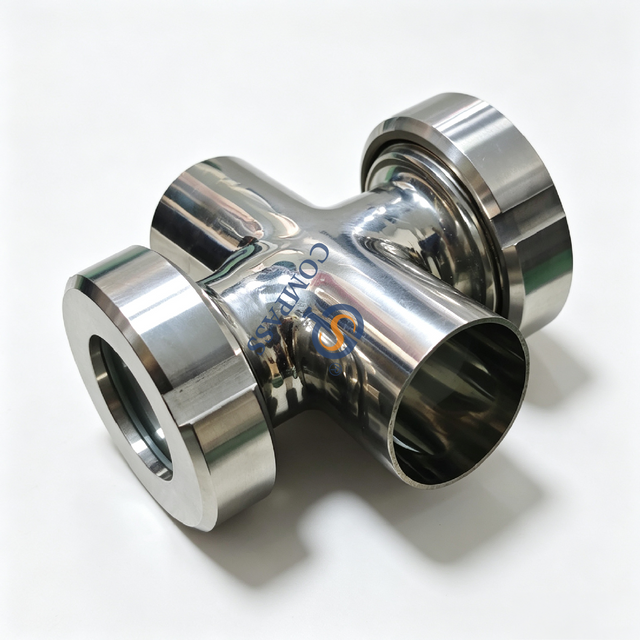
Another frequent mistake involves measuring the wrong part of the fitting. You must differentiate between the tube outside diameter and the ferrule flange outside diameter. The tube OD determines the internal flow path. The flange OD determines which clamp you need. Ordering a fitting based solely on the flange measurement often results in receiving the wrong internal bore size. Always specify the tube OD when purchasing components to ensure the internal flow path remains consistent.
The 1” vs. 1.5” Tri-Clamp Trap
The most common ordering mistake in the industry involves 1-inch and 1.5-inch Tri-Clamp fittings. Due to historical design standards, both sizes share the exact same flange diameter of 1.984 inches. They use the exact same clamp and the exact same gasket outer diameter. If you measure the flange with calipers and order a 1.5-inch fitting, you might actually need a 1-inch fitting for your flow path. You must measure the internal diameter to confirm the correct size before placing an order.
Implementation Risk
Mismatched internal diameters create severe process disruptions. If a 1.5-inch tube abruptly transitions into a 1-inch fitting, you create a massive flow restriction. This causes immediate pressure drops and fluid shear, which can damage sensitive products like cell cultures or dairy emulsions. Conversely, transitioning from a smaller tube to a larger fitting creates pooling areas. Cleaning fluids lose their velocity in these expanded zones. Your Clean-in-Place (CIP) protocols will fail to remove residual product, leading to inevitable contamination.
Measure the outside diameter of the tube using calibrated digital calipers.
Verify the internal bore diameter matches the adjoining equipment perfectly.
Cross-reference the flange outside diameter to select the correct clamp size.
Document the exact tube OD on all purchase orders, explicitly stating "Tube OD" rather than just a generic dimension.
Sanitary Fitting Sizing Reference
Sanitary Tube OD
Tri-Clamp Flange OD
Compatible Clamp Size
0.50"
0.992"
1/2" - 3/4" Mini
0.75"
0.992"
1/2" - 3/4" Mini
1.00"
1.984"
1" - 1.5" Standard
1.50"
1.984"
1" - 1.5" Standard
2.00"
2.516"
2" Standard
2.50"
3.047"
2.5" Standard
Mistake 2: Confusing Industrial Fittings with Real Sanitary Standards
Stainless steel is not inherently sanitary. Many facilities mistakenly install standard industrial stainless steel fittings in hygienic lines. While the material might resist corrosion, the physical design and surface finish fall completely short of sanitary requirements. You must evaluate components based on their explicit hygienic design.
Surface Finish (Ra) and Polish Requirements
Surface finish dictates cleanability. We measure this using Roughness Average (Ra), typically expressed in microinches. Standard industrial pipe has a rough, porous surface. True sanitary fittings undergo extensive mechanical polishing. Standard dairy and food processing applications require a minimum 32 Ra finish. Biopharmaceutical applications demand a 15 Ra finish or lower, often requiring electropolishing. Electropolishing removes microscopic peaks and valleys, leaving a mirror-like, passive surface that prevents bacterial adhesion.
The Risk of Micro-Crevices
Industrial fittings contain internal threads, sharp 90-degree corners, and rough weld seams. These features act as traps for organic matter. When you use industrial fittings, you introduce micro-crevices into your process stream. Bacteria colonize these crevices and form biofilms. Biofilms secrete a protective matrix that standard CIP chemicals cannot penetrate. You will experience recurring contamination spikes and consistently fail environmental swab tests until the offending fitting is removed.
Evaluation Dimension
Never purchase a fitting simply because it is labeled "stainless steel." You must verify the mechanical polish rating. Inspect the internal transitions. True sanitary fittings feature sweeping radii rather than sharp angles. They utilize hygienic clamp connections or orbital welds instead of threaded NPT connections. Demand explicit documentation of the Ra value before authorizing any purchase.
Industrial vs. Sanitary Fitting Characteristics
Feature
Industrial Fitting
Sanitary Fitting
Connection Type
Threaded (NPT), Socket Weld
Tri-Clamp, Orbital Weld
Internal Surface
Rough, unpolished (often >100 Ra)
Mechanically polished (15-32 Ra)
Geometry
Sharp 90-degree angles
Sweeping radii, smooth transitions
Cleanability
Requires manual teardown
CIP and SIP compatible
Mistake 3: Choosing and Installing the Wrong Sanitary Valve
Engineers often treat valves as an afterthought during system design. This is a fundamental flaw. A Sanitary Valve serves as the primary control point of your piping system. Improper selection or poor integration compromises the entire line, regardless of how perfect your tubing might be.
Matching Valve Types to Flow Requirements
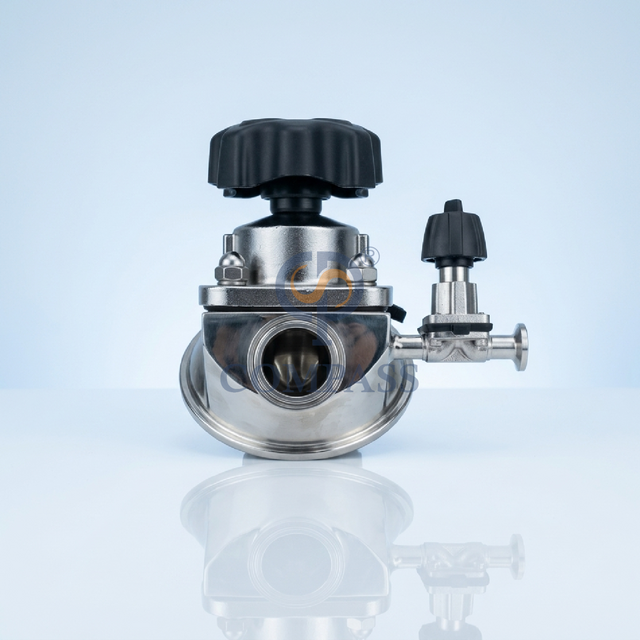
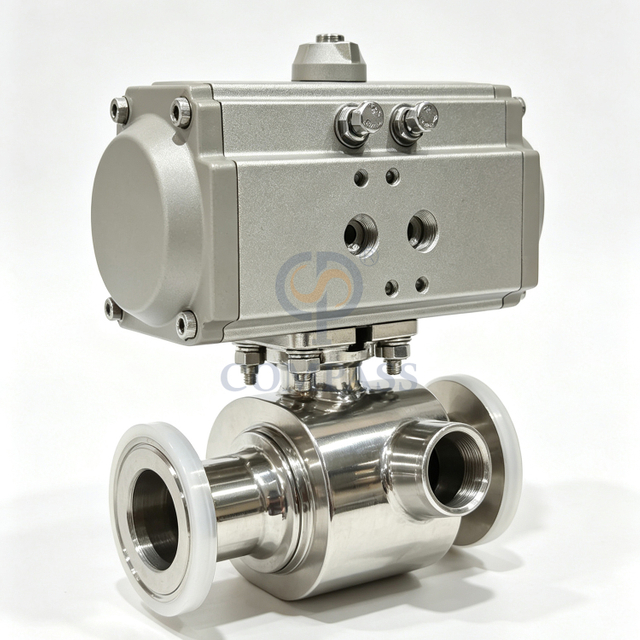
You must select the valve mechanism based on your specific process media. Butterfly valves work exceptionally well for low-pressure, low-viscosity fluids like water or milk. However, they struggle with thick syrups or heavy particulates. Ball valves handle higher pressures and viscous materials, but standard designs trap fluid around the ball. You must specify cavity-filled ball valves for hygienic applications. Diaphragm valves offer the highest level of purity for biopharma, isolating the mechanical parts completely from the product stream.
Connection Handiness and Ergonomics
Physical placement heavily impacts daily operations. Consider the handiness of connection. Operators must access these valves for manual cleaning (COP), inspection, and maintenance. Installing a valve in a cramped overhead space guarantees poor maintenance compliance. Orient the valve handle for ergonomic operation. Ensure there is adequate clearance to remove the clamp, extract the gasket, and pull the valve body without dismantling the entire pipe run. If using automated actuators, ensure proximity switches are easily accessible for calibration.
Connection Handiness and Dead Legs
Improper fitting-to-valve connections create dead legs. A dead leg is a branch in the piping where fluid stagnates because it does not flow with the main process stream. Stagnant fluid breeds bacteria. You must follow the strict L/D (Length to Diameter) ratio rule. The length of the dead leg must not exceed twice the diameter of the branch tube. Position valves as close to the main header as physically possible to minimize these entrapment zones.
Implementation Mitigation
Your valve must perfectly match the surrounding infrastructure. Ensure the valve shares the exact same material grade as the adjoining fittings. Match the surface finish precisely. If your tubing is electropolished to 15 Ra, the internal bore of the valve must meet that exact same specification. Verify that the connection standards align perfectly to prevent misalignment during assembly.
Assess the viscosity and particulate load of the process fluid before selecting a valve body style.
Determine the maximum operating pressure and temperature of the line to ensure the valve seals will hold.
Evaluate the frequency of CIP and SIP cycles the valve will endure.
Verify the physical space available for handle actuation and maintenance teardowns.
Mistake 4: Ignoring Material Grade, Seal Compatibility, and Pressure Limits
A hygienic connection relies on a complete assembly. The steel ferrule, the elastomer gasket, and the metal clamp must work together. Overlooking the physical limitations or chemical compatibility of any single component will result in system failure.
304 vs. 316L Stainless Steel
Buyers frequently debate between 304 and 316L stainless steel. Grade 304 is acceptable for mild environments, dry products, or basic water lines. However, Grade 316L contains added molybdenum. This addition provides superior resistance to pitting and crevice corrosion. If your process involves high-chloride environments, highly acidic foods, or aggressive high-temperature CIP chemicals, 316L is absolutely mandatory. Using 304 in these conditions leads to rapid rouge formation and structural degradation, requiring costly passivation treatments to fix.
Gasket and Seal Selection
The gasket is the most vulnerable point in any sanitary connection. You must match the elastomer to your specific process media and cleaning chemicals. EPDM serves as an excellent all-around gasket for water and steam, but it degrades quickly when exposed to oils or fats. FKM handles high temperatures and fatty oils beautifully. PTFE offers near-universal chemical resistance but lacks elasticity, making it prone to cold flow. Silicone works well for high-purity pharma but breaks down under harsh caustic cleaning. Selecting the wrong gasket causes swelling, extrusion into the flow path, or particulate shedding into your product.
Clamp Style and Pressure Limitations
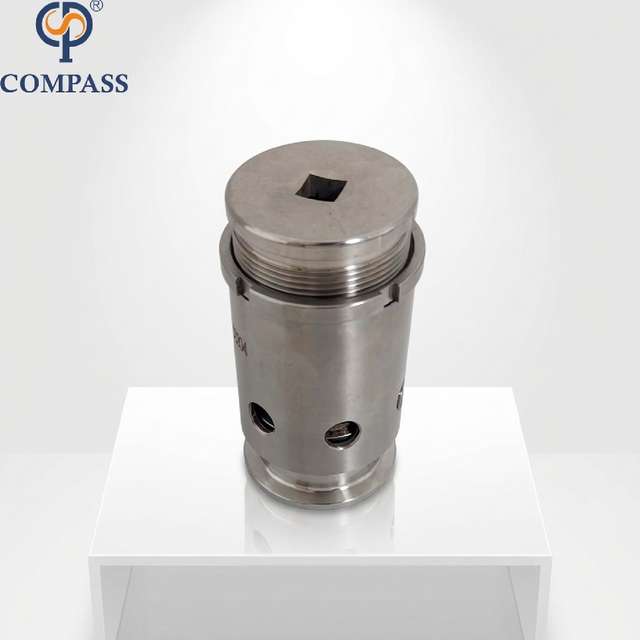
Not all Tri-Clamps handle the same operational stress. Standard single-hinge clamps work perfectly for low-pressure transfer lines. However, high-pressure processing, heavy vibration lines, or high-temperature steam applications require heavy-duty bolted clamps. High-pressure bolted clamps utilize a two-piece design secured by brass or stainless nuts. Failing to specify the correct clamp style leads to gasket blowout, dangerous steam leaks, and sudden pressure loss.
Sanitary Gasket Material Compatibility
Elastomer Type
Best Applications
Limitations
EPDM
Water, steam, dilute acids
Degrades in oils and animal fats
FKM (Viton)
High temps, fatty oils, citrus
Poor performance with hot steam
PTFE (Teflon)
Aggressive chemicals, extreme temps
Prone to cold flow, lacks elasticity
Silicone
High-purity pharma, wide temp range
Breaks down under strong caustics
Mistake 5: Overlooking Regulatory Standards and Material Traceability
Compliance serves as your baseline for risk management and product safety. Ignoring industry standards exposes your facility to massive legal and operational liabilities.
Industry-Standard Evaluation Lenses
You must ensure all components meet the specific standards of your industry. In the dairy and food sector, look for the 3-A Sanitary Standards symbol. This certification guarantees the component meets strict design criteria for cleanability. For pharmaceutical applications, components must adhere to ASME BPE (Bioprocessing Equipment) standards. Furthermore, all elastomers and plastics must comply with FDA CFR Title 21 requirements for food contact surfaces.
The Importance of Material Test Reports (MTRs)
Never accept stainless steel components without verified Material Test Reports (MTRs). An MTR details the exact chemical composition, mechanical properties, and origin of the steel heat lot. Reputable manufacturers laser-etch a heat number onto every fitting and valve. You use this number to cross-reference the MTR. This documentation proves that the 316L steel you purchased actually contains the required molybdenum and low carbon content.
Implementation Risk
Counterfeit stainless steel floods the global market. Without MTRs, you might unknowingly install substandard alloys. These materials will corrode rapidly under CIP conditions. When inspectors audit your facility, the inability to produce material documentation results in immediate citations. In worst-case scenarios, undocumented materials cause contamination events that trigger mandatory product recalls and severe regulatory fines.
Establish a strict procurement policy requiring MTRs for all stainless steel purchases.
Train receiving personnel to verify laser-etched heat numbers against the provided documentation.
Maintain a digital archive of all MTRs, categorized by installation location and date.
Conduct random material audits using positive material identification (PMI) testing guns.
Mistake 6: Forgetting to Plan for Easy Maintenance and Future Upgrades
Designing a piping system without considering future maintenance creates massive operational bottlenecks. A lack of foresight during the procurement phase leads to daily frustrations for your maintenance and sanitation teams.
Standardization of Parts
Facilities often accumulate a chaotic mix of connection standards over time. You might find DIN fittings on European equipment, SMS threads on older tanks, and Tri-Clamp fittings on newer transfer lines. Mixing these standards across a single facility complicates inventory management. Maintenance teams must stock dozens of different gaskets, adapters, and wrenches. Standardize your entire facility on a single connection type—preferably the Tri-Clamp standard—to streamline repairs and reduce spare parts inventory.
Ease of Maintenance
Evaluate how your choice of fittings impacts routine maintenance. Operators must regularly tear down lines for manual inspection and swab testing. If you hard-weld every connection using orbital welding, you eliminate the ability to inspect the internal bore. Strategically place removable clamp connections at critical junctions. Ensure valve configurations allow for quick manual teardowns without requiring specialized tools. The faster your team can inspect and reassemble the line, the faster you can resume production.
Map out all critical inspection points and ensure they utilize quick-disconnect Tri-Clamps.
Standardize gasket materials across similar process lines to prevent accidental swapping.
Maintain a dedicated toolset for sanitary teardowns to prevent cross-contamination from industrial tools.
Document the exact torque specifications for all bolted clamps to prevent gasket extrusion.
Mistake 7: Choosing the Wrong Flexible Hose Connections
Even the most perfectly engineered rigid piping system remains vulnerable at its transition points. Moving from rigid stainless steel tubing to flexible hoses introduces significant contamination risks if handled improperly.
Hose Barbs and Adapters
Never use standard industrial hose barbs in a sanitary environment. Serrated barbs cut into the hose material and create deep crevices where product stagnates. Instead, you must use sanitary crimped hose adapters. These adapters feature a smooth internal transition. A specialized collar is mechanically crimped over the outside of the hose, compressing it evenly against the smooth internal stem. This eliminates the entrapment zones associated with traditional barbs and worm-gear hose clamps.
Integration Risk
Improper hose connections become the weakest link in your facility. If you use standard clamps, the hose will eventually slip or degrade under SIP temperatures. Bacteria will colonize the space between the hose and the fitting. Every time product flows through that transition, it picks up bacterial load. Specify factory-crimped hoses with fully traceable sanitary ends to maintain the integrity of your process loop.
Hose Transition Comparison
Transition Method
Sanitary Status
Contamination Risk
Serrated Hose Barb with Worm Clamp
Not Acceptable
Extremely High (Deep crevices, fluid stagnation)
Reusable Sanitary Adapter
Marginal
Moderate (Requires perfect manual assembly)
Factory-Crimped Sanitary End
Fully Acceptable
Low (Smooth transition, no entrapment zones)
Vulcanized Sanitary End
Fully Acceptable
Very Low (Seamless integration with hose lining)
Conclusion
Your sanitary processing system is only as strong as its weakest connection. Treating fittings and valves as generic commodities invites operational disaster. Precision in specifying these components serves as a direct investment in product safety, regulatory compliance, and maximum operational uptime.
When selecting components, apply a strict shortlisting logic. Always verify sizing based on Tube OD, not flange diameter. Demand explicit documentation for the Ra surface finish. Establish 316L stainless steel as your baseline for any corrosive or high-temperature processes. Match your clamp pressure ratings to your specific application, and enforce strict adherence to 3-A or ASME BPE standards through verified MTRs.
To ensure your production lines achieve the highest level of hygienic performance, turn to proven industry leaders like Wenzhou Xusheng & Compass Machinery Industry and Trading Co.,Ltd. With decades of specialized manufacturing expertise, advanced CNC machining capabilities, and stringent quality control protocols, they deliver high-precision sanitary valves and stainless steel fittings tailored to meet strict biopharmaceutical, food, and beverage application requirements worldwide.
Audit your current spare parts inventory and eliminate any industrial-grade threaded fittings or mismatched connection standards.
Implement a mandatory MTR verification process for all incoming stainless steel components before they reach the installation floor.
Review your existing valve placements to identify and eliminate dead legs that violate the L/D ratio rule.
Standardize your facility's elastomer gaskets based on a chemical compatibility review of your current CIP fluids.
FAQ
Q: How do I measure a sanitary fitting correctly?
A: Use digital calipers to measure the exact Outside Diameter (OD) of the tubular section, not the flanged end. The tube OD determines the flow path size. Measuring the flange will often lead to ordering the wrong internal bore, especially with 1-inch and 1.5-inch sizes.
Q: Can I use 304 stainless steel instead of 316L?
A: You can use 304 for mild environments, dry processing, or basic water lines. However, you must use 316L for high-chloride environments, acidic products, or aggressive CIP processes. 316L contains molybdenum, which prevents pitting and crevice corrosion under harsh conditions.
Q: What is the difference between mechanical polishing and electropolishing?
A: Mechanical polishing uses abrasives to smooth the steel surface to a specific Ra value. Electropolishing is a chemical and electrical process that removes microscopic peaks, creating a mirror-like, passive surface. Electropolishing is typically required for high-purity biopharmaceutical applications.
Q: Why is my sanitary valve leaking after a CIP cycle?
A: Post-CIP leaks usually result from thermal expansion or chemical degradation of the gasket. If you use an elastomer incompatible with your cleaning chemicals, it will swell or harden. Additionally, standard single-hinge clamps may loosen during high-temperature steam cycles. Switch to heavy-duty bolted clamps.
Q: What does a 3-A certification actually mean?
A: The 3-A Sanitary Standards certification indicates that a component meets strict, independent design criteria for hygienic equipment. It ensures the part is easily cleanable, free of micro-crevices, and manufactured from approved materials suitable for dairy and food processing.
Q: How often should I replace sanitary gaskets?
A: Replacement frequency depends heavily on your process temperatures, chemical exposure, and operating pressures. Establish a preventative maintenance schedule based on visual inspections. Replace any gasket that shows signs of hardening, cracking, swelling, or extrusion into the internal flow path.