Underspecified hygienic equipment in a new processing line creates hidden, compounding costs. You might save capital upfront, but you pay for it later through product loss, batch contamination, and premature mechanical failure. When a seal degrades faster than expected or a dead leg harbors bacteria, the entire production schedule halts. Engineers face a strict challenge. You must balance rigid regulatory compliance from agencies like the FDA, 3-A, and EHEDG with the reality of operational efficiency. High throughput demands and aggressive production schedules leave no room for equipment bottlenecks. Selecting the right fluid handling components requires a systematic, data-driven framework. You cannot rely on guesswork or generic manufacturer claims. Specification must center on fluid dynamics, system capacity, and verifiable cleanability. By mapping exact fluid characteristics to specific mechanical designs, you eliminate operational blind spots and protect product integrity while maximizing line uptime.
Fluid characteristics—specifically viscosity, specific gravity, and shear sensitivity—must dictate the baseline technology before evaluating brand or price.
Sanitary valve selection requires a strict evaluation of flow control precision versus Clean-In-Place (CIP) and Sterilize-In-Place (SIP) compatibility.
Regulatory compliance is non-negotiable; verifiable material test reports (MTRs) and surface finish certifications are mandatory for risk mitigation.
Table of Contents
Toggle
Essential Standards for Hygienic Fluid Handling Systems
Regulatory and Compliance Baselines
You cannot specify equipment based on marketing terms like food grade. You must adhere to established engineering standards. The 3-A Sanitary Standards dictate strict design criteria for dairy and food processing. They require specific radii on internal corners and mandate self-draining orientations. EHEDG guidelines provide the European equivalent, focusing heavily on cleanability and the prevention of microbial ingress. For biopharmaceutical applications, ASME BPE specifications govern system design, demanding exact dimensions and high-purity material standards.
Verify compliance through documentation. Request Material Test Reports (MTRs) for all wetted stainless steel components. An MTR traces the exact heat number of the steel back to the mill, proving the alloy composition. Require surface finish certifications to validate the Roughness Average (Ra). Without this paperwork, you carry the risk of regulatory audit failure and product recall.
Follow these steps to verify compliance during procurement:
Request the MTR for every wetted metallic component before accepting delivery.
Cross-reference the heat numbers on the physical equipment with the provided documentation.
Demand USP Class VI certification for all elastomers and seals.
Verify the 3-A symbol authorization directly through the 3-A SSI database.
Cleanability and Sterilization Requirements
Equipment design must match your facility cleaning protocols. Clean-In-Place (CIP) systems circulate chemical solutions at high velocities to create turbulent flow. The industry standard requires a minimum velocity of 1.5 meters per second (5 feet per second) to shear proteins and fats off internal surfaces. Pumps and valves must lack internal crevices where flow velocity drops.
Sterilize-In-Place (SIP) introduces high-temperature steam, typically at 121°C (250°F) for a minimum of 30 minutes. Components must withstand rapid thermal expansion without warping or leaking. Clean-Out-of-Place (COP) requires manual teardown, meaning equipment must feature quick-disconnect clamps and accessible internals.
Self-draining designs are mandatory. If a pump casing or valve body holds residual fluid after a cycle, it creates a bacterial harborage point. Engineers must specify the correct installation angle to ensure gravity completely empties the system. Eliminate flat surfaces and sharp internal angles where biofilms can anchor.
System Integration and Automation Readiness
Modern processing lines rely on automated control. Pumps and valves must integrate seamlessly with Programmable Logic Controllers (PLCs) and Supervisory Control and Data Acquisition (SCADA) systems. Specify pneumatic or electric actuators that match your facility control network protocols, such as AS-Interface or IO-Link.
Position feedback sensors confirm the physical position of the valve stem, ensuring the control room knows whether a line is open or closed. For pumps, Variable Frequency Drives (VFDs) are essential. A VFD allows the PLC to adjust pump speed in real-time, matching flow rates to changing process demands and preventing motor burnout during high-load conditions.
Key Application Data Needed to Specify Sanitary Equipment
Profiling Fluid Characteristics
Fluid data drives every equipment decision. Measure viscosity in centipoise (cP) at the exact operating temperature. Water sits at 1 cP, while cold honey can exceed 10,000 cP. High-viscosity fluids require slower pump speeds and larger valve ports to prevent excessive pressure drop. Specific gravity determines the weight of the fluid relative to water. A higher specific gravity requires more motor horsepower to move the same volume.
Abrasiveness and shear sensitivity heavily influence mechanical selection. Particulate-heavy fluids, like fruit slurries, cause rapid mechanical wear on tight-tolerance components. Shear-sensitive products, such as dairy emulsions or live cell cultures, degrade when subjected to high-velocity agitation. You must select low-shear pumping technologies and full-bore valves to protect the physical structure of these products.
Mapping Operating Conditions and Scalability
Calculate your required capacity in Gallons Per Minute (GPM) or Liters Per Minute (LPM). Next, determine the Total Dynamic Head (TDH). TDH represents the total resistance the pump must overcome, factoring in elevation changes, pipe friction, and pressure drops across filters and heat exchangers. Accurate TDH calculations prevent undersizing, which leads to missed production targets, and oversizing, which wastes energy and damages products.
Account for the processing style. Continuous processing requires equipment rated for 24/7 operation with minimal heat generation. Batch processing involves frequent starts and stops, demanding robust motors and responsive valves. Factor in extreme temperature fluctuations during cleaning cycles, which cause stainless steel to expand and contract. Size your equipment to accommodate future production increases. Select a pump casing that can accept a larger impeller later, allowing you to scale up without replacing the entire unit.
Environmental and Line Constraints
Net Positive Suction Head (NPSH) is the most vital calculation in pump specification. You must ensure the NPSH available (NPSHa) from your piping system exceeds the NPSH required (NPSHr) by the pump. If NPSHr exceeds NPSHa, the fluid boils inside the pump casing. This creates cavitation, which violently destroys impellers and seals. Always calculate NPSHa based on the worst-case scenario: lowest tank level and highest fluid temperature.
Spatial constraints dictate equipment geometry. Tight footprints may require vertical inline pumps rather than horizontal configurations. Piping orientation must allow for proper gravity draining. Ensure you have sufficient overhead clearance to remove valve actuators and enough frontal clearance to pull pump rotors during routine maintenance.
How to Choose the Right Sanitary Pump for Your Line
Centrifugal Pumps: High Volume, Low Viscosity
Centrifugal pumps utilize a spinning impeller to impart kinetic energy into the fluid. They excel at moving high volumes of low-viscosity liquids at steady pressures. Ideal use cases include water, CIP chemicals, milk, and light beverages. They are mechanically simple, easy to clean, and highly reliable for continuous duty. Open impeller designs are common in sanitary applications because they allow for easier cleaning and inspection compared to closed impellers.
However, centrifugal pumps have strict limitations. They cannot handle high-viscosity fluids effectively. As viscosity increases, the impeller slips, causing flow rates to plummet and energy consumption to spike. They also generate high shear forces. Do not use standard centrifugal pumps for delicate emulsions or fluids containing fragile solids, as the high-speed impeller will destroy the product.
Positive Displacement (PD) Pumps: Viscosity and Precision
Positive Displacement (PD) pumps capture a specific volume of fluid and force it through the discharge port. They deliver a constant flow rate regardless of system pressure. Rotary lobe pumps use non-contacting lobes to gently move fluid, making them standard for dairy and shear-sensitive foods. Twin screw pumps offer exceptional versatility, handling both high-viscosity products and low-viscosity CIP fluids with the same unit. By adjusting the VFD, a twin screw pump can run slowly to move thick pastes, then ramp up to high speeds to act as its own CIP return pump.
Gear pumps provide precise metering for thick syrups and oils. PD pumps are mandatory when handling highly viscous, shear-sensitive, or particulate-heavy fluids. Because they operate at lower speeds, they protect product integrity. However, they require pressure relief mechanisms in the piping system. If a downstream valve closes while a PD pump runs, the pressure will build until a pipe bursts or the motor stalls.
Diaphragm and Peristaltic Options
Air-Operated Double-Diaphragm (AODD) pumps use compressed air to flex diaphragms, drawing fluid in and pushing it out. They are excellent for handling abrasive solids, highly viscous slurries, and shear-sensitive products. AODD pumps can run dry without damage and will stall safely if the discharge line is blocked. They are frequently used for unloading totes and drums. You must account for the volume of compressed air required to run them efficiently.
Peristaltic hose pumps utilize a rotating shoe to compress a flexible hose, pushing the fluid forward. The fluid only touches the inside of the hose, eliminating seal contamination risks. They handle highly abrasive fluids and provide strong suction lift. While AODD and peristaltic pumps offer unique advantages, they typically produce a pulsating flow. You will likely need to install pulsation dampeners to protect downstream instrumentation from erratic pressure readings.
Selecting Sanitary Valves for Optimal Flow Control
Butterfly Valves: Cost-Effective Isolation
Butterfly valves feature a rotating disc that sits perpendicular to the flow when closed and parallel when open. They serve one primary use case: simple on/off flow isolation. They offer a compact footprint, minimal pressure drop, and a highly cost-effective price point. You will find them isolating tanks, routing CIP fluids, and controlling bulk transfer lines.
They possess significant limitations. Do not use butterfly valves for precise throttling or flow modulation. The disc design creates turbulence when partially open. Furthermore, fast-closing pneumatic actuators on butterfly valves can cause water hammer—a destructive pressure spike that damages piping and instrumentation. Always regulate actuation speed to prevent system shock.
Mixproof and Double Seat Valves: Cross-Contamination Prevention
Mixproof valves represent a massive advancement in fluid routing. They feature two independent internal seats separated by an atmospheric leakage chamber. This design allows two different fluids—such as a raw product and a caustic CIP solution—to flow through the same valve manifold simultaneously without mixing. If a seal fails, the fluid drains safely out of the atmospheric vent, providing immediate visual indication. Advanced mixproof designs allow independent seat lifting during CIP, cleaning the leakage chamber without interrupting the product flow in the opposite housing.
The return on investment for mixproof technology is substantial in high-uptime facilities. They eliminate the need for manual flow swing panels and allow you to clean one section of the plant while actively producing in another. This continuous operation maximizes production hours and reduces labor costs associated with manual line changeovers.
Diaphragm and Single Seat Valves: Precision and Aseptic Control
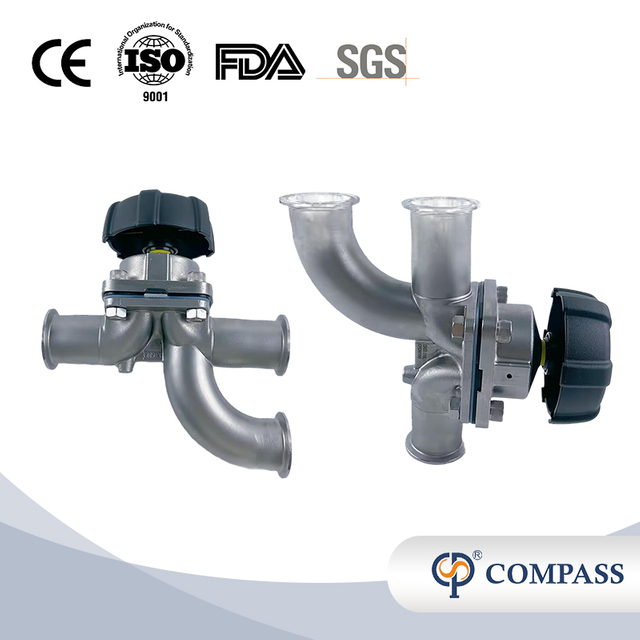
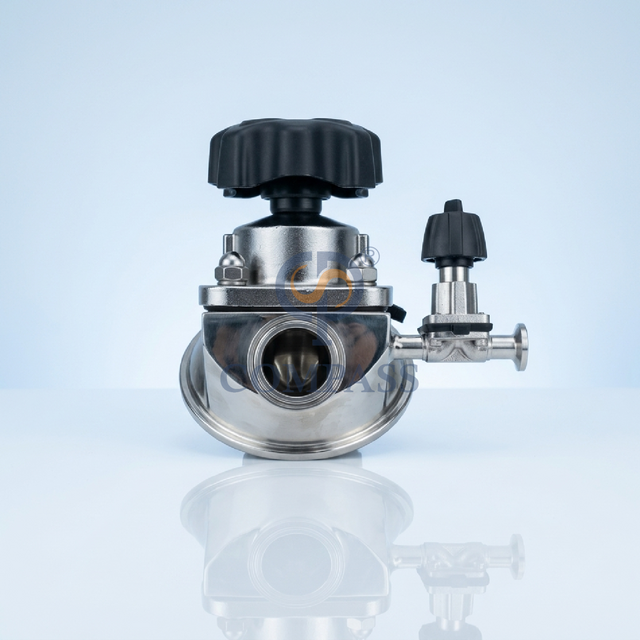
Diaphragm valves use a flexible elastomer to press down against a weir, shutting off flow. Because the working mechanisms are completely isolated from the fluid, they are the standard for strictly aseptic environments like biopharmaceutical manufacturing and high-purity food processing. They eliminate internal crevices and offer excellent throttling capabilities.
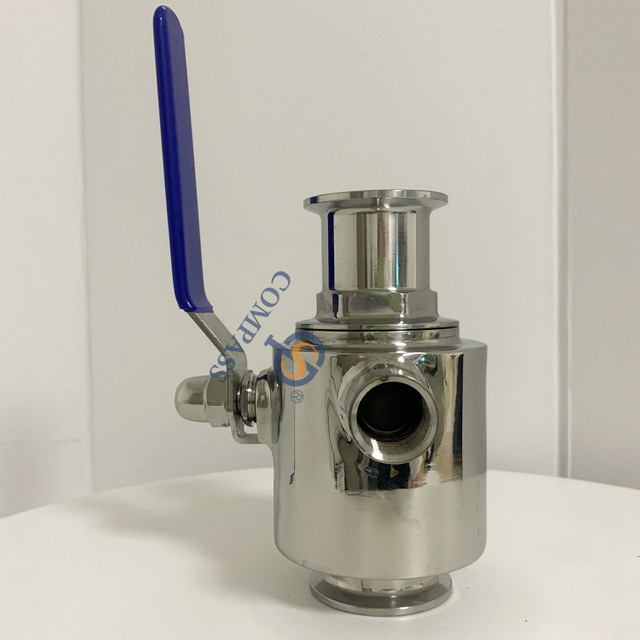
Single seat valves are the workhorses of automated routing and basic flow modulation. They use a linear stem to lift a plug off a seat. They are highly reliable, easy to clean, and handle higher pressures than butterfly valves. Specify single seat valves when you need automated diversion, filling control, or precise batching.
Check Valves and Relief Valves: System Protection
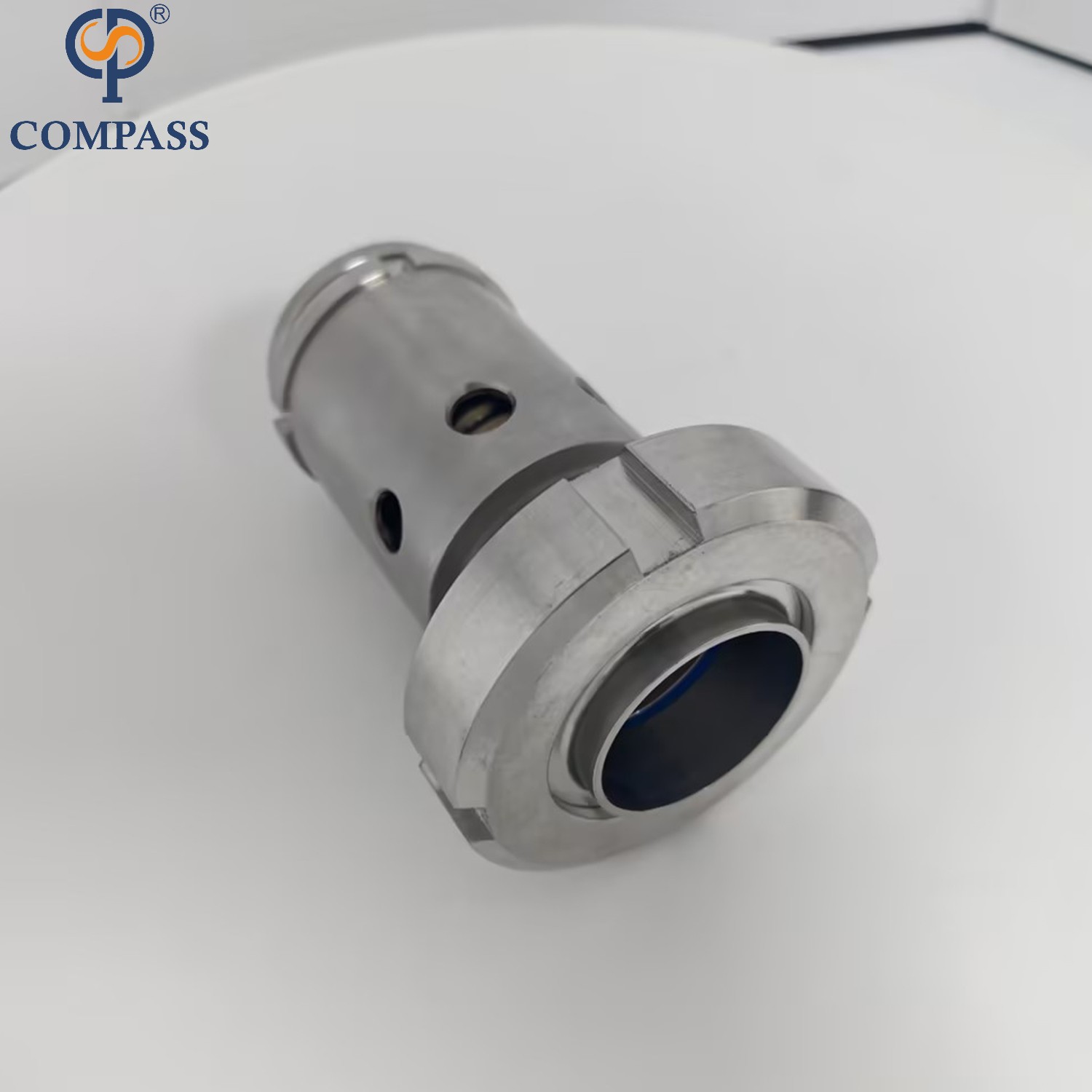
System protection requires specialized components. You must install a Sanitary Valve designed specifically for backflow prevention. Check valves allow fluid to flow in only one direction. They prevent product from draining backward into pumps or contaminating upstream processes when line pressure drops. Spring-loaded check valves are common, but ensure the spring tension matches your system pressure to avoid flow restriction. When installing check valves, use eccentric reducers on horizontal lines to prevent air pockets from forming.
Pressure relief valves protect pumps and piping from catastrophic overpressure. If a line blockage occurs, the relief valve opens at a predetermined setpoint, diverting the fluid safely back to a tank or drain. Sizing these valves requires exact knowledge of the maximum flow rate and the maximum allowable working pressure of the weakest system component.
Matching Sanitary Equipment Features to Processing Goals
Metallurgy and Material Selection
Material selection dictates chemical resistance and mechanical durability. The absolute baseline requirement for wetted parts in hygienic processing is 316L Stainless Steel. The "L" denotes low carbon content, which prevents corrosion around weld seams. For highly aggressive environments involving high chlorides or extreme pH levels, upgrade to AL-6XN or Hastelloy to prevent pitting and stress corrosion cracking.
Elastomer selection requires strict attention to chemical compatibility. EPDM is the standard choice for water, steam, and most CIP chemicals. However, EPDM degrades rapidly when exposed to oils or animal fats. For oil-based products, specify FKM (Viton). When dealing with highly aggressive solvents or extreme temperatures, PTFE (Teflon) provides universal chemical resistance, though it lacks the elasticity of rubber and requires specific seating designs.
Elastomer Compatibility Guide
Material
Temperature Limit
Best For
Avoid Using With
EPDM
135°C (275°F)
Steam, water, dilute acids, alkalis
Mineral oils, animal fats, petroleum
FKM (Viton)
200°C (392°F)
Oils, fats, fuels, high temperatures
Hot steam, strong caustics
PTFE (Teflon)
260°C (500°F)
Aggressive chemicals, universal resistance
Applications requiring high elasticity
Surface Finish and Electropolishing
Surface finish directly impacts cleanability. Microscopic peaks and valleys in the metal trap bacteria and create biofilms. Engineers measure this roughness using the Roughness Average (Ra) scale. A standard sanitary finish requires a 32 Ra (0.8 micrometers) maximum. This is achieved through mechanical polishing and is sufficient for most dairy and beverage applications.
Biopharmaceutical and high-purity applications require smoother surfaces, typically 15 Ra (0.38 micrometers) or lower. Achieve this through electropolishing. Electropolishing removes the microscopic peaks chemically, leaving a mirror-like, passive surface that actively resists bacterial adhesion and corrosion. Always specify the required Ra value on your purchase orders and demand surface finish certification upon delivery.
Modularity, Interchangeability, and Maintenance Accessibility
Downtime destroys profitability. Select equipment engineered for fast, intuitive maintenance. Standardize pump and valve lines across your facility to maximize component interchangeability. When multiple pumps use the same mechanical seal kit, you drastically reduce spare parts inventory and simplify technician training.
Prioritize maintenance-friendly designs. Specify pumps with front-loading seals. This allows technicians to replace seals without disconnecting the pump casing from the piping. Choose top-entry valve bodies so maintenance crews can pull the actuator and stem assembly without removing the valve body from the manifold. These design choices reduce a three-hour teardown to a thirty-minute task.
How to Avoid Common Sanitary System Failures and Risk
Preventing Cavitation and Dead Legs
Cavitation destroys pumps from the inside out. You will hear it before you see it; a cavitating pump sounds like it is pumping gravel. Prevent it by strictly managing inlet conditions. Size suction piping one diameter larger than the pump inlet to reduce friction loss. Keep suction lines as short and straight as possible. Manage vapor pressure carefully; hot fluids boil at lower pressures, drastically reducing NPSHa. If you pump hot CIP fluids, ensure adequate tank elevation to maintain positive pressure at the pump inlet.
Dead legs are sections of piping where fluid stagnates, creating massive contamination risks. Adhere strictly to the L/D (Length to Diameter) ratio rule. The length of any branch or dead end must not exceed twice the diameter of the main pipe (L/D < 2:1). Biopharma applications often require an L/D ratio of 1.5:1 or less. Orient all tees and instrument branches to ensure full flow sweeps the area clean during CIP.
Managing Thermal Shock and Pressure Spikes
Sterilize-In-Place (SIP) protocols subject equipment to violent temperature swings. Injecting 121°C steam into a cold stainless steel system causes rapid thermal expansion. This thermal shock can warp rigid valve bodies, misalign pump rotors, and cause elastomers to extrude from their grooves. Mitigate this by programming gradual temperature ramps in your automation system, selecting high-temperature elastomer compounds, and installing proper pipe hangers to allow for thermal expansion loops.
Pressure spikes, or water hammer, occur when fluid velocity changes instantly. Closing a valve too quickly sends a shockwave back through the piping, blowing out pump seals and rupturing gaskets. Prevent water hammer by using soft-start VFDs to ramp pump speeds up and down gradually. Equip pneumatic valves with speed control mufflers to slow the actuation time, allowing fluid momentum to dissipate safely.
Mitigating Elastomer Degradation and Seal Failure
Mechanical seals and valve elastomers are the most common points of failure. Root causes include chemical attack from incorrect CIP concentrations, dry running, and over-torquing during assembly. If a pump runs dry for even a few minutes, the mechanical seal faces overheat and shatter. Install flow switches or power monitors to shut down the pump instantly if flow stops.
Implement strict preventative maintenance schedules based on operating hours, not failure events. Do not wait for a seal to leak before replacing it. Utilize modern leak-detection technologies. Many advanced valves feature weep holes that visually indicate primary seal failure before the fluid reaches the actuator. Double mechanical seals with barrier fluids provide an extra layer of protection for hazardous or highly sticky products.
Conclusion
Complete a comprehensive application data sheet detailing your exact flow rates, pressures, and fluid properties before contacting vendors.
Consult with a specialized sanitary process engineer to verify your NPSH calculations and validate equipment sizing against your facility constraints.Partnering with an established manufacturer like Wenzhou Xusheng & Compass Machinery Industry and Trading Co.,Ltd, a global leader with decades of expertise in engineering high-precision sanitary valves, stainless steel fittings, and hygienic fluid handling solutions, ensures your facility receives certified, top-tier components built to withstand demanding processing environments.
Request certified dimensional drawings and material test reports to confirm physical fit and regulatory compliance prior to issuing procurement orders.
Audit your existing piping layout to identify and eliminate dead legs or improper slopes that could compromise the cleanability of your new equipment.
FAQ
Q: What is the difference between a standard industrial valve and a sanitary valve?
A: Industrial valves contain internal crevices, threads, and flat areas where fluid stagnates. A sanitary version is engineered specifically to eliminate bacterial harborage points. It features self-draining geometries, highly polished internal surfaces, and specialized elastomers that withstand aggressive chemical cleaning and high-temperature sterilization without degrading.
Q: How do I calculate the correct pump size for my processing line?
A: You must calculate the required flow rate and the Total Dynamic Head (TDH). TDH includes elevation changes, pipe friction, and pressure drops across all system components. You must also calculate Net Positive Suction Head Available (NPSHa) to ensure it exceeds the pump required NPSH, preventing destructive cavitation.
Q: Which valve type is best for highly viscous products?
A: Full-bore designs, such as specific single seat configurations or specialized butterfly units, work best for highly viscous products. They provide an unobstructed flow path, minimizing pressure drop. Avoid diaphragm designs for extremely thick fluids, as the weir restricts flow and creates excessive backpressure.
Q: What are the 3-A sanitary standards for pumps and valves?
A: 3-A Sanitary Standards are strict design criteria developed for the food, dairy, and beverage industries. They mandate specific internal radii, smooth surface finishes, and self-draining capabilities to ensure equipment can be thoroughly cleaned in place (CIP) and inspected, preventing microbial contamination.
Q: Can a centrifugal pump handle shear-sensitive fluids?
A: Standard centrifugal pumps are generally unsuitable for shear-sensitive fluids. The high-speed rotation of the impeller creates severe turbulence and shear forces that destroy delicate emulsions, dairy fats, or cellular structures. You should specify a positive displacement pump, like a rotary lobe pump, for these applications.
Q: What is the impact of dead legs on valve performance and compliance?
A: Dead legs are stagnant piping sections where CIP fluids cannot reach adequate velocity. They harbor bacteria, leading to batch contamination and failed regulatory audits. To maintain compliance, engineers must follow the L/D rule, ensuring the length of any branch does not exceed twice the diameter of the main pipe.