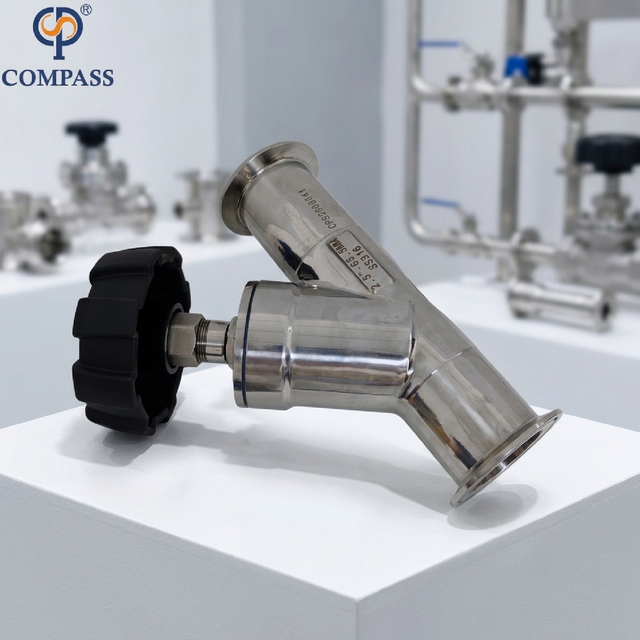
Process engineers and procurement managers face a saturated market of fluid control suppliers. The challenge is distinguishing true original equipment manufacturing partners who maintain rigorous, verifiable production depth from resellers masking industrial-grade components as hygienic. The stakes in hygienic processing are severe. A single microscopic crevice or material failure can lead to batch contamination, product recalls, and failed regulatory audits across food, pharmaceutical, and consumer chemical lines.
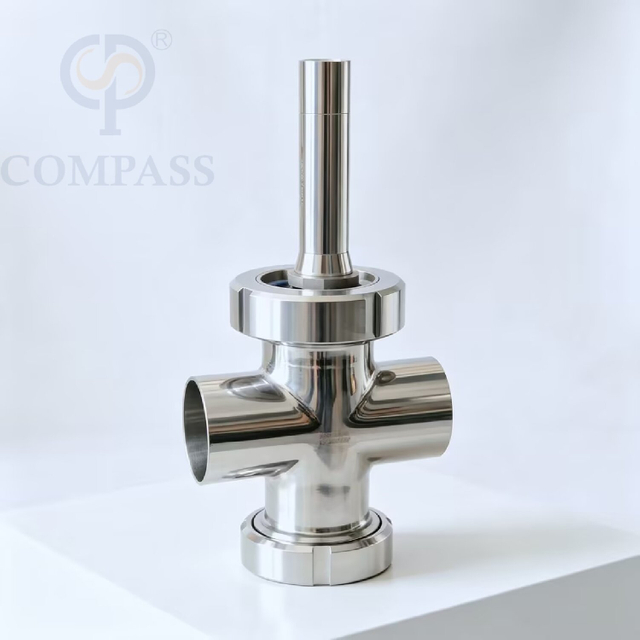
Selecting the right Sanitary Valve requires a systematic evaluation of material science, mechanical design, regulatory compliance, and the internal quality control infrastructure of the manufacturer. Understanding the structural differences between standard and high-purity components ensures process integrity from the mixing tank to the final packaging line. We will examine how to evaluate manufacturing standards, identify the correct valve architecture for specific media, and select a reliable production partner.
Material and Surface Purity are Non-Negotiable: True sanitary valves require 316L stainless steel for wetted parts and specific surface roughness (Ra) maximums to prevent bacterial harboring.
Design Dictates Cleanability: Component architecture must eliminate "dead legs" and support seamless Clean-in-Place (CIP) and Sterilize-in-Place (SIP) protocols.
Application Drives Valve Selection: Ball, butterfly, and diaphragm valves serve distinct process needs, requiring trade-off analysis between flow rates, pressure drops, and throttling precision.
OEM Traceability Mitigates Risk: A credible OEM provides continuous material traceability (MTRs), strict black/white manufacturing separation, and verifiable compliance with 3-A, FDA, or EHEDG standards.
Table of Contents
Toggle
Sanitary vs. Industrial Valves: Key Differences Explained
The primary objective of an industrial valve is pressure and flow containment. You can install a standard gate valve on a cooling water line, and it performs its job effectively. Industrial designs tolerate internal crevices, threaded connections, and rough cast surfaces because the media being transferred does not require biological purity. Hygienic processing demands containment combined with absolute biological and particulate cleanliness. A standard industrial component fails hygienic requirements immediately due to internal dead zones where product stagnates and bacteria multiply.
While historically associated with dairy and brewing, high-purity fluid control standards now dictate operations across multiple sectors. Biopharmaceutical manufacturing relies on these components to prevent cross-contamination between distinct drug batches. Cosmetics and consumer chemical facilities, producing items like lotions and liquid laundry detergents, require identical hygienic standards. If a batch of detergent is contaminated by residual chemicals from a previous run, the product efficacy is destroyed, and the chemical reaction can damage downstream processing equipment.
Surface finish separates standard stainless steel from hygienic-grade materials. When surface roughness exceeds acceptable limits, microscopic peaks and valleys form on the metal. Bacteria like Listeria or Salmonella lodge in these valleys. During a cleaning cycle, the fluid velocity shears over the top of the peaks, leaving the bacteria in the valleys untouched. The internal fluid path must be mechanically polished or electropolished to a specific surface roughness, typically an Ra (Roughness Average) of 0.8 µm (32 µin) or better. Electropolishing strips away the outer layer of metal, removing free iron and leaving a chromium-rich passive layer that resists corrosion.
Material composition requires strict adherence to austenitic stainless steels. Manufacturers utilize 304 stainless steel for external, non-wetted components like actuators and handles. The wetted parts—any surface touching the product—must be forged or machined from 316L stainless steel. The "L" denotes low carbon content, which prevents carbide precipitation during welding, thereby maintaining superior corrosion resistance against harsh alkaline and acidic cleaning chemicals. This material integrity must be supported by Material Test Reports (MTRs) documenting the exact chemical composition of the steel heat.
Sealing technology also shifts dramatically. Standard industrial seals degrade under high-temperature steam or aggressive caustic washes. Hygienic systems utilize FDA-compliant, USP Class VI elastomers. Materials such as EPDM, PTFE, and Platinum-cured Silicone are engineered to withstand repeated high-temperature sterilization cycles. EPDM performs exceptionally well in steam and caustic environments but fails when exposed to lipid-heavy products like butter or oil-based cosmetics. For lipids, facilities must specify FKM or PTFE. Because PTFE lacks mechanical memory and suffers from cold flow under constant compression, the valve seat design must physically encapsulate the PTFE to prevent it from extruding into the flow path.
Field Inspection Steps for New Valve Deliveries
Check the provided MTR against the physical heat stamp engraved on the valve body.
Run a portable profilometer across the internal bore to verify the Ra specifications match the purchase order.
Inspect the tri-clamp ferrules for machining burrs, handling damage, or dimensional inaccuracies.
Verify the elastomer identification tag matches the specified USP Class VI material required for your process media.
Types of Sanitary Valves and Their Process Uses
Matching the mechanical design to the fluid characteristics prevents premature wear and process inefficiencies. Each valve type presents specific flow coefficients, pressure limitations, and maintenance requirements. Installing the wrong architecture leads to pressure spikes, sheared product, or incomplete cleaning cycles.
Sanitary Ball Valves
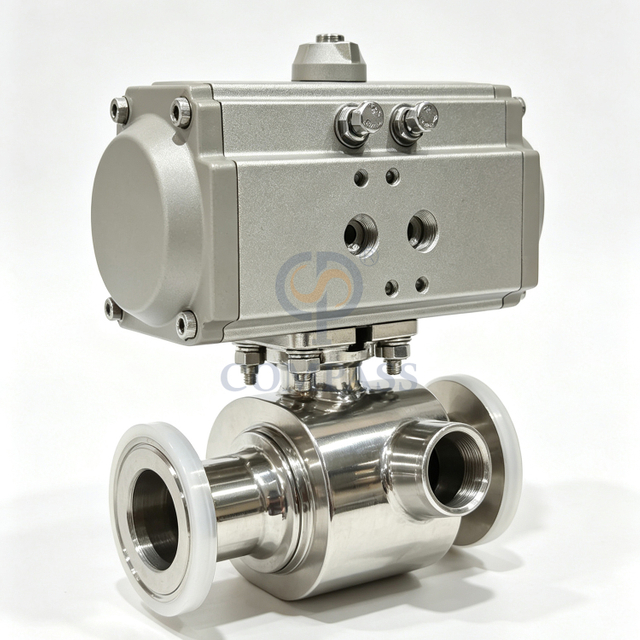
Ball valves provide full-bore, unencumbered flow. When in the open position, the internal port aligns perfectly with the pipeline, minimizing fluid pressure drop and preventing shear damage to sensitive media. They are highly effective for viscous fluids, high-flow on/off control, and systems that require mechanical pigging for product recovery.
The primary limitation lies in the cavity space between the ball and the valve body. In a standard ball valve, fluid becomes trapped in this void when the valve cycles. To maintain hygienic conditions, a Sanitary Valve of this type must feature a cavity-filled seat design. PTFE seating material is machined to fill the void entirely, preventing product entrapment and allowing cleaning fluids to flush the area effectively without requiring manual teardown.
Sanitary Butterfly Valves
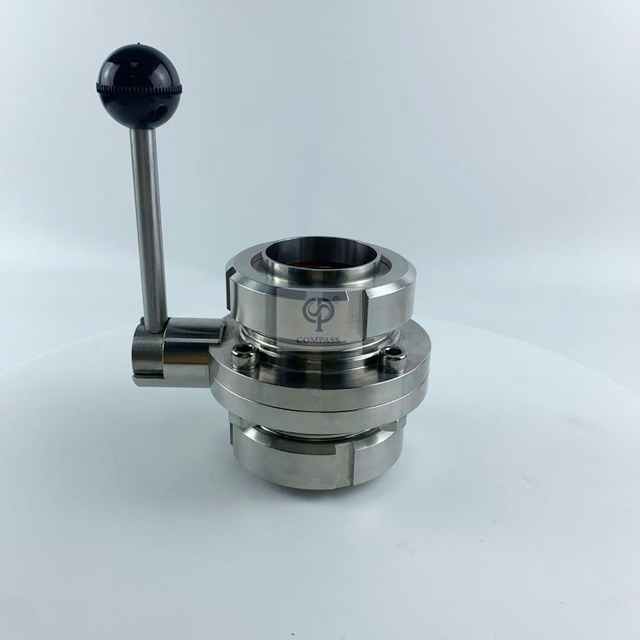
Butterfly valves offer a compact, lightweight footprint and rapid quarter-turn operation. A rotating disc sits in the center of the flow path, sealing against a continuous elastomer ring. They excel in large volume routing, low-pressure systems, and applications requiring frequent automated CIP cycles. You will find them heavily utilized on silo outlets, transfer lines, and CIP routing manifolds.
Because the disc remains in the fluid path even when fully open, butterfly valves obstruct flow slightly. If you pump a product with large particulates, the disc will impact the solids, potentially causing damage to the product or creating pressure spikes in the line. They are also less effective for precise flow throttling compared to other designs, functioning best in strict open or closed positions.
Sanitary Diaphragm Valves
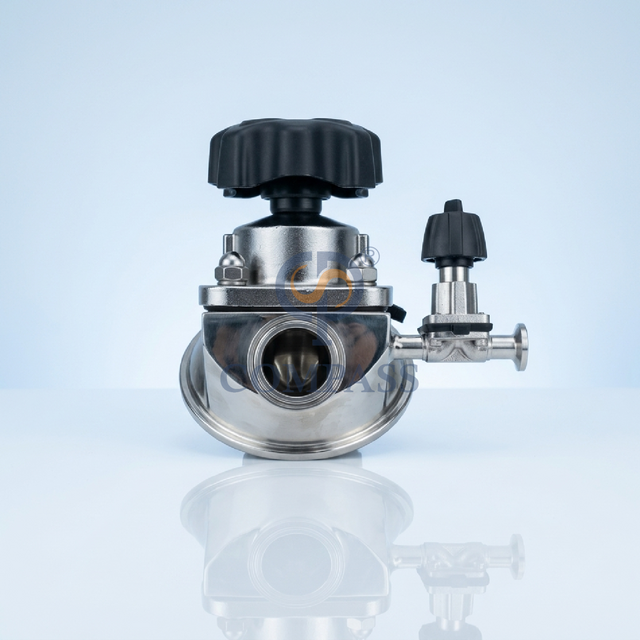
Diaphragm valves provide absolute isolation of the moving mechanical parts from the product zone. The fluid enters the body, flows over a raised saddle known as a weir, and exits. A flexible elastomer or PTFE diaphragm presses down onto the weir to stop the flow. There are no stems or balls in the fluid path. This design is the standard for high-purity pharmaceutical and bioprocessing applications, particularly Water for Injection (WFI) loops, due to its zero dead-leg architecture and exceptional drainability.
These valves allow for precise flow throttling. However, the diaphragm undergoes continuous flexing, resulting in a higher maintenance frequency for diaphragm replacement. Additionally, the weir design restricts the flow path, resulting in lower flow coefficients (Cv) compared to ball or butterfly variants.
Sanitary Check and Relief Valves
Check valves enforce unidirectional flow, preventing backflow that could contaminate upstream sterile zones. Relief valves provide overpressure protection, opening automatically when system pressure exceeds a set threshold to protect positive displacement pumps and piping. Evaluating these components requires scrutinizing the internal mechanism. Spring-loaded designs must utilize highly polished, open-coil springs that do not trap particulates.
Eccentric check valves are required for horizontal lines. If you use a concentric check valve on a horizontal line, a pool of fluid will sit at the bottom of the valve body because the outlet is centered. An eccentric design offsets the outlet to the bottom of the valve body, allowing it to drain completely by gravity.
Operational Comparison of Hygienic Valve Types
Valve Type
Primary Application
Flow Restriction
Maintenance Frequency
Cavity-Filled Ball
Viscous fluids, piggable lines, high flow.
None (Full Bore)
Low
Butterfly
Large volume routing, silo outlets, CIP manifolds.
Low to Moderate
Low
Weir Diaphragm
Biopharma, WFI loops, precise throttling.
High
High (Diaphragm wear)
Eccentric Check
Horizontal line backflow prevention.
Moderate
Low
Essential Factors for Choosing Sanitary Valves
Procuring fluid control components requires matching specifications to operational realities. Overlooking a single parameter—such as elastomer compatibility with a specific CIP chemical—leads to system failure, leaks, and contamination events.
Practical Procurement Checklist for Hygienic Valves
Evaluation Parameter
Key Considerations
Risk of Non-Compliance
Material Traceability
Availability of heat numbers and MTRs for 316L wetted parts.
USP Class VI / FDA approval; resistance to process media and CIP chemicals.
Seal swelling, particulate shedding, leakage.
Drainability
Design allows complete gravity draining at specified installation angles.
Stagnant fluid pooling, microbial growth.
Actuation Integration
Compatibility with pneumatic/electric actuators and feedback sensors.
Process automation failure, inaccurate flow control.
Regulatory compliance dictates the baseline engineering of these components. In the United States, the 3-A Sanitary Standards govern dairy and food processing equipment, demanding specific radii on internal corners and verifiable cleanability. Elastomers must comply with FDA CFR Title 21. In Europe, the EHEDG (European Hygienic Engineering & Design Group) provides stringent guidelines for hygienic design. Pharmaceutical applications require adherence to USP Class VI standards, which mandate rigorous biological reactivity testing for elastomers and plastics.
Clean-in-Place (CIP) and Sterilize-in-Place (SIP) compatibility means the valve must facilitate automated cleaning without manual disassembly. The internal geometry must allow cleaning fluids to reach a minimum velocity of 1.5 meters per second. This velocity creates turbulent flow, which physically scrubs the internal surfaces. If the valve design creates shadowing—areas where the fluid velocity drops—the turbulent flow is lost, and bacteria survive the wash cycle. During SIP, the valve must withstand continuous exposure to clean steam, often exceeding 121°C, without the seals degrading or the metal warping.
Process parameter alignment involves evaluating temperature extremes, pressure ratings, and media characteristics. A valve handling cold dairy products faces different thermal stresses than one managing hot syrups. High-viscosity fluids require full-bore designs, while corrosive media might necessitate higher alloy materials like Hastelloy or AL-6XN if 316L stainless steel proves insufficient for the chemical concentration.
Actuation and automation readiness is mandatory for modern processing facilities. Manual operation is increasingly replaced by pneumatic or electric actuators. The valve body must feature standardized mounting pads, such as ISO 5211, to accept these actuators without custom fabrication. Furthermore, the integration of positioners and feedback sensors allows the central PLC to monitor the exact position of the valve. Proximity switches or control heads confirm whether the valve is fully open or fully closed, ensuring automated process control environments operate safely and preventing accidental mixing of product and CIP chemicals.
Actuator Sizing and Integration Steps
Calculate the maximum line pressure and media viscosity to determine the required breakaway torque.
Add a 20% to 30% safety margin to the torque calculation to account for elastomer swelling or sticky media.
Select a pneumatic actuator (spring-return or double-acting) that meets the calculated torque requirements at your facility's available air supply pressure.
Mount the control head and calibrate the open/closed proximity sensors to communicate with the facility PLC.
How to Evaluate Sanitary Valve Manufacturers and Quality
A supplier's manufacturing infrastructure directly impacts the reliability of the finished component. True original equipment manufacturers control the metallurgical and machining processes in-house, rather than simply assembling outsourced parts from unknown foundries.
Raw material sourcing and strict black/white separation are foundational. "Black" refers to carbon steel, while "white" refers to stainless steel. If an OEM machines carbon steel and stainless steel in the same facility without physical separation, cross-contamination is inevitable. Carbon steel dust from grinding or tooling transfers through the air and settles onto the stainless steel surface. When exposed to moisture in a processing plant, these embedded carbon particles rust, creating localized galvanic corrosion and rouge formation on the hygienic component. Verifying that a manufacturer maintains dedicated stainless-steel-only production zones is a mandatory audit step.
Machining precision relies on advanced CNC (Computer Numerical Control) capabilities. Hygienic components require exceptionally tight tolerances. For example, a tri-clamp ferrule relies on a specific 20-degree angle to mate with the adjacent ferrule and compress the gasket perfectly. If the CNC machine is out of calibration and cuts that angle at 19 degrees, the gasket will extrude into the flow path. That extruded gasket creates a dam, which creates a dead leg, which harbors bacteria. During this machining process, continuous restamping is mandatory. When a raw stainless steel forging is machined, the original heat number from the foundry must be physically restamped onto the finished valve body. This unbroken chain of custody ensures full traceability from the raw material melt to the installed component.
Testing and verification protocols separate premium manufacturers from low-tier suppliers. Before leaving the facility, every valve undergoes hydrostatic pressure testing to verify the structural integrity of the body casting or forging. Pneumatic seat leak testing ensures the elastomer seals provide bubble-tight shutoff under pressure. Finally, quality control teams utilize profilometers—highly sensitive instruments that measure surface roughness—to verify that the internal polish meets the specified Ra requirements, documenting the results for the end-user.
OEM Audit Questions for Procurement Teams
Do you have a dedicated facility or physically separated zone for stainless steel machining to prevent carbon dust contamination?
How do you track and transfer heat numbers during the machining process to maintain MTR validity?
What percentage of your assembled valves undergo pneumatic seat leak testing before shipping?
Can you provide sample MTRs and profilometer reports for recent production batches?
Managing Risks and Supply Chain Issues with Sanitary Valves
Selecting substandard fluid control components introduces severe operational vulnerabilities. The hidden impacts of non-compliance extend far beyond the initial procurement phase, affecting daily operations, maintenance schedules, and overall facility output.
Failed regulatory audits often stem from undocumented materials or poor internal geometry that harbors bacteria. If an inspector discovers a valve lacking proper MTRs or exhibiting internal corrosion, the entire processing line can be shut down. Batch spoilage occurs when microscopic biofilms develop in dead legs, contaminating thousands of gallons of product. In the worst-case scenario, this leads to emergency product recalls, inflicting massive reputational damage and legal liability on the processing brand.
Maintenance frequency and seal degradation heavily impact facility uptime. Elastomers have a finite lifespan. Facility managers must evaluate the ease of seal replacement. Designs that require specialized tools or extensive pipeline disassembly increase maintenance downtime. Furthermore, relying on an OEM that does not guarantee the long-term availability of specific spare parts kits forces facilities to replace entire valve assemblies rather than simply swapping out degraded seals.
Supply chain fragmentation introduces significant lead time risks. Suppliers who rely on third-party foundries, external polishing houses, and outsourced assembly face compounding delays. If the polishing house falls behind, the entire delivery schedule collapses. Vertically integrated manufacturers who control casting, machining, polishing, and assembly under one roof offer reliable lead times and tighter quality control, mitigating the risk of project delays during facility upgrades or emergency replacements.
Carbon steel cross-contamination during manufacturing.
Require strict black/white separation at the OEM facility.
Biofilm Buildup
Inadequate surface finish (Ra > 0.8 µm) or dead legs.
Mandate profilometer reports; review P&ID for proper valve orientation.
Actuator Stalling
Undersized actuator for the media viscosity.
Apply a 30% torque safety margin during actuator sizing.
Conclusion
Take immediate action to secure your processing lines and ensure compliance across your fluid routing systems:
Audit your current Piping and Instrumentation Diagrams (P&ID) to identify any existing dead legs or misapplied valve architectures.
Request sample Material Test Reports (MTRs) and surface finish profilometer reports from your shortlisted suppliers to verify their documentation practices.
Standardize your elastomer selection across the facility based on your specific CIP chemical concentrations and maximum SIP temperatures.
Schedule a virtual or physical audit of the manufacturer's facility to confirm black/white material separation and in-house CNC machining capabilities.
To streamline this process and ensure uncompromising hygienic standards, partnering with an industry leader is key. Driven by decades of specialized manufacturing expertise, Wenzhou Xusheng & Compass Machinery Industry and Trading Co.,Ltd combines advanced CNC precision machining, strict black/white material separation, and comprehensive quality control to deliver high-purity sanitary valves engineered for maximum reliability and global compliance.
FAQ
Q: What is the main difference between a sanitary valve and an industrial valve?
A: The primary difference is cleanability and material purity. Industrial valves focus on pressure containment and tolerate internal crevices, threads, and rough surfaces. Sanitary valves feature polished internal surfaces (Ra < 0.8 µm), crevice-free architecture, and 316L stainless steel to prevent bacterial growth and allow for automated cleaning.
Q: What industries require sanitary valves besides food and pharmaceuticals?
A: Beyond food, dairy, and pharmaceuticals, these components are critical in bioprocessing, cosmetics, and consumer chemical manufacturing. Products like lotions, liquid soaps, and laundry detergents require hygienic processing to prevent cross-contamination that could ruin product efficacy or cause dangerous chemical reactions.
Q: Why is 316L stainless steel the standard for a sanitary valve body?
A: 316L stainless steel contains molybdenum, providing superior resistance to corrosion from harsh chlorides and acidic cleaning chemicals. The "L" indicates low carbon content, which prevents carbide precipitation during welding, ensuring the metal remains corrosion-resistant at the weld seams.
Q: What does 3-A sanitary standard compliance mean for valves?
A: 3-A compliance indicates that the valve design meets strict hygienic standards developed for the US dairy and food industries. It ensures the component has proper internal radii, no dead legs, drainable geometry, and utilizes approved materials, allowing it to be effectively cleaned and inspected.
Q: How do you clean a sanitary valve without taking it apart?
A: They are cleaned using Clean-in-Place (CIP) systems. Automated pumps circulate high-velocity alkaline and acidic chemical solutions, followed by purified water rinses, directly through the pipeline. The valve's crevice-free internal geometry allows these fluids to scrub all wetted surfaces effectively without manual disassembly.
Q: What is a "dead leg" in hygienic valve design?
A: A dead leg is a section of piping or a cavity within a valve where fluid stagnates because it sits outside the main flow path. In hygienic processing, dead legs must be eliminated because stagnant fluid cannot be reached by CIP chemicals, leading to bacterial growth and batch contamination.