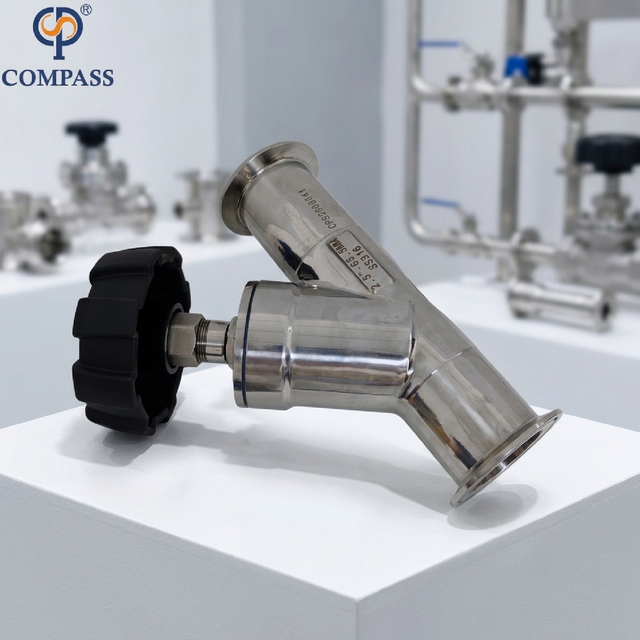
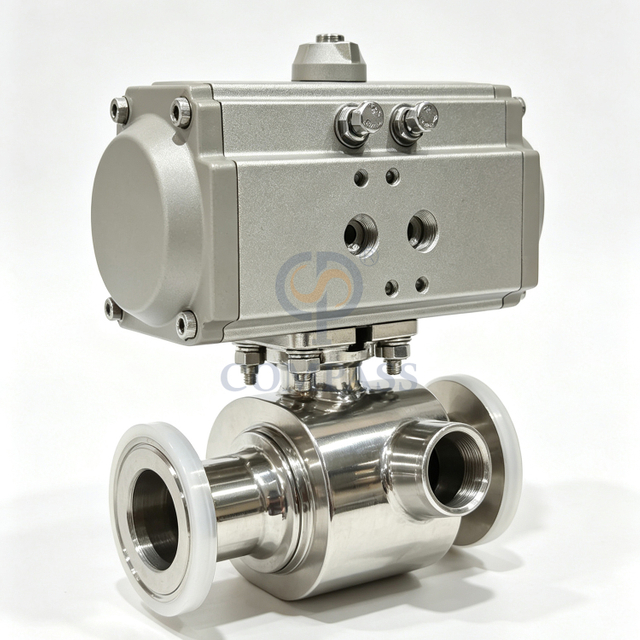
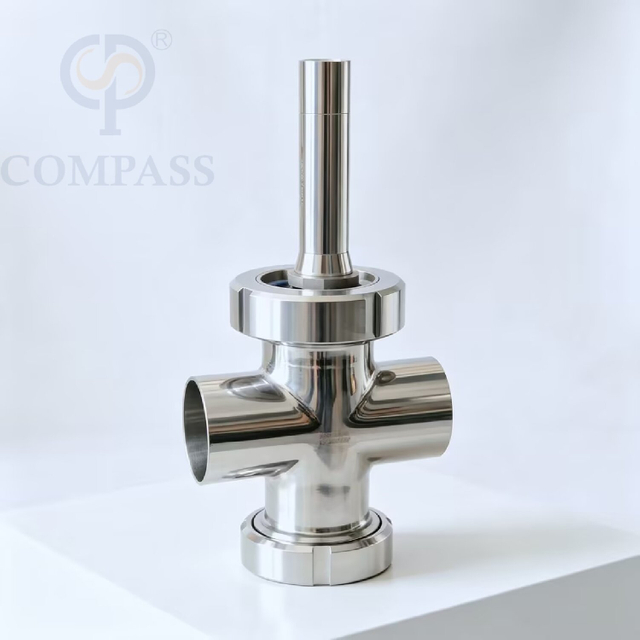
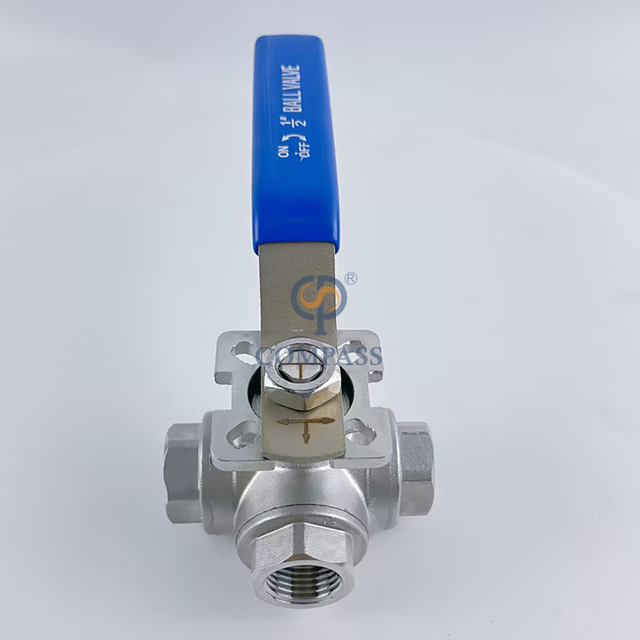
Fluid handling components carry massive stakes in hygienic processing environments. A single compromised seal or microscopic crevice triggers batch contamination, heavy regulatory fines, or catastrophic product recalls. Procurement teams often fall into the trap of treating these components like standard industrial commodities. This oversight leads to mismatched metallurgy, inadequate surface finishes, hidden dead legs, and incompatible end connections. You cannot afford to cut corners when product purity is on the line. Process engineers and facility managers must systematically vet specifications, compliance standards, and supplier reliability. Evaluate every physical and metallurgical detail before issuing a purchase order for a Sanitary Valve. Plant operators know that a failed component means breaking the sterile envelope, draining lines, and losing hours of production. You need a strict evaluation framework to prevent these failures and ensure seamless integration into your existing piping infrastructure.
Material Traceability is Non-Negotiable: Validating exact metallurgy (e.g., 316L stainless steel) via Material Test Reports (MTRs) is critical for preventing corrosion in aggressive CIP/SIP environments.
Surface Finish Dictates Cleanability: The internal Roughness Average (Ra) must align with specific industry standards (e.g., 3-A, ASME BPE) to prevent bacterial adhesion.
Application Dictates Valve Geometry and Sizing: Selecting between ball, butterfly, or diaphragm configurations—and calculating the correct Flow Coefficient (Cv)—requires mapping the valve directly to the fluid’s viscosity, particulate load, and purity requirements.
Supplier Vetting Mitigates Operational Risk: Evaluating a supplier’s QA/QC protocols, engineering consultation capabilities, and bulk-shipping safeguards is as important as the physical valve specifications.
Table of Contents
Toggle
Sanitary Valve Selection Guide: How to Choose the Right Specs
Hygienic Processing Requirements vs. Industrial Standards
Industrial valves utilize carbon steel, threaded connections, and contain sharp internal crevices. These standard designs trap debris and promote biofilm growth. A true hygienic component features a crevice-free design, high-grade stainless steel, and self-draining geometry. You need smooth transitions to prevent bacterial adhesion. Industrial equipment relies on packing glands that leak or harbor contaminants. Hygienic designs use specialized elastomers that sit flush against the metal. Every internal surface must allow cleaning fluids to sweep across it without obstruction. You cannot retrofit an industrial component for a food or pharmaceutical line. The internal geometry of a hygienic unit eliminates sharp 90-degree corners. Engineers specify generous radii on all internal transitions. This ensures that fluid velocity remains high against the walls during cleaning cycles, physically scrubbing away product residue.
Mapping Process Parameters
Define your baseline operational metrics before sourcing any equipment. Document the maximum operating pressure, temperature ranges, and flow rates of your system. Note specific fluid characteristics like viscosity, abrasiveness, and particulate load. These metrics dictate the physical limits your equipment must handle daily. High-temperature steam cycles require completely different seal materials than cold beverage lines. Abrasive slurries destroy standard butterfly discs within weeks. Mapping these parameters ensures you select a component built for your exact operational reality. Guessing these metrics leads directly to system failures. For example, pumping a high-viscosity cheese curd through a standard port creates massive shear forces. This shear degrades the product texture and overloads the pump motor. You must match the internal bore diameter to the exact rheology of your product.
Sizing and Flow Coefficient (Cv)
Calculate the correct size to match your system flow requirements accurately. The Flow Coefficient (Cv) measures how much water passes through the unit at a one psi pressure drop. Proper sizing prevents pressure drops, cavitation, and shear damage to sensitive media. An oversized unit causes sluggish flow and allows particulates to settle out of the fluid. An undersized unit creates dangerous bottlenecks and excessive fluid velocity. High velocity causes cavitation, where vapor bubbles form and collapse, physically tearing away the stainless steel over time. Match the Cv rating to your pump output and pipe diameter. Field technicians frequently encounter systems where a two-inch line chokes down to a one-inch port. This restriction creates a permanent pressure drop that forces the feed pump to run at maximum capacity, burning out stators and wasting electrical energy.
The Cost of Misapplication
Improper selection carries severe financial and operational risks for your facility. You face premature seal failure, leading to leaks and immediate production halts. Cross-contamination between batches occurs when wrong geometries trap old product. Extended maintenance downtime eats directly into your production schedules. Replacing a failed component requires draining the line, locking out equipment, and breaking the sterile envelope. Getting the specifications right upfront saves massive headaches later. You mitigate risk by treating the selection process as an engineering task rather than a simple purchasing exercise. Consider the labor cost of a single teardown. A maintenance crew spends two hours isolating the line, replacing a blown elastomer, and re-sterilizing the loop. If this happens weekly due to poor material selection, your facility loses thousands of dollars in lost production time alone.
Comparing Sanitary Valves: Butterfly, Ball, Diaphragm, and Check Valves
Sanitary Butterfly Valves
Butterfly configurations dominate high-volume, low-pressure applications across multiple industries. They excel at routing standard liquids like water, clear beverages, and CIP fluids. The design features a rotating disc that compresses against an elastomer seat to stop flow. They offer a compact footprint and simple maintenance procedures. You cannot use these for highly viscous fluids or precise flow control. Thick syrups or heavy slurries struggle to pass around the central disc. The disc creates a slight flow restriction even when fully open, making them unsuitable for products requiring gentle handling. When installing these units, technicians must ensure the disc opens parallel to the flow direction. Installing them backward or at odd angles creates unnecessary turbulence. You must also verify the handle orientation clears adjacent piping, as tight manifolds often restrict full handle rotation.
Sanitary Ball Valves
Ball configurations handle viscous fluids, heavy slurries, and applications requiring an unobstructed flow path. When open, the internal bore aligns perfectly with the piping, creating zero flow restriction. This full-port design allows thick products to pass without shear damage. You must verify cavity-filled seat designs when evaluating these units. Standard ball designs leave a void between the ball and the valve body where product gets trapped. Cavity-filled PTFE seats encapsulate the ball entirely, preventing product entrapment and ensuring thorough cleaning during CIP cycles. These units weigh significantly more than butterfly designs. Installers must provide adequate pipe hangers and structural support to prevent sagging. Unsupported heavy components place severe stress on adjacent Tri-Clamp ferrules, eventually causing gasket deformation and slow leaks.
Sanitary Diaphragm Valves
High-purity pharmaceutical, biotech, and aseptic processing facilities rely heavily on diaphragm configurations. The design isolates the mechanical moving parts entirely from the product fluid. A flexible diaphragm pushes down against a weir to stop the flow. You must assess the weir design and diaphragm material strictly for zero-dead-leg requirements. These units provide the highest level of cleanability and drainability available. They handle aggressive sterilization cycles easily. They restrict flow more than ball configurations and require regular diaphragm replacement as part of preventative maintenance. Installation angle dictates performance for these units. You must install them at a specific drain angle, typically between 15 and 30 degrees depending on the manufacturer, to ensure fluid completely drains from the weir area by gravity.
Sanitary Check and Relief Valves
Check configurations prevent backflow, ensuring fluid only moves in one direction. Relief configurations protect your expensive systems from dangerous overpressure events. Spring tension and cracking pressure must precisely match your specific system dynamics. If the spring is too weak, the unit opens prematurely. If the spring is too stiff, pressure builds to catastrophic levels before relief occurs. Evaluate the internal guide mechanisms to ensure they do not trap particulates. Eccentric designs work best for horizontal lines to guarantee complete self-draining capabilities. Concentric designs only drain properly in vertical orientations. Maintenance teams must regularly test relief mechanisms using calibrated pressure rigs. A stuck relief mechanism turns a standard piping loop into a potential explosion hazard during a dead-head pump scenario.
Key Technical Specs for Sanitary Valves: Materials, Finish, and Seals
Metallurgy and Material Grades
AISI 304 and 316L stainless steel perform very differently in aggressive environments. 316L serves as the absolute baseline for product-contact surfaces because of its molybdenum content. This specific element resists chloride-induced pitting during harsh cleaning cycles. CIP chemicals containing bleach or strong acids quickly pit and rust standard 304 stainless. 304 works fine for external components, actuators, and structural supports. Never accept 304 for internal wetted parts. Verify the "L" designation, which stands for low carbon. Low carbon steel prevents carbide precipitation during welding, keeping the joints highly resistant to corrosion. When welders strike an arc on standard 316, the high heat draws carbon to the grain boundaries. This creates a sensitized zone that rusts almost immediately upon exposure to acidic cleaning fluids. 316L eliminates this metallurgical failure point entirely.
Surface Finish and Electropolishing
Roughness Average (Ra) values define the microscopic smoothness of the metal surface. Food and beverage applications typically require an Ra of ≤ 32 µin (0.8 µm). Biopharma and semiconductor lines demand stricter benchmarks, often ≤ 15 µin (0.38 µm). A smoother surface gives bacteria nowhere to hide and allows cleaning fluids to perform effectively. Mechanical polishing works well for standard food processing applications. Electropolishing becomes mandatory when you need to strip away surface impurities for high-purity pharmaceutical lines. Electropolishing removes the microscopic peaks and valleys, leaving a passive, chromium-rich surface layer. You can visually identify an electropolished surface by its mirror-like, highly reflective finish. Mechanical polishing leaves microscopic directional scratch lines. These lines, while small, still provide anchor points for stubborn proteins and biofilms to attach during long production runs.
End Connections and Installation Compatibility
Different connections serve drastically different operational needs on the plant floor. Tri-Clamp fittings allow quick maintenance, easy inspections, and frequent teardowns. They use a gasket and a mechanical clamp to create a flush seal. Butt-weld connections provide permanent, high-pressure, zero-crevice joints. Facilities use orbital welding to ensure perfect, repeatable butt-welds without internal oxidation. Hygienic threads follow DIN or SMS standards for specific regional equipment compatibility. Always ensure the chosen connection matches your existing facility piping infrastructure perfectly. Mixing connection types requires adapters, which introduce unnecessary joints and potential leak points. When tightening Tri-Clamps, operators must use a calibrated torque nut. Over-tightening crushes the elastomer gasket into the fluid path, creating a dam that traps product. Under-tightening allows the joint to flex and leak during high-pressure CIP cycles.
Elastomer and Seal Compatibility
Common seal materials include EPDM, PTFE, FKM, and Silicone. Evaluate these materials strictly against your maximum process temperatures and chemical exposure levels. EPDM handles steam and caustic cleaners well but degrades rapidly when exposed to oils or fats. FKM handles high temperatures and oils but struggles with pure steam. PTFE offers near-universal chemical resistance but lacks the elasticity needed for certain dynamic seals. You must account for seal swell, chemical degradation, and thermal cycling resilience. A failing seal compromises the entire hygienic envelope, leading to immediate product contamination. Plant engineers must cross-reference the exact concentration of their nitric acid and sodium hydroxide CIP washes against the elastomer compatibility charts. A 2% caustic solution might be safe for Silicone, but a 5% shock-dose will turn that same seal into a sticky, degraded mess within minutes.
Certifications, Traceability, and Regulatory Compliance
Industry-Standard Certifications
Compliance documentation proves the equipment actually meets hygienic design rules. 3-A Sanitary Standards govern US dairy and food applications, dictating specific radii for internal corners and acceptable materials. FDA CFR Title 21 Part 177 regulates the polymers and rubbers that come into direct contact with food products. EHEDG covers European hygienic design requirements, often requiring rigorous cleanability testing. ASME BPE standards dictate strict dimensional and metallurgical rules for high-purity pharmaceutical applications. Do not accept a manufacturer's verbal promise of compliance. Demand the physical certificates for your facility's audit trail. State and federal inspectors will halt your production line if you cannot produce these documents during an unannounced audit. Keep a centralized digital database linking every physical component tag to its corresponding compliance certificate.
Material Test Reports (MTRs)
An MTR verifies the exact chemical composition and physical properties of the metal heat lot. You must read these documents to confirm you actually received 316L stainless steel. The report lists the percentages of chromium, nickel, molybdenum, and carbon. A supplier unable to provide immediate, accurate MTRs poses a severe compliance risk to your facility. Never install undocumented metal in a hygienic process line. Inspectors demand these reports during routine audits. Keep digital and physical copies of every MTR tied directly to the heat numbers stamped on the equipment bodies. If a section of piping begins to show unexplained rouge or rust, the MTR allows metallurgists to trace the exact batch of steel back to the foundry. This traceability isolates the problem and prevents you from installing more defective metal from the same heat lot.
How to Prevent Contamination: CIP/SIP, Dead Legs, and Automation
CIP (Clean-in-Place) and SIP (Sterilize-in-Place) Compatibility
The equipment design must accommodate automated cleaning cycles without requiring manual teardowns. Fluid must flush through every internal cavity seamlessly during the pre-rinse, caustic wash, and final rinse phases. Evaluate thermal shock resistance during SIP steam cycles. Rapid temperature changes from cold product to 121°C steam warp cheap metal or destroy standard elastomers. The internal geometry must allow all cleaning chemicals to drain completely by gravity. Puddling chemicals contaminate the next product batch. Ensure the actuator can pulse the mechanism during cleaning to flush the seating areas. This pulsing action, known as seat lifting, momentarily breaks the seal to allow high-velocity cleaning fluid to scrub the hidden contact points. Without seat lifting, the area directly beneath the seal remains dirty, harboring bacteria that will inoculate the next batch of product.
Identifying and Eliminating Dead Legs
Dead legs are stagnant branch areas where fluid stops moving. Bacteria multiply rapidly in these isolated zones because CIP fluids cannot generate enough turbulence to clean them. Evaluate structural dimensions to ensure Length to Diameter (L/D) ratios meet strict hygienic design guidelines. The standard rule requires the dead leg length to be less than twice the diameter of the branch tube. Keep all branch connections, sensor ports, and sampling points as short as physically possible. Use specialized block-and-bleed configurations or zero-dead-leg T-patterns to eliminate stagnant zones entirely. When piping a new manifold, welders must position branch tees as close to the main header as physically possible. Even a three-inch dead leg on a one-inch line creates a permanent bacterial reservoir that no amount of chemical flushing will sanitize.
Actuation and Control System Integration
Choose between manual, pneumatic, or electric actuation based on your facility's automation levels. Pneumatic actuators remain the industry standard for rapid, reliable cycling in wet environments. They fail to a safe position (normally open or normally closed) if air pressure drops. Integrate control tops, positioners, and proximity sensors to provide accurate PLC feedback. Your control room needs real-time confirmation of physical positions. Modern control tops include solenoid valves and LED status indicators, simplifying wiring and troubleshooting on the plant floor. Ensure the control top carries the appropriate IP rating for high-pressure washdowns. An IP69K rating guarantees the electronics will survive direct hits from 1500 psi hot water lances during daily sanitation shifts. Water ingress into a control top shorts out the proximity sensors, sending false position data back to the main PLC and potentially causing catastrophic fluid mixing.
Valve Configuration Application Guide
Configuration Type
Primary Industrial Use Case
Key Operational Limitation
Sanitary Butterfly
High-volume routing of water, CIP fluids, and clear beverages.
Not suitable for highly viscous fluids or precise flow throttling.
Sanitary Ball (Cavity-Filled)
Viscous slurries, thick syrups, and full-port flow requirements.
Larger physical footprint and heavier weight than butterfly designs.
Sanitary Diaphragm
High-purity pharmaceutical, biotech, and strict aseptic processing.
Restricts flow rates and requires frequent diaphragm replacement.
Sanitary Check
Preventing backflow and protecting pumps from reverse pressure.
Must be installed in specific orientations to ensure self-draining.
Choosing a Sanitary Valve Supplier: Quality, Support, and Bulk Orders
Assessing Manufacturer QA/QC Processes
Audit the supplier’s manufacturing environment closely before placing large orders. Review their pressure testing protocols and surface finish verification methods. They should use calibrated profilometers to guarantee Ra values on every batch. Ask about their Positive Material Identification (PMI) processes. PMI guns use X-ray fluorescence to verify the metal alloy composition on the spot. A robust QA/QC program catches metallurgical flaws and machining errors before the equipment leaves the factory. Suppliers relying solely on visual inspections eventually ship non-compliant components to your facility. You should request documented hydro-test results for every unit. This test pressurizes the body with water to 1.5 times its maximum rated operating pressure, ensuring the castings contain no microscopic pinholes or structural weaknesses that could rupture under plant conditions.
Collaborative Engineering and Customization
Evaluate the supplier's ability to consult on complex production processes. They should provide tailored solutions rather than just pulling boxes off a shelf. Look for engineering teams capable of designing thermal jackets for temperature-sensitive media. They should offer custom porting configurations to fit tight piping layouts. A strong supplier acts as an extension of your engineering team, reviewing your P&ID drawings and suggesting optimal installation angles for drainability. Avoid vendors who cannot answer deep technical questions regarding fluid dynamics or elastomer chemical compatibility. If your process requires routing liquid chocolate, the supplier must know how to integrate hot water jackets around the body to prevent the product from solidifying and locking the mechanism in place.
Supply Chain Reliability and Bulk Transit Standards
Check the supplier's domestic inventory depth versus their reliance on overseas manufacturing. Long lead times cripple your project schedules. Verify packaging standards for bulk orders. Delicate Ra surface finishes and machined Tri-Clamp faces easily suffer scratches or dents during careless transit. Each unit should arrive individually bagged, with protective plastic caps securely fitted over the end connections. Bulk bins where metal grinds against metal ruin the hygienic integrity of the equipment before you even open the box. Demand strict transit protection protocols. A single scratch across a Tri-Clamp ferrule face creates a permanent leak path that no gasket can seal. You will spend hours trying to track down a microscopic drip that originated from poor packaging at the supplier's warehouse.
Aftermarket Support and Component Interchangeability
Assess the availability of replacement seal kits, actuators, and technical troubleshooting support. You will need to rebuild these components eventually. Ensure the supplier stocks standard rebuild kits locally. Standardized designs allow you to swap actuators or control tops without removing the main body from the piping. This interchangeability keeps maintenance downtime minimal. If a vendor uses proprietary seals that take weeks to ship, your production line remains paralyzed. Prioritize suppliers who guarantee fast shipping on consumable wear parts and offer detailed maintenance manuals. Maintenance teams need exploded-view diagrams and exact torque specifications to rebuild units correctly. Without this documentation, technicians guess at the reassembly process, often pinching elastomers or misaligning internal guides.
Conclusion
Compile your exact process parameters, including maximum temperature, operating pressure, media type, and specific CIP chemical concentrations.
Calculate the required Flow Coefficient (Cv) for each installation point to prevent system bottlenecks and cavitation.
Request detailed technical drawings and physical MTR samples from shortlisted suppliers before committing to a bulk order.
Verify all elastomer materials against your specific cleaning chemical concentrations to prevent premature seal degradation.
Audit the supplier's packaging and transit protocols to ensure delicate machined faces arrive without scratches or dents.
To ensure maximum operational reliability, partner with established industry experts like Wenzhou Xusheng & Compass Machinery Industry and Trading Co.,Ltd. Combining state-of-the-art precision manufacturing with decades of engineering heritage, they deliver high-purity sanitary valves and fluid equipment that meet rigorous global hygienic standards, safeguarding your process integrity from procurement to installation.
FAQ
Q: What is the difference between an industrial valve and a sanitary valve?
A: Industrial valves use carbon steel, threaded connections, and contain internal crevices that trap debris. Sanitary versions feature crevice-free designs, 316L stainless steel, and self-draining geometries. They use specialized flush seals and polished internal surfaces to prevent bacterial adhesion and allow for automated cleaning.
Q: Why is 316L stainless steel preferred over 304 for sanitary valves?
A: 316L contains molybdenum, which provides superior resistance to chloride-induced pitting. Harsh CIP chemicals and bleach quickly corrode standard 304 stainless steel. The "L" indicates low carbon, which prevents carbide precipitation during welding, keeping the joints highly resistant to corrosion.
Q: How do I choose between Tri-Clamp and butt-weld connections for a sanitary valve?
A: Choose Tri-Clamp connections when you need quick maintenance, frequent inspections, and easy teardowns. Choose butt-weld connections for permanent, high-pressure lines where you want a zero-crevice joint. Butt-welds eliminate the need for gaskets but require cutting the pipe for future maintenance.
Q: What does a 3-A certification mean for a sanitary valve?
A: A 3-A certification proves the equipment meets strict hygienic design standards established for the US dairy and food industries. It guarantees the internal geometry, surface finish, and materials allow for effective cleaning and prevent bacterial growth. It ensures the design has no hidden dead legs.
Q: How do I choose the right seal material for my sanitary valve?
A: Match the seal material to your maximum process temperatures and CIP chemicals. EPDM works well for steam and caustics but fails with oils. FKM handles high heat and oils but struggles with pure steam. PTFE offers universal chemical resistance but lacks high elasticity.
Q: What is the acceptable surface finish (Ra) for food-grade valves?
A: Standard food and beverage applications typically require an internal Roughness Average (Ra) of ≤ 32 µin (0.8 µm). High-purity pharmaceutical and biotech applications require much smoother surfaces, often demanding an Ra of ≤ 15 µin (0.38 µm) achieved through electropolishing.
Q: What should I look for in a sanitary valve Material Test Report (MTR)?
A: Look for the specific percentages of chromium, nickel, molybdenum, and carbon to verify it is true 316L stainless steel. Ensure the heat number on the MTR exactly matches the heat number stamped on the physical metal body for complete traceability.