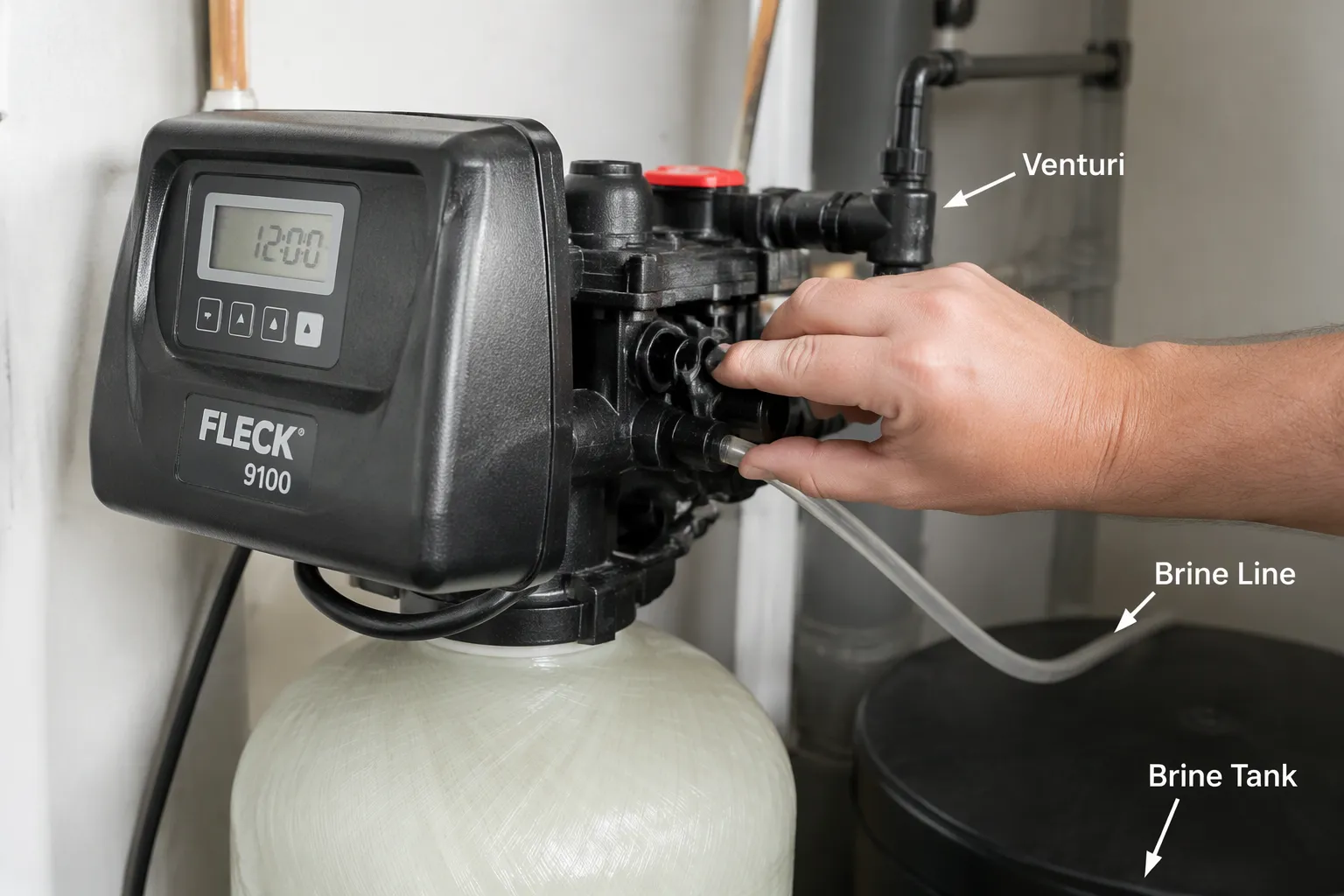
The brine valve on a Fleck 9100 controls brine draw during regeneration and brine tank refill afterward. This small component sits between the control head and the brine tank, and it opens and closes water flow to that tank in step with the timer and the venturi. You get two distinct jobs from one part: pulling brine into the resin bed, then letting water back in to rebuild the brine supply. If you own a 9100 or 9100SXT, this page answers your question directly. No softening basics, no detours. You will see what the valve does, how each cycle works, and what to check when brine stops moving.
Key Takeaways
The brine valve does two jobs: it pulls brine from the tank during regeneration and lets water back in to refill.
During brine draw, the tank level should drop about 15 minutes into the cycle. A steady drop means the valve works.
If the brine tank stays full after regeneration, check the brine line and venturi for clogs or kinks.
Set the brine fill time to match the water flow rate. This ensures the right strength for the next brine batch.
A bad air-check valve can break suction. Listen for gurgling near the end of the draw as a warning sign.
Brine Valve Function
The brine valve is one piece of the Fleck 9100's fully adjustable 5-cycle control. That control runs the whole regeneration sequence, and the brine and slow rinse cycle happens in downflow. Water pushes down through the resin bed during this stage. The valve sits in that sequence as the gatekeeper for the brine tank. It opens and closes the water path to the tank in step with the timer. The venturi supplies the suction that moves brine. You can think of the valve as the switch and the venturi as the pump.
Brine Draw Role
During brine draw, the valve opens the path from the brine tank and pulls brine into the resin bed. The brine moves down through the resin and regenerates the softener. This step restores the resin's ability to soften water. The draw depends on the venturi, which creates the suction that moves brine out of the tank. The timer holds the valve open for the set draw period. You can watch the tank level during draw. A working draw pulls the brine level down. A level that does not move tells you the valve or the line has a problem.
One useful detail: the brine flow control is directional. It only restricts flow during refill, not during draw. That design matters when you troubleshoot, because a clogged flow control button will not stop the draw itself. It will show up as a refill problem instead. So a weak draw points you toward the venturi or the brine line, not the button.
The Fleck 9100 only uses electricity for the 2 hours it regenerates. During normal service, it mechanically counts water usage. When the capacity set on the Program Gallon Wheel is used up, the unit activates the timer motor and then the drive motor to operate the pistons. So the valve's draw action follows a mechanical count, not a constant electrical signal. That fact helps you rule out electrical faults when draw fails on a unit that still counts gallons.
Brine Tank Refill
After regeneration, the valve allows water back into the brine tank. That water dissolves salt and makes brine for the next cycle. The refill step closes the loop: draw empties the tank, refill fills it again. Refill time must match the flow rate of water into the tank after regeneration. That flow rate determines how much water you add and how strong the next brine batch will be. If the flow control button inside the fitting clogs with debris, refill slows or stops. You can remove the brine tube and the brass piece it goes into to check that button. A clean button keeps refill on schedule, and a scheduled refill keeps the next draw ready.
Check the tank level after a cycle to confirm refill worked. A tank that stays low after regeneration tells you the refill path is blocked or the refill time is too short. A low tank also means the next draw has less brine to work with. Keep enough salt in the tank so the refill water can dissolve it. The water needs contact with the salt to reach the right strength.
How the Brine Valve Works
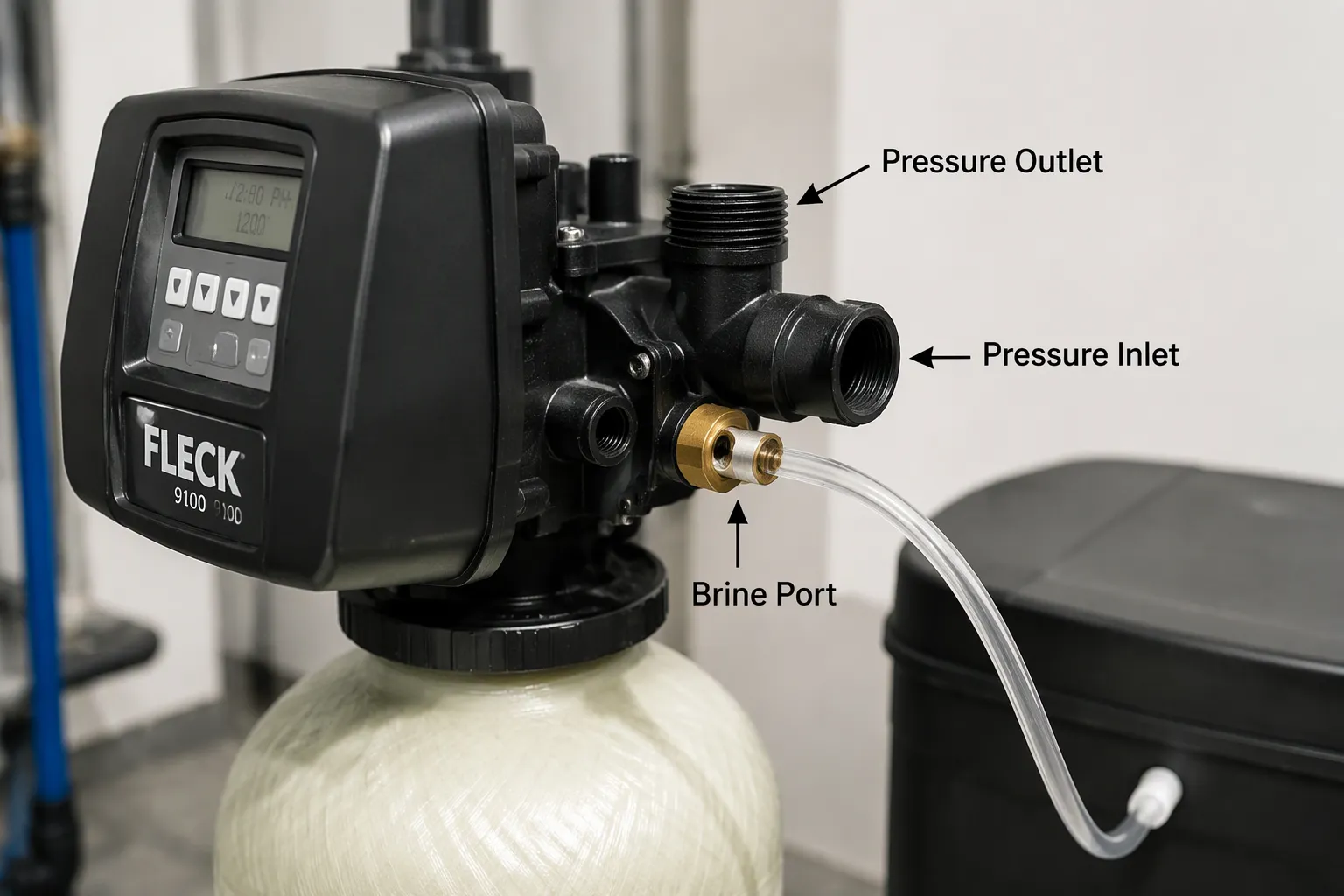
The venturi valve drives the whole brine operation. It has three ports: a pressure inlet, a pressure outlet, and a brine port. Water enters through the pressure inlet and exits through the pressure outlet. That flow creates suction at the brine port. The suction pulls brine from the tank into the valve. A clean venturi makes strong suction. A venturi with debris makes weak suction. The brine line connects the valve to the brine tank. On twin tank units, the brine line routes through a hole in the back of the brine tank to the fitting on the side of the valve. Check that line for kinks, salt bridges, or hardened buildup when performance drops. A clear line keeps the valve working at full strength.
The brine port fitting deserves a look during service. Remove the brine tube and inspect the brass piece it enters. Debris here restricts flow and mimics a venturi fault. Clean the fitting before you replace any part.
Brine Draw Cycle
Backwash comes first. Brine draw follows it. Here is the sequence you will see:
Brine draw starts while brine remains in the brine tank. With the correct quantity of brine, the tank normally empties within about 15 minutes.
Slow rinse begins once the brine is drawn. The air-check valve at the bottom of the brine tank closes at this point to prevent air from being drawn.
The remaining ~45 minutes of the 60-minute BD cycle pushes the brine through the resin and rinses remaining sodium, chloride, calcium and magnesium to drain.
The BD cycle is programmed as 60 minutes, which is usually correct. Watch the tank level during the first stage. A level that drops steadily tells you the brine valve and venturi are working. A level that stays put points to a suction fault or a blocked line. A working air-check valve matters too. If it sticks open, air enters the line and the draw weakens. Listen for gurgling near the end of the draw. That sound means air is entering, and the check valve needs attention. The draw stage depends on a sealed brine line. Any air leak breaks the suction and slows the pull.
Brine Refill Cycle
Refill reverses the flow. The brine valve opens the path and water returns to the brine tank. That water dissolves salt and rebuilds the brine supply for the next regeneration. Set the brine fill time based on the flow rate of water into the brine tank after regeneration. That flow rate determines how much water you add. The amount of water sets the strength of the next brine batch. A fill time that is too short leaves a weak batch. A fill time that is too long wastes salt and water. Check the tank after a full cycle. The level should match your setting. Keep enough salt above the water line so the refill water can dissolve it. Hard salt crust at the bottom slows dissolution. Break up crusted salt before you trust the refill level. Mark your fill level on the tank wall with tape. A quick glance then confirms each cycle.
Brine Valve Problems
Common Symptoms
The most common Fleck 9100SXT complaint is a failure to draw brine. Two culprits cause most of these failures: a venturi valve fault or a blockage in the brine line. You will notice the symptom during regeneration. The brine tank level stays high and does not drop. The unit finishes its cycle, yet the water stays hard. That result makes sense. Without a proper draw, the resin bed never regenerates, so hardness minerals pass straight through to your taps.
A venturi fault kills the suction that moves brine. The venturi has three ports: the pressure inlet, the pressure outlet, and the vacuum inlet. The difference between the pressure inlet and outlet is the amount of vacuum draw. A weak pressure difference means a weak pull on the brine tank. Debris in the injector block, nozzles, or screens causes this drop. A blocked or kinked brine line causes the same symptom from the other side. The valve pulls, but nothing reaches it.
Basic Troubleshooting
Tie every check to the valve's two jobs. For draw problems, start at the brine line. Confirm the line is clean and free of kinks or hardened salt. Then remove and inspect the brine injector block, nozzles, and screens. A clean venturi restores suction. For refill problems, check the flow control button inside the fitting and confirm your fill time matches the actual flow into the tank. The valve body itself rarely fails. Treat the body as sound context and focus on the flow path.
There are 3 ports to a venturi valve: The pressure inlet, the pressure outlet, and the vacuum inlet.
(The difference between the pressure inlet and outlet is the amount of vacuum draw)
Work one job at a time. A tank that will not empty points to draw. A tank that will not refill points to the fill path. Match the symptom to the job, and the brine valve diagnosis becomes straightforward.
The brine valve on your Fleck 9100 handles two jobs. It pulls brine from the tank during regeneration, and it lets water back in afterward to rebuild the supply. One part, two clear roles, both tied to the timer and the venturi.
Match each symptom to the job it belongs to. A tank that will not empty points to draw. A tank that will not refill points to the fill path. That simple habit makes diagnosis faster and keeps you from replacing parts you do not need.
FAQ
How long should the brine draw take on a Fleck 9100?
The draw stage normally empties the brine tank in about 15 minutes. The full brine and slow rinse cycle runs 60 minutes, so the remaining ~45 minutes rinses the resin. Watch the tank level drop to confirm the draw works.
Why does my brine tank stay full after regeneration?
A full tank after a cycle points to a failed draw. Check the brine line for kinks or hardened salt first. Then inspect the venturi injector block, nozzles, and screens for debris. A clean venturi restores the suction that pulls brine from the tank.
What causes weak suction at the brine port?
Debris in the venturi usually causes it. The valve creates vacuum from the pressure difference between its inlet and outlet. A clogged injector block or screen shrinks that difference. Clean the injector parts and confirm the brine line is clear.
How do I set the brine fill time?
Set fill time to match the actual flow rate of water into the tank after regeneration. That flow rate decides how much water you add. The water amount sets the strength of the next brine batch. Mark your target level on the tank wall with tape.
Can a bad air-check valve stop the brine draw?
Yes. The air-check valve sits at the bottom of the brine tank and closes once brine is drawn. If it sticks open, air enters the line and breaks the suction. Listen for gurgling near the end of the draw as a sign.