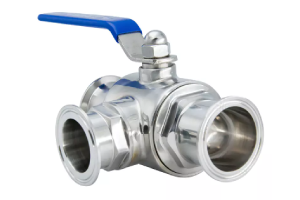
To choose the right sanitary fittings for stainless steel process lines, you should consider strong materials, proper certifications, and compatibility of the pipes. The surface finish and connection types are crucial as they help prevent contamination and maintain cleanliness. If you do not choose the right sanitary fittings, you may encounter various issues. Rough finishes can trap residues, while poor welds can lead to buildup or rust. Additionally, changes in fittings can create small spaces that are difficult to keep clean. By choosing the right sanitary fittings for your stainless process lines, you can avoid stagnant water and reduce the need for extensive cleaning. Always select fittings that are appropriate for your industry and apply smart tips when making your selection.
Damage to surface finishes can create areas where bacteria can thrive.
Poor welds can trap residues and complicate the cleaning process.
Changes in fittings can result in small spaces that compromise cleanliness.
Rough finishes can hold onto bits and residues, making cleaning challenging.
Poor welds can lead to buildup and rust due to cracks or holes.
Incorrect fitting styles can create stagnant water spots that are difficult to clean.
Key Takeaways
Pick sanitary fittings made from strong materials like 304 or 316 stainless steel. This helps stop rust and keeps things clean.
Choose gaskets that work for your system. This stops leaks and makes a tight seal. It helps keep your process line clean.
Make sure the pipe sizes and fittings match. This stops leaks and blockages. It helps your system work well and stay safe.
Find fittings with the right certifications like 3A and FDA. This makes sure they are safe and follow the rules.
Choose fittings with smooth surfaces. This makes cleaning easy and stops bacteria from growing. Try to get a roughness of Ra 0.8 microinches or better.
Choose the Right Sanitary Fittings: Key Factors
When you pick sanitary fittings for stainless steel process lines, you should look at three things. First, check what material the fittings are made of. Next, think about the gasket material and how it seals. Last, make sure the pipe diameters fit together. Each of these things helps keep your system clean, safe, and working well.
Material Selection: 304 vs. 316 Stainless
Stainless sanitary fittings come in different types. The most common are 304 and 316/316l stainless steel. You need to know how they are different before you choose.
Property | 304 Stainless Steel | 316 Stainless Steel |
|---|
Corrosion Resistance | Excellent in general environments | Superior—especially in chloride and marine media. |
Vulnerability | Suitable for general indoor/outdoor use but vulnerable to chloride-induced pitting. | Far more resistant to chlorides, acids, and marine conditions due to the addition of molybdenum. |
304 stainless steel costs less and is used a lot.
316 stainless steel fights rust better, so it works well in tough places.
Knowing these facts helps you pick the right stainless steel for your sanitary tubing.
You will see 316l stainless steel in places that need extra protection. It is good for harsh chemicals or saltwater. This type has molybdenum, which helps stop rust. If you work with food, drinks, or medicine, you may need 316l stainless steel. It gives the best results. 316 stainless steel costs more than 304, usually by 20-30%. This is because it has more nickel and molybdenum. If you do not have a big budget and do not use harsh chemicals, 304 stainless steel might be enough.
Picking the right material also helps you stop rust. Stainless sanitary fittings made from 316l stainless steel last longer in hard places. They are easy to clean and help stop contamination.
Gasket Material and Sealing
Gaskets are small but important parts of stainless sanitary fittings. They make a tight seal between fittings and adapters. This stops leaks and keeps your process line clean. You need to pick the right gasket material for your system.
Gasket Material | Temperature Resistance (°F) | Chemical Resistance Properties |
|---|
Nitrile Buna Rubber (U) | Intermittent: 240, Continuous: 210 | Good compatibility with moderately aggressive chemicals. |
Fluoroelastomer (FKM) | Intermittent: 410, Continuous: 380 | Handles oils, alcohols, acids, and alkalis well. |
Platinum Cured Silicone (PX) | High temperature properties | Excellent resistance to acids, bases, and steam. |
Ethylene-Propylene Diene Monomer (EPDM) | -65 to 300 | Excellent chemical resistance, but swells with oil-based products. |
Polytetrafluoroethylene (PTFE) | Unmatched temperature range | Exceptional chemical compatibility, but lacks elasticity. |
Non-metallic gaskets like rubber, Teflon, or PTFE are good for food and drinks.
Metallic gaskets, made from soft iron or stainless, are for high pressure and heat.
Composite gaskets mix both types for strength and flexibility.
Buna (Nitrile) gaskets are great for food and brewing. EPDM is used in medicine and food and is FDA-approved. If you pick the wrong gasket, you could get leaks or contamination. Your system might even stop working. Leaks can happen if the gasket does not fit the flange or if you use the wrong bolt torque. Always check and put in gaskets the right way to keep your stainless steel pipe system safe and clean.
Tip: Check your gaskets often for damage and change them when needed. This helps you stop leaks and keeps your sanitary process line working well.
Pipe Diameter Compatibility
You must match the inside and outside sizes of your stainless steel pipe and fittings. If you use the wrong size, you could get leaks, blockages, or safety problems.
Diameter Range | Wall Thickness Range | Importance for Leak Prevention |
|---|
1/2 inch to 8 inches | 0.065 inches to 0.120 inches | Diameter compatibility is critical to prevent leaks, especially in high-pressure environments. |
Leaks: If sizes do not match, gaps can cause leaks and contamination.
Reduced System Efficiency: Wrong sizes can block flow and slow things down.
Increased Maintenance Costs: If sizes do not fit, you need more repairs and spend more money.
Safety Hazards: Wrong sizes in high-pressure systems can be dangerous.
You should always use seamless stainless sanitary fittings and adapters that fit your pipe size. Seamless fittings help you avoid dead legs and let you drain everything. This makes cleaning easier and supports clean-in-place (CIP) rules. When you pick the right diameter, you spend less on repairs and keep your process line clean.
Note: Using seamless 316l stainless steel fittings gives you the best cleanliness and strength for your sanitary process lines.
Certifications and Compliance for Stainless Sanitary Fittings
3A, FDA, and Industry Standards
When you pick sanitary fittings, you need to check for the right certifications. These certifications help you follow safety rules and keep your products safe. The main standards come from groups like 3A, FDA, and ASME.
3A sanitary standards have rules for how fittings should be made and used. These rules help stop germs and make cleaning simple. Food and drink factories use these standards a lot.
The FDA checks if fittings are safe for food and medicine. You need FDA approval to show your equipment will not add bad chemicals to your product.
ASME-BPE is a standard for bioprocessing equipment. This standard cares about keeping things pure and being able to track parts, which is important for medicine and biotech.
You should also look for 3a-certified tri-clamp fittings. These fittings let you connect and take apart pipes without tools. They help you keep your system clean and safe.
Documentation and Traceability
You need good records to show your stainless sanitary fittings follow all the rules. These records help you prove your process meets cGMP standards and can pass checks.
Material certifications tell you what your fittings are made from. They help you meet FDA rules and support your paperwork for inspectors.
Testing records show your fittings passed pressure and cleaning tests. This is important to prove your equipment works right.
Traceability lets you track each fitting from the factory to your process line. This helps with quality control and keeps your products the same.
Cleaning validation shows you can remove all leftovers from your fittings. Smooth surfaces and good draining help with this step.
Tip: Always ask your supplier for all the paperwork. This helps you avoid problems during checks and keeps your process safe.
You should keep all your records in a safe place. Good records and traceability protect your business and your customers.
Connection Types for Fittings and Adapters
Tri-Clamp, Weld, and Threaded Options
There are different ways to connect fittings in stainless process lines. Each way has good points and bad points. Tri-clamp fittings are easy to put together and take apart. You do not need special tools for them. Welded connections stay in place and do not leak. They are best if you do not need to remove parts often. Threaded adapters are quick to use and simple to remove. But they might leak if you do not put them together right.
Here is a table to compare these connection types:
Connection Type | Advantages | Disadvantages |
|---|
Tri-Clamp | Fast to assemble and take apart, no welding needed | If not tightened well, leaks can happen, gaskets need to be changed sometimes |
Butt Weld | Stays in place, does not leak, good for high pressure | Costs more to install, needs skilled workers, must cut to take apart |
Threaded | Quick to put together, easy to remove | Needs careful assembly, can leak if shaken or heated |
Pick the connection type that fits your process and cleaning needs. Think about how often you will change or clean your fittings.
DIN and Other International Standards
There are different rules for sanitary fittings and adapters. ASME BPE makes sure fittings are easy to clean and stay sterile. It has strict rules for surface finish and material quality. DIN standards, like DIN 11850 and DIN 11851, help make strong and safe connections. These rules keep food and medicine safe. In 2014, DIN 11850 changed to EN 10357. This new rule works for all countries in the European Union.
Standard | Focus Area | Key Features |
|---|
ASME BPE | Clean and sterile fittings | Has strict rules for cleaning, material, surface finish, and size. |
DIN | Strong and safe connections | Keeps food and medicine clean, has rules for tubes and fittings. |
Selecting the Best Connection Type
You should think about a few things before picking a connection type. Look at how tight the seal is. Make sure it will not leak, even with high pressure. Check if the connection will last and keep your equipment safe. Safety is important. You want to stop leaks of steam, chemicals, or other fluids.
Check the pipe standard before choosing a connection.
Think about how the system works and how often you will fix it.
Make sure the connection fits the material in your process.
Tip: Always match your fittings and adapters to your process. This keeps your sanitary system safe, clean, and easy to care for.
Hygienic Design and Surface Finish
Surface Roughness and Cleanability
When you pick fittings for stainless process lines, look at how smooth they are. Smooth surfaces make cleaning easier and keep your system safe. If a surface is rough, bacteria can hide in tiny grooves. You should choose fittings with a surface roughness of Ra 0.8 microinches or better. This smoothness helps you clean well and spot contamination fast.
Surface Roughness (Ra) | Cleanability Impact |
|---|
Ra 0.8 microinches (0.8 μm) or better | Ensures effective cleanability and prevents bacteria accumulation |
Ra 0.8 microinches is the best surface roughness to use.
Smooth surfaces help you see if cleaning worked.
They also let you find contamination quickly.
Having smooth surfaces is important for hygiene. It helps you follow industry rules and keeps products safe. Always check the finish before picking sanitary fittings for your process line.
Crevice-Free and Drainable Design
Good design stops bacteria from growing in hidden spots. Crevice-free fittings do not have small gaps or corners. This means bacteria and dirt cannot hide anywhere. Self-draining fittings let all liquids flow out, so nothing gets stuck inside. Your stainless system should have these features for the best hygiene.
Feature | Impact on Bacterial Contamination |
|---|
Crevice-free design | Eliminates areas for microorganism accumulation |
Self-draining orientations | Ensures effective cleaning and prevents product holdup |
Controlled surface roughness | Minimizes microscopic asperities where biofilms can initiate |
Shapes that avoid dead legs and crevices keep things clean.
Open flow paths help you clean every part of the line.
Full-bore flow paths stop germs from getting trapped.
Hygienic design is not just about being clean. It also helps you follow safety rules and pass checks. Sanitary fittings with smooth surfaces and tight seals make your process line safer. When you focus on hygiene, you protect your products and your customers.
Industry-Specific Needs for Stainless Steel Pipe Systems
Food and Beverage Applications
You need to pick sanitary fittings that follow strict rules in food and drink lines. These fittings help keep everything clean and safe. Food-grade stainless steel, like 304 and 316, does not rust easily. It also stops bacteria from growing. Smooth surfaces are important because they make cleaning simple and stop germs from hiding. Shiny finishes help you keep things clean and follow food safety laws.
Here are some common sanitary fitting types for food and beverage lines:
Tri-Clamp fittings are easy to take apart and clean fast.
Welded fittings make strong connections for high-pressure systems.
Threaded fittings are good for low-pressure lines that are not as important.
Butt-weld fittings give smooth joints for medicine-grade uses.
Ball and sleeve fittings, barbed fittings, cam and groove fittings, and compression fittings let you use them for different jobs.
Rules help you decide what fittings to use. You must pick fittings that meet 3A Sanitary Standards, FDA rules, and ISO 9001 quality checks. These rules make sure surfaces are smooth and there are no small gaps.
Requirement | Description |
|---|
Sanitary Safety of Materials | Food-grade stainless steel keeps food safe and stops contamination. |
Surface Smoothness and Cleaning | Shiny finishes make cleaning easy and help keep food clean. |
Pharmaceutical and Biotech
Medicine needs very clean and careful work. You must use sanitary fittings that stop germs and keep things sterile. Leak-proof joints keep your products safe and the area clean. Aseptic valves and tubing let you fix things without losing sterility. Stainless fittings last a long time and do not rust, which is important for medicine.
You have to follow strict cleaning steps. Smooth surfaces help you stop germs and make cleaning easy. Materials must meet health and safety rules. You should use 316 stainless steel if you work with salty stuff to stop germs.
Tip: Always make sure your fittings meet FDA rules and other laws. This keeps your medicine safe and high quality.
Dairy and Specialty Industries
Dairy lines need even stricter sanitary fittings than regular food lines. Machines like pasteurizers and cooling tanks get cleaned and sterilized a lot. You must use fittings that do not get dirty and can handle strong cleaning chemicals. 3A Sanitary Standards help you pick fittings that pass tough checks.
You need fittings that are easy to clean and do not let bacteria grow. EHEDG certification means the design is clean and easy to wash. The right materials make sure your stainless fittings are safe and clean.
Note: Dairy fittings must handle hard cleaning and keep your products safe. Picking the right sanitary fittings keeps your dairy line safe and high quality.
Practical Tips for Choosing Stainless Sanitary Fittings and Adapters
Assessing Process Requirements
You should first think about what your process needs. Ask yourself how clean the system must be. Think about how fast things need to move through the pipes. Check if your system will have medium or high pressure. Use this table to help you make choices:
Design Requirement | Specification |
|---|
Surface roughness (Ra value) | Must be ≤ 0.8 μm for food-contact surfaces; ≤ 0.4 μm for demanding applications like dairy and beverage lines. |
Complete drainability | Horizontal runs must slope at a minimum gradient of 1:100 to ensure complete evacuation of cleaning solutions. |
No dead legs or crevices | All pipe sections must be fully swept by CIP flow; fittings must be crevice-free and short in length. |
Make sure your sanitary adapters fit these needs. This helps keep your process safe and clean.
Working with Suppliers
When you pick a supplier for adapters, check their quality and trust. Use this table to compare different suppliers:
Criteria | Description |
|---|
Dimensional Consistency | Ensures fittings maintain tight tolerances to avoid assembly issues like leakage or structural failures. |
Surface Finish Repeatability | Guarantees smooth internal surfaces to prevent contamination and facilitate cleaning. |
Weld Integrity | Ensures welds are executed properly to avoid cracks and leakage, maintaining system reliability. |
Documentation Traceability | Provides necessary documentation for compliance and accountability in case of audits or inspections. |
Long-Term Supply Stability | Ensures consistent product quality and reliable delivery schedules to avoid project delays. |
Ask for records and look at the finish of the adapters. Good suppliers help you get the right fitting for your process.
Common Mistakes to Avoid
People sometimes make mistakes when picking sanitary adapters. Here are some problems and ways to stop them:
If things are not lined up right, leaks can happen.
If the surface is not smooth, bacteria can hide and cleaning is hard.
Bad welds can cause rust and buildup.
Fittings that do not match can break after being used a lot.
To stop these mistakes, always check tubing standards and rules. Pick connections that are easy to clean and take care of. Treat gaskets as important parts. Make sure water can drain out and CIP can reach everywhere. Support and control movement to keep things safe.
Tip: Clean adapters often with gentle cleaners. Do not make them too tight. Check for rust or leaks. These steps help your stainless process line last longer and keep things running well.
You must pay attention to important things when picking sanitary fittings for stainless steel process lines. The table below shows what you should think about:
Decision Point | Details |
|---|
Material Choice | 304 is good for most jobs, 316 is better for tough or medicine places. |
Certifications | Find fittings with 3A, FDA, ISO 9001, and CE Marking. |
Connection Types | Choose Tri-Clamp, Welded, Threaded, or Butt-Weld depending on your needs. |
Surface Finish | Pick Ra ≤ 0.8μm and designs without crevices to keep things clean. |
Industry Needs | Make sure fittings fit your area, like food, medicine, or dairy. |
You should ask experts and check everything before making a choice. If you need more help, look for guides about sanitary fittings, best ways for your industry, and tips for picking valves or stainless steel grades.
FAQ
What is the difference between 304 and 316 stainless steel fittings?
304 stainless steel works for most jobs. 316 stainless steel is better when you need extra protection from chemicals or salt. 316 costs more, but it lasts longer in tough places.
How often should you replace sanitary gaskets?
Check your gaskets every month. Replace them if you see cracks, swelling, or leaks. Checking often helps you stop contamination and keeps your process line safe.
Can you mix different connection types in one process line?
You can mix connection types, but you must check if they fit together. Mixing can make cleaning harder and cause more leaks. Try to use the same type for easier care.
Why is surface finish important for sanitary fittings?
Surface finish helps you keep your process line clean. Smooth surfaces stop bacteria from hiding. Pick fittings with Ra 0.8 microinches or better for easy cleaning.
What certifications should you look for in sanitary fittings?
Look for 3A, FDA, and ISO 9001 certifications. These show the fittings are safe and high quality. Ask your supplier for papers to prove they meet the rules.