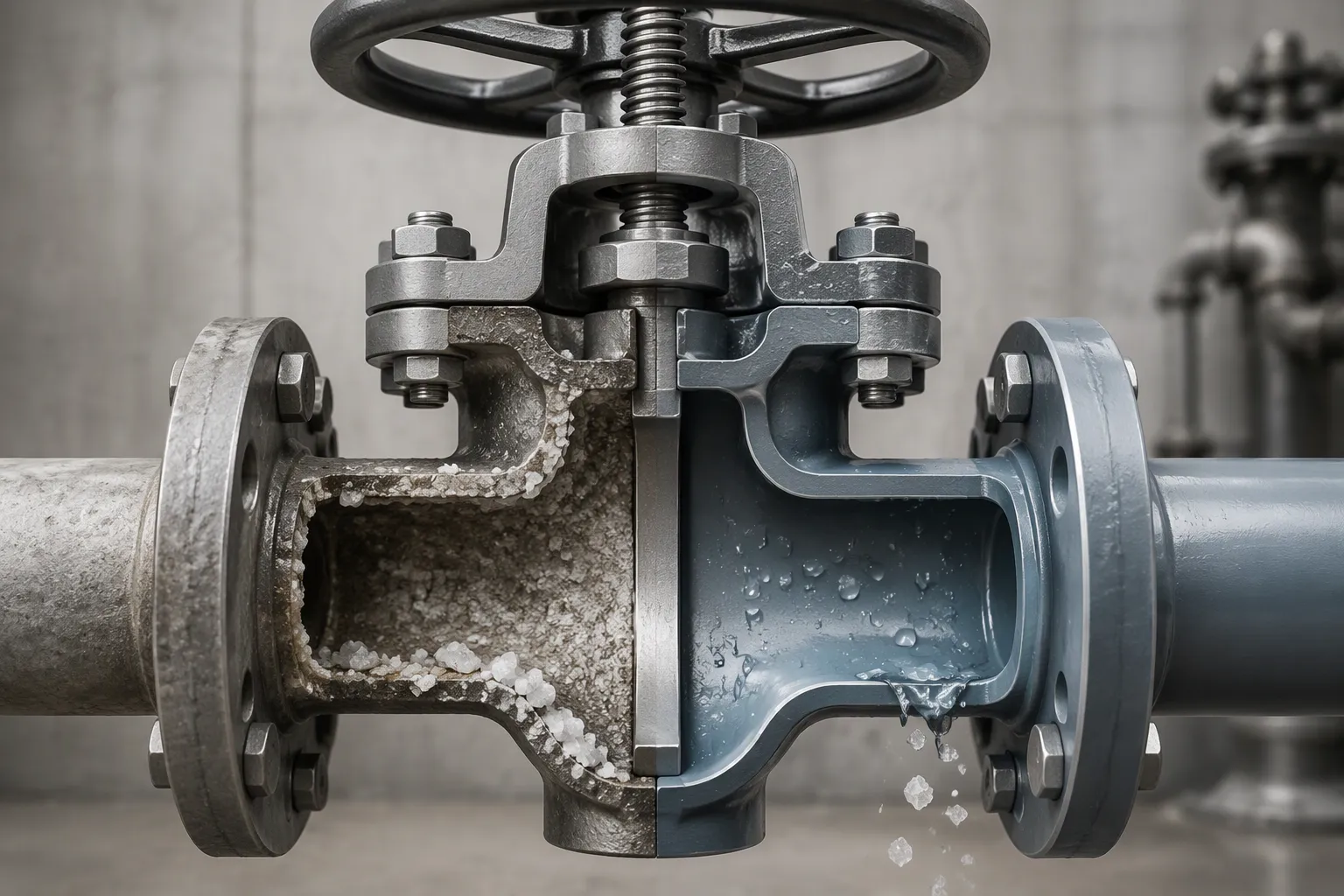
Anti-scaling coatings give you the most practical way to keep scale from bonding to gate valve surfaces. You get three takeaways here: choose and apply the right coating, maintain it, and respond fast when scaling starts. Each one protects your gate valves from stuck gates, seal damage, and lost flow. A good coating blocks scale nucleation and smooths the surface. A maintained coating keeps that barrier intact. A fast response stops small scale patches from spreading. You can prevent scaling on gate valves by coating them with the right material and a clear plan. Start with the material choice, then build the habits around it.
Key Takeaways
Choose the right coating for your valve's fluid and job. PTFE works for water, epoxy for corrosion, and ceramic for wear.
Apply the coating correctly with proper surface prep and curing. This creates a strong barrier that stops scale from sticking.
Maintain the coating with regular inspections and gentle cleaning. This keeps the barrier intact and prevents scale buildup.
Act fast when you see damage or scale. Use a chemical injection quill and plan repairs to stop small problems from spreading.
Start with an audit of your valves. Match each one to a coating and maintenance plan to avoid downtime and costly repairs.
Causes of Scaling on Gate Valves
Fluid, Water Quality, and Temperature Factors
Scale starts with what flows through your valve. Hard water carries dissolved calcium and magnesium. Heat and pressure changes push these minerals out of solution. They then settle on metal surfaces as mineral buildup. Suspended solids in the fluid add to the problem. Particles of sand, rust, or debris give scale crystals a place to anchor. Poor water quality speeds this process. High hardness, high alkalinity, and elevated chloride levels all make scale more likely.
Temperature swings cause scaling on gate valves in a second way. Hot fluid near a cooler valve body creates a temperature gradient. Minerals crystallize at that boundary. Valve material selection also matters. Rough cast iron surfaces trap particles more easily than polished stainless steel. You cannot change your water chemistry overnight. You can, however, understand which factors dominate your system. That knowledge shapes your coating choice later.
Operational Impact of Scale Buildup
The effects of scaling on gate valves touch every part of your operation. Scale sticks to the gate and the seat. The gate then jams when you try to open or close it. Forcing a stuck gate damages the stem and the actuator. Scale also makes sealing surfaces rough. The seat no longer seals tight, and the valve leaks. Flow capacity drops as scale narrows the passage. You then pay for repeated descaling, often with harsh chemicals or abrasive tools. Each descaling cycle removes a little more base metal.
The long-term cost adds up fast. Repeated cleaning shortens valve service life. You replace gate valves sooner than planned. Unplanned downtime interrupts production. Emergency repairs cost more than routine maintenance. Scale also hides corrosion underneath. Pitting can start while the surface looks clean. You end up with a valve that fails without warning. These risks make prevention through coating a sound investment. Understanding the causes helps you target the right fix.
How to Prevent Scaling on Gate Valves by Coating
Barrier and Surface-Smoothness Mechanism
You can prevent scaling on gate valves by coating because a coating changes the surface itself. Bare metal has tiny pits and rough spots. These features give scale crystals a place to grab. A coating fills those spots and forms a sealed film over the metal. This barrier protection against mineral adhesion blocks the chemical bond between scale and substrate. Scale crystals still form in the fluid, but they cannot stick to the wall.
Surface smoothness enhancement to resist deposits adds a second layer of defense. A smooth film offers few anchor points, so deposits slide off with the flow. Many coatings also lower surface energy. These hydrophobic and low surface energy coatings push water and dissolved minerals away. Water beads up instead of spreading out. Scale has less contact time and less chance to stick. Together, the barrier and the smooth finish fight scale nucleation and adhesion at the source. You get a surface that resists buildup from the first day in service.
Main Anti-Scaling Coatings and Best Fits
You will find several types of coatings for gate valves on the market. Each one fits a different job. Choosing the right coating for your application starts with your fluid and your operating conditions.
Fluoropolymer coatings, with PTFE as the common choice, give strong general anti-scaling performance. PTFE offers very low surface energy and a slick finish. Scale has a hard time bonding to it. These coatings suit potable water, mild chemicals, and moderate temperatures. They work well in gate valves that cycle often and need a clean, non-stick bore.
Epoxy-based coatings are great in corrosion-plus-scale service. Epoxy forms a hard, tightly bonded film. It resists chemical attack and seals the metal from harsh water. You will see epoxy-based coatings on gate valves in wastewater, cooling loops, and mildly acidic lines. They give you corrosion control and scale resistance in one system.
Ceramic coatings fit abrasive and high-wear duty. Ceramic offers excellent hardness and wear resistance. It handles slurries, sand-laden fluid, and high-velocity flow. The hard surface shrugs off particle impact and keeps its smoothness over time. Ceramic coatings for gate valves make sense where mechanical wear drives failure, not chemistry alone.
All three options share one payoff. The benefits of coating gate valves go beyond scale control. Coatings on gate valves also cut corrosion, because the film separates metal from the fluid. Less corrosion and less scale mean fewer repairs. Coated gate valves last longer and hold their seal. That extended service life is the real return on your coating investment.
Applying Coatings to Gate Valves by Coating Best Practices
Surface Preparation and Application Steps
Good results with coatings for gate valves start long before the spray gun fires. Surface preparation decides how well the film bonds. Follow this sequence for reliable work on gate valves by coating:
Disassemble the valve and strip old scale, grease, and rust from the gate, seat, and body bore.
Profile the metal with grit blasting or a comparable method. A rough, clean anchor pattern gives the film a mechanical grip.
Mask threads, sealing faces, and stem areas that must stay bare.
Confirm your choice by choosing the right coating for your application — match the chemistry to your fluid, temperature, and wear duty.
Apply the coating in thin, even passes. Keep the gun at a steady distance and overlap each pass.
These application techniques for valve coatings reward patience. Thick single passes trap solvent and cause runs. Several thin layers build a uniform film instead. Good coating application methods also include a tack-free flash-off between passes. This step lets solvents escape before the next layer lands.
Curing and Inspection Checks
Curing turns the wet film into a hard, protective coatings barrier. Follow the coating maker's cure schedule exactly. Most systems need a staged bake or a controlled ambient cure. Heat too fast, and the film blisters. Heat too slow, and the coating never reaches full hardness. Track oven temperature and dwell time for every batch.
Readings within the maker's stated range at several points
Adhesion
A pull-off or tape test with no lifting
Finish
Smooth surface, no runs, pinholes, or grit
A failed check means strip and recoat. Never patch a defect and ship the valve. One weak spot becomes a scale anchor point later. Solid inspection protects your coating investment and keeps the gate valves scaling-free for years.
Maintain and Restore Coatings to Prevent Scaling on Gate Valves
Routine Maintenance and Inspection
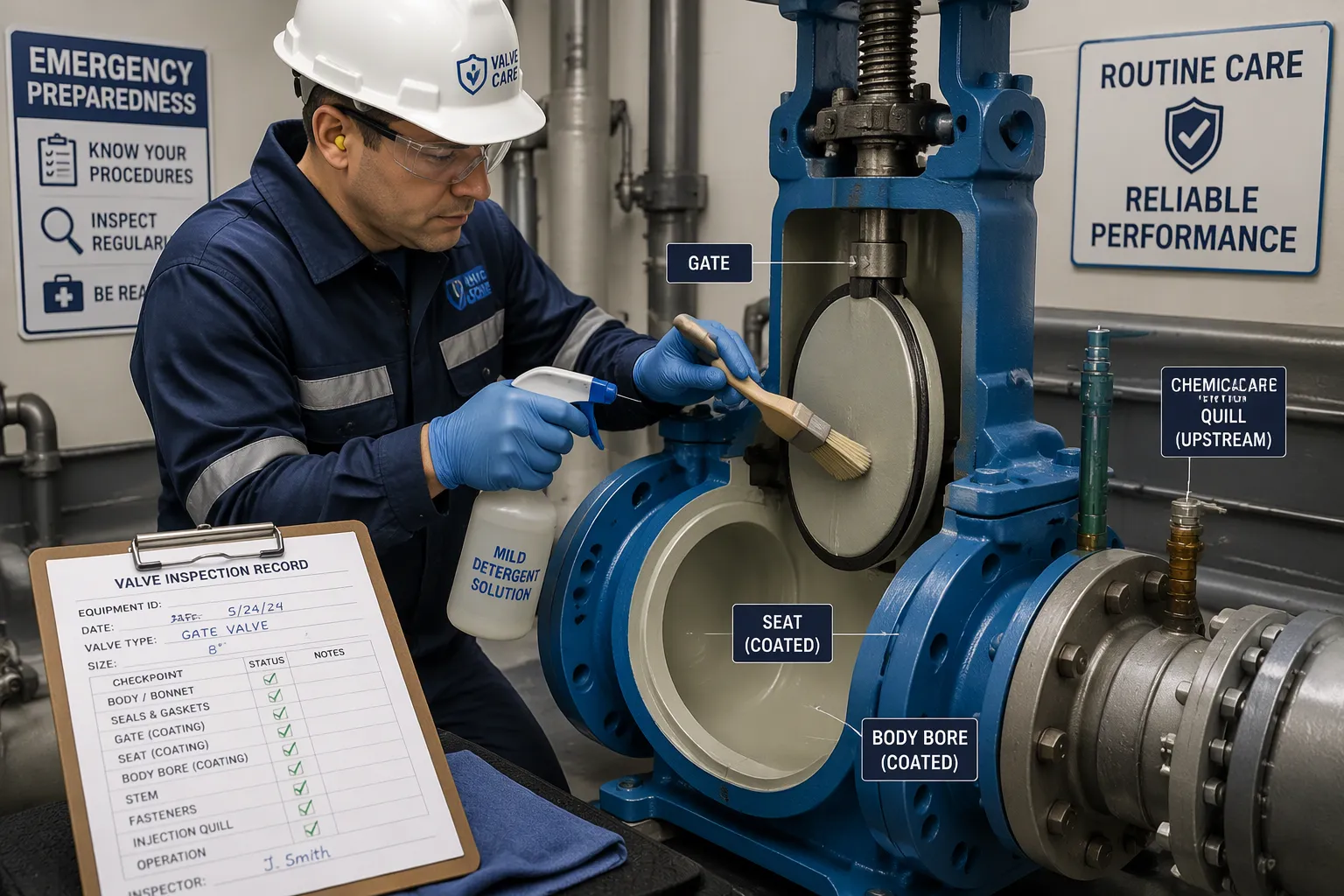
A coating only works while it stays whole. Put a scheduled inspection on your maintenance calendar. Check every coated valve at a set time based on your fluid and how often it cycles. Look at the gate, the seat, and the body bore. Watch for chips, blisters, and worn spots. Finding small flaws early keeps them from turning into scale anchors.
Cleaning needs the same care. Use gentle methods only. Soft brushes, mild detergents, and low-pressure rinse water protect the film. Never use harsh chemicals or abrasive tools. Strong solvents can break down the polymer chain. Abrasive pads wear away soft seats and scratch the film. Aggressive cleaners also break down the elastomers in the seals. One careless cleaning session can undo months of protection. These maintenance tips: prevent scaling on gate valves by coating work best when your crew follows them every time.
Keep simple records for each valve. Write down the inspection date, the film condition, and any cleaning done. Patterns show up over time. You may find that one line scales faster than another. That signal points to a fluid or temperature problem upstream. Good records also tell you when recoating is due. You then plan the work instead of reacting to a failure.
Emergency Fixes for Damaged Coatings
Scale will sometimes win a round. A damaged patch lets minerals bond again. Act fast, and you stop the spread. Install a chemical injection quill upstream of each valve. The quill lets you dose the line for periodic scale removal without taking the valve apart. For calcium carbonate scale, dilute hydrochloric acid at 0.5 percent concentration can be used for scale removal. Follow your site's safety rules for acid handling, and flush the line afterward.
Plan the repair path before you need it. Inspect the damaged area and judge the size. Small defects may take a spot repair. Larger areas call for full reapplication. Keep touch-up materials in stock so a repair does not wait on a purchase order. Schedule the recoating during a planned outage. This approach protects the benefits of coating gate valves over the long run.
Emergency fixes buy time, not permanence. A patch that fails again signals a deeper problem. Review the fluid chemistry and the application quality. Then correct the root cause. Fast action on coatings on gate valves keeps a small defect from becoming a stuck gate. That discipline helps you prevent scaling on gate valves by coating them and keeping the film whole. It also shows why you prevent scaling on gate valves with a plan, not luck. Every hour spent on coatings on gate valves today saves a repair tomorrow. A single gate valve left unprotected can stall a whole line. Treat each coating as a living system that needs care. You will then hold the upper hand against scaling on gate valves for years.
You now hold three pillars for a scale-free valve program. First, select and apply the right coating for your fluid and duty. Second, maintain that film with routine inspection and gentle cleaning. Third, act fast when a defect appears. These habits prevent scaling on gate valves by coating them with a durable barrier. Prevention through coating costs far less than repeated descaling or early valve replacement. You avoid downtime, seal damage, and lost flow.
Start today. Audit your current gate valves. Match each one to a suitable coating and a clear maintenance plan. This simple step helps you prevent scaling on gate valves for years. Good protective coatings reward that effort.
FAQ
Which coating fits my valve best?
Match the coating to the job. PTFE works well for general anti-scaling in water and mild chemicals. Epoxy is good for service with both corrosion and scale. Ceramic fits abrasive, high-wear flow. Each option does well within its own range.
How long does an anti-scaling coating last?
There is no fixed number. Film life depends on your fluid chemistry, how often the valve cycles, and how you clean it. A scheduled inspection catches wear early. You then recoat during a planned outage instead of a failure.
Can I clean a coated valve with harsh chemicals?
No. Strong solvents break down the polymer film. Abrasive pads scratch the surface and wear soft seats. Use soft brushes, mild detergents, and low-pressure rinse water instead. Gentle cleaning keeps the barrier whole.
What should I do when scale appears on coated gate valves?
Act fast. Install a chemical injection quill upstream for periodic scale removal. For calcium carbonate scale, dilute hydrochloric acid at 0.5 percent concentration can be used. Then plan a spot repair or full reapplication for the damaged area.