Proper storage and maintenance are very important for hydraulic gate valves. They stop rust, seal failure, and working problems. Careless handling creates real dangers. A damaged hydraulic actuator can stop the valve from opening. A rusty gate can get stuck in the body. A weak seal can leak under pressure. You need a steady plan to properly store and maintain backup gate valves. This guide gives you clear, useful steps. You will learn how to protect each unit and keep it ready for use. A valve that sits idle for months still needs care. Follow these practices, and your valves will work when you need them.
Key Takeaways
Keep valves inside in a dry, shaded spot with a steady temperature. This helps stop rust and damage to the seals.
Check the valves often for rust, cracks in the seals, and smooth operation. Also lubricate the stem so it keeps moving freely.
Before you install it, test the valve completely and write down all storage details so you can track it.
For long-term storage, add extra anti-corrosion coating and check it again every three to six months.
Why Proper Storage and Maintenance Matter
Preventing Corrosion and Seal Failure
Backup gate valves often sit in a warehouse for months before anyone installs them. That waiting period decides how the valve works later. Moisture, dust, and temperature changes harm an idle valve in quiet ways. Damp air settles on machined surfaces and starts corrosion. Dust gathers in the gate guides and scratches the sealing faces. Repeated heating and cooling cycles push condensation into tight spaces, and internal corrosion begins where you cannot see it.
Seals face the same problem. Rubber and elastomer seats dry out, harden, and lose their elastic grip over time. A damaged seal will leak under pressure, even if the valve body looks fine from the outside. Safe storage blocks these failure paths before they start. You control the environment, the packaging, and the inspection schedule. That control protects both the metal and the soft parts.
Ensuring Operational Readiness
A steady maintenance routine during storage prevents costly downtime. Picture a valve pulled from the shelf after a year of neglect. The gate sticks, the hydraulic actuator hesitates, and the installation crew loses a full shift. Now picture the same valve after regular checks. The gate moves freely, the seals stay soft, and the unit drops into the line without delay.
Proper storage and maintenance also protects your budget. Repairing a corroded gate valve costs far more than routine care. You avoid emergency purchases, rushed shipping, and repeated labor. A simple schedule of inspection and lubrication keeps every unit ready. The valve works correctly the moment you need it, and that reliability pays for itself.
How to Properly Store Backup Gate Valves
Gate Valve Storage Environment
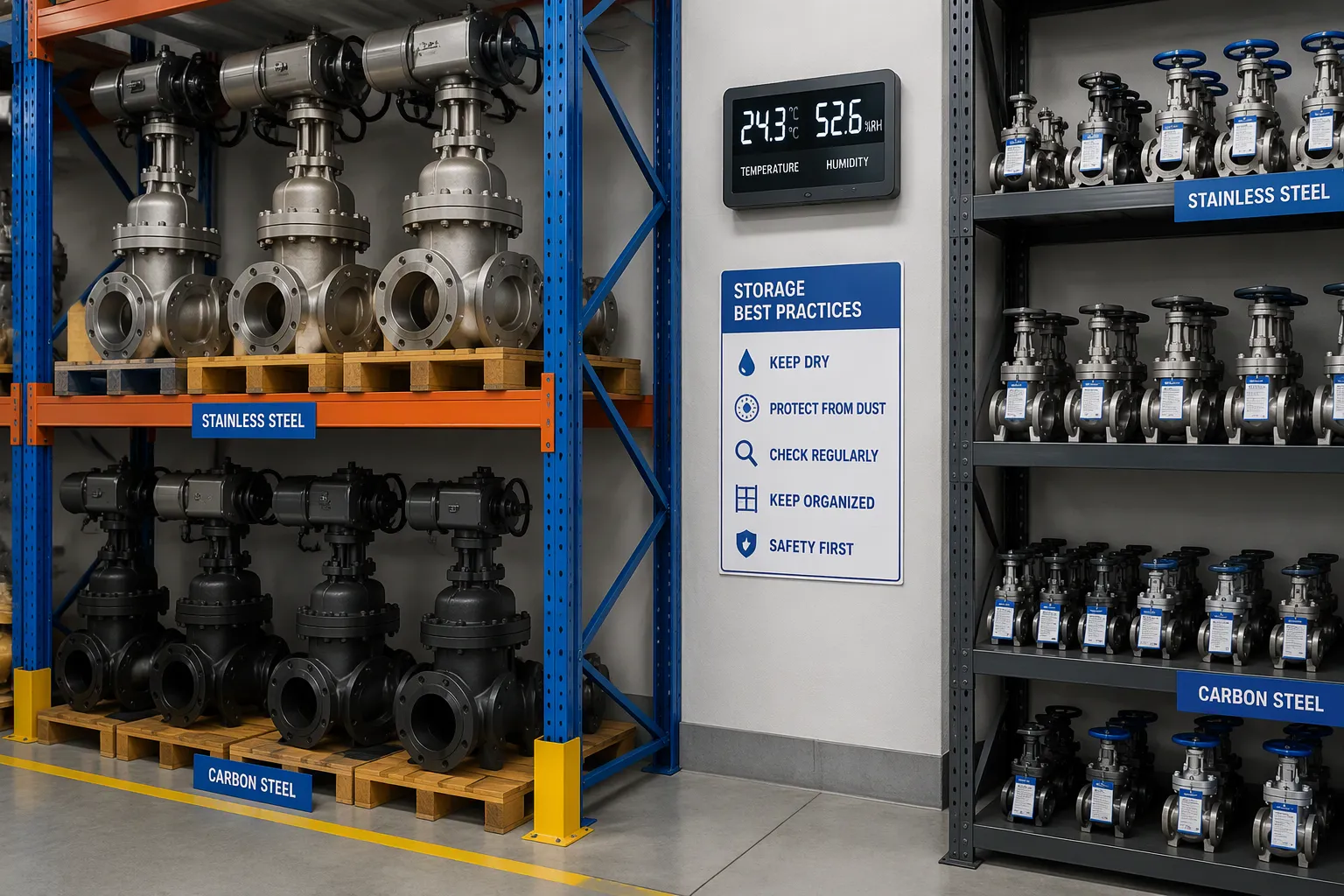
Store the gate valve indoors whenever you can. A dry, well-ventilated, shaded indoor facility is the ideal storage environment. This setting keeps moisture away from machined surfaces and lets air move freely around the valve body. Good airflow stops condensation from pooling on the gate and the hydraulic actuator. Shade matters too, because direct sunlight heats the metal unevenly and degrades rubber seals over time.
Temperature control deserves careful attention. Some guidelines recommend a range of -10°C to 30°C. Other sources recommend 5°C–40°C (41°F–104°F). Either range works well for most hydraulic gate valves. Pick one range and hold it steady. Large temperature swings cause condensation cycles, and those cycles drive corrosion inside the valve body.
Humidity control supports these temperature targets. Aim for low-humidity areas inside your warehouse. A damp corner near a loading dock will undo months of careful storage. Keep the storage zone indoor & dry, and check it after heavy rain. These storage best practices protect both the metal parts and the soft seals.
Packaging and Positioning
Positioning decides how well your storage protects each unit. Elevate every valve off the ground on pallets or racks. Ground contact invites moisture, dirt, and floor traffic damage. Raised storage also lets you inspect the valve body from all sides without lifting it.
Separate large and small valves during storage. Place small valves on shelves where they stay visible and easy to reach. Keep large valves on floor racks with clear access for inspection. This split layout prevents heavy units from crowding small ones and crushing their packaging.
Material separation adds another layer of protection. You should separate stainless and carbon steel gate valve units on different racks. Carbon steel sheds particles that can settle on stainless surfaces and trigger localized corrosion. A simple physical gap between the two groups solves this problem.
Outdoor storage is possible, but it demands extra care. Use protective covers that shield the valve from weather conditions. Avoid direct sunlight, rain, and dusty conditions at all times. Covers must breathe, so trapped moisture can escape. These backup gate valve storage methods keep outdoor units safe for short periods. For long-term holding, move the valves back inside.
Follow these steps, and you will properly store backup gate valves with confidence. Sound storage methods protect your investment from day one.
Maintenance During Storage
Gate Valve Inspection and Testing
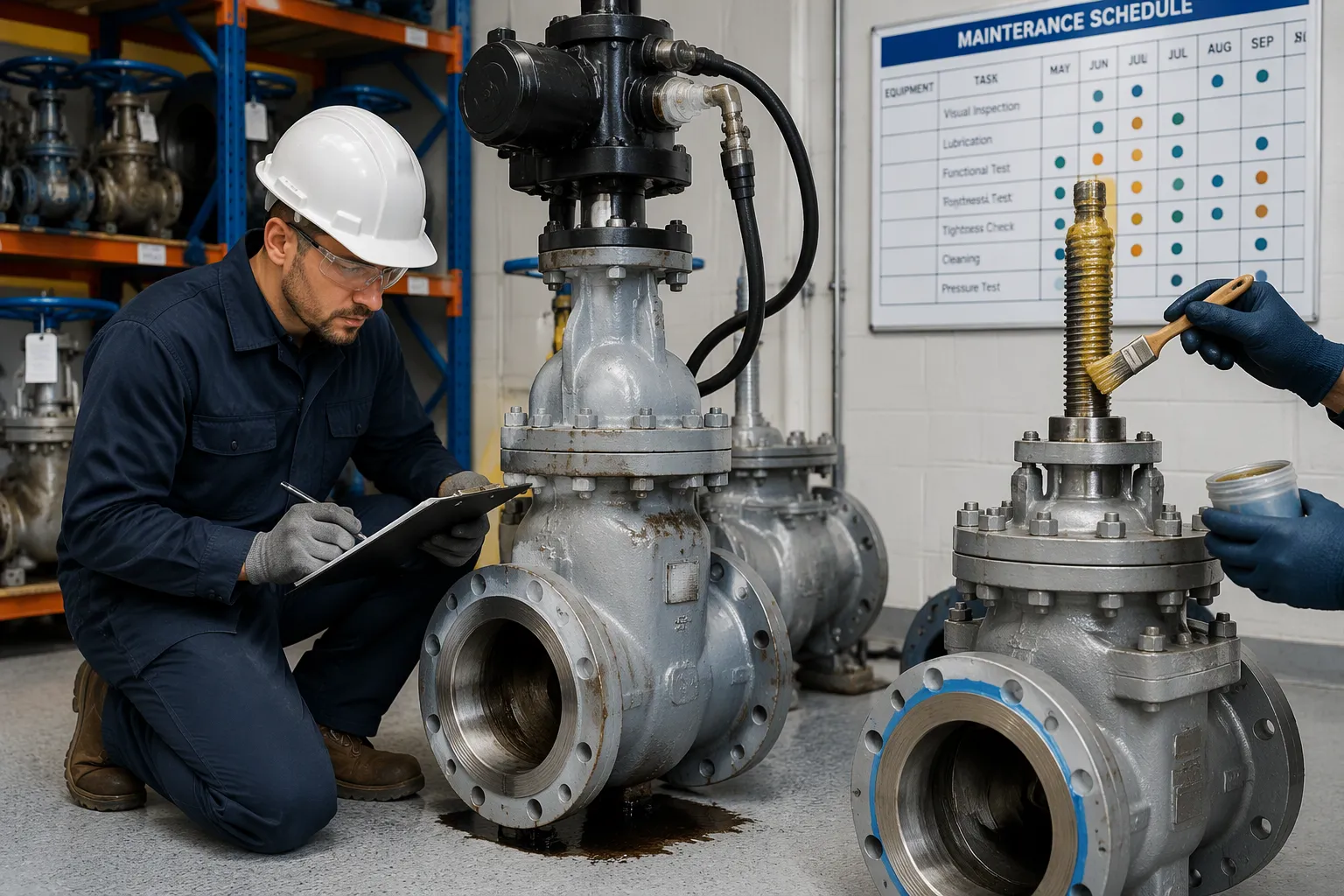
Make a regular inspection schedule and follow it. Walk through the storage area and look at each unit with your own eyes. Check the valve body for rust spots, scratches, and dust buildup. Look at the sealing faces for cracks or hardening. Watch for leaks around the hydraulic actuator and the stem packing. A small oil stain under the actuator means a seal has started to fail. Find that stain early, and you avoid a much bigger repair later.
Operation testing should be on the same schedule. Open and close the gate by hand or with the actuator. The gate should move freely through its full travel. The hydraulic actuator should respond smoothly, with no hesitation or strange noise. A sticky gate often means debris has gotten into the guide slots. A slow actuator often points to a fluid leak or air in the line. Test each unit on a fixed cycle, and write down the results. This regular inspection habit keeps small faults from turning into failures.
Lubrication and Anti-Corrosion
Put a suitable lubricant on the valve stem on a regular basis. A thin, even film protects the stem threads from rust and keeps the gate moving smoothly. Use a lubricant rated for your storage temperature range. Wipe away old grease before you put on fresh product. Grit trapped under new grease will wear the stem over time. Lubricate stems on every unit in the rotation, not just the ones you tested that day.
Protect exposed surfaces with an anti-corrosion coating. Machined faces, flange edges, and the gate guide area all need a barrier against damp air. Choose a coating you can remove easily before installation. Follow lubrication best practices for your specific valve model, and check the manufacturer's guidance on compatible products. These steps form the core of good gate valve maintenance during storage.
One operational tip deserves a place in your routine. Close the valve while the media is flowing, not after the pump or flow shuts down. Sediment settles when flow stops, and a gate that closes into that sediment may not seat fully. Train your team on this point, and add it to your maintenance checklist. Proper storage and maintenance protect the valve, and this simple habit protects it in service too.
Pre-Installation Checklist
Final Inspection and Verification
Do a full visual inspection before the valve leaves the warehouse. Check the valve body for dents, cracks, and rust spots. Look at the gate for scratches and debris in the guide slots. Examine the seal for hardening, cuts, and flattening. Inspect the hydraulic actuator for oil stains, loose fittings, and damaged hoses. Clean away any dust or grit you find. A dirty valve can carry debris into the line on day one.
Make sure operation testing has been done and recorded. Cycle the gate through its full travel one last time. The gate valve must close fully and smoothly, with no sticking and no odd noise from the actuator. If the gate hesitates, stop and find the cause before installation. A valve that fails this check will fail again under pressure.
Documentation and Tracking
Write down every detail that shaped the valve's time in storage. Record the storage location, the temperature range, and the humidity level. Log each inspection date and each maintenance action, including lubrication and coating touch-ups. Note any faults you found and how you fixed them. This paper trail gives you traceability. If a problem appears after installation, you can trace it back to a specific date and action.
Keep one record sheet per unit, and attach it to the valve or its packaging. Update the sheet at every check. Good records turn guesswork into facts, and facts protect your maintenance budget.
Long-Term Storage Recommendations
Extended Preservation Steps
Keep backup gate valves indoors for the whole storage time. A dry room with a steady temperature stops the condensation cycles that big temperature swings cause. These cycles push damp air into the valve body, and moisture settles on machined faces. Keep the room within the temperature range you already set for daily storage, and check it after seasonal weather changes. A steady indoor climate helps the valve more than any single treatment.
Apply heavier anti-corrosion protection for units that will sit for a year or more. Coat the gate guide area, flange faces, and stem threads with a thicker barrier product. Seal every port with caps or plugs to stop moisture from getting in. Tape the actuator connections and cover the hydraulic lines. These steps make a solid long-term storage protocol, and they cost little compared with a rebuild.
Periodic Re-Inspection Schedule
Set a re-inspection schedule of every three to six months. At each visit, check for corrosion on the body and the stem. Test seal integrity by looking for hardening, cracks, and oil stains under the actuator. Cycle the gate through its full travel to confirm smooth operation. Write down every finding on the unit's record sheet.
Adjust the interval to fit your site. A humid warehouse needs closer attention than a climate-controlled room. Move any unit that shows early rust to a drier spot and treat it right away. This inspection rhythm keeps your maintenance plan honest and your valves ready.
You now have a clear plan. Keep the valve indoors, control the temperature, and lift each unit off the floor. Check the body, seals, and actuator on a set schedule. Lubricate the stem and renew the anti-corrosion coating. These steps show you how to properly store each unit with care. A steady approach protects your investment for years.
Follow these guidelines, and the hydraulic gate valve will work reliably when you need it. You can properly store and maintain backup gate valves with confidence. Good storage and maintenance turn idle stock into reliable backup gate valves. Start these practices today. Contact the manufacturer or a qualified professional with any specific questions.
FAQ
What temperature range should I keep for stored gate valves?
You have two accepted ranges to choose from. Some guidelines recommend -10°C to 30°C. Other sources recommend 5°C–40°C (41°F–104°F). Pick one range and hold it steady. Large temperature swings cause condensation cycles, and that moisture drives corrosion inside the valve body.
How often should I inspect a valve in long-term storage?
Set a re-inspection schedule of every three to six months. At each visit, check the body and stem for corrosion. Test the seal for hardening and cracks. Cycle the gate through its full travel. A humid warehouse needs closer attention than a climate-controlled room, so adjust the interval to fit your site.
Can I store a hydraulic gate valve outdoors?
You can, but only with extra care. Use protective covers that shield the valve from weather, and avoid direct sunlight, rain, and dusty conditions. Covers must breathe so trapped moisture can escape. Outdoor storage suits short periods only. For long-term holding, move the valves back inside.
Why should I separate stainless and carbon steel valves?
Carbon steel sheds particles that settle on stainless surfaces and trigger localized corrosion. A simple physical gap between the two groups on different racks solves this problem. Keep small valves on shelves and large valves on floor racks at the same time.
When should I close the gate valve during operation?
Close the valve while the media is flowing, not after the pump or flow shuts down. Sediment settles when flow stops. A gate that closes into that sediment may not seat fully. Train your team on this point and add it to your maintenance checklist.