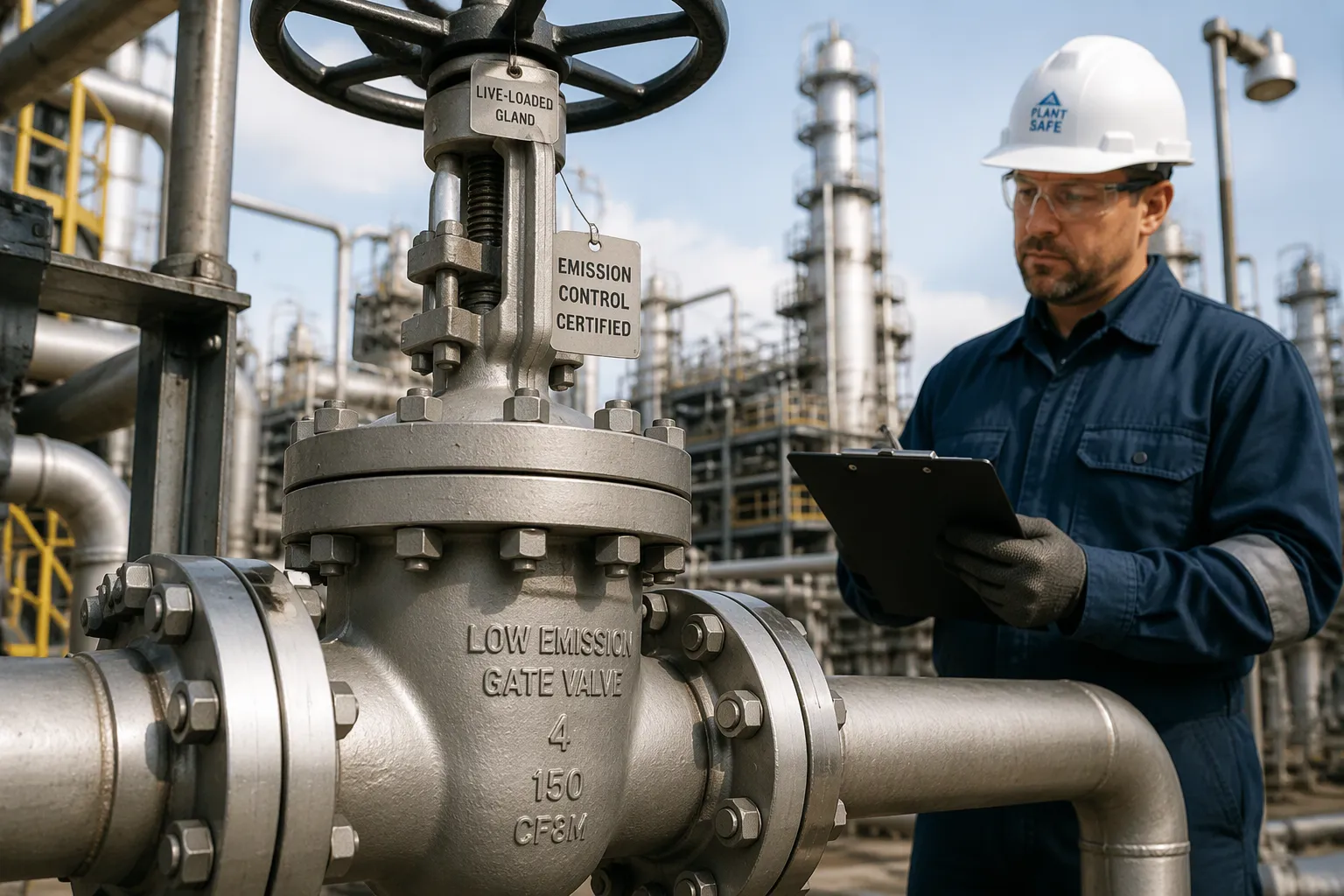
A low emission gate valve is an on-off isolation valve made to keep dangerous media inside the pipeline and out of the air. Standard gate valves let small amounts of gas escape through stem packing and body joints. These fugitive emissions get regulatory attention in petroleum refineries and chemical plants, where every sealed joint matters.
Valve leakage has real results. Lost product cuts into margins, escaping gases add to greenhouse gas inventories, and workers face exposure near hot or toxic service. Regulators now require documented, tested performance instead of good intentions.
Design details, certification standards, selection parameters, and service applications all shape real-world performance of Low Emission Gate Valves. Technical buyers who understand these factors choose valves that hold up in daily operation.
Key Takeaways
Low emission gate valves reduce harmful leaks by as much as 96% when compared to standard valves.
Key design features include special stem packing, live loading, and tight body joints.
Certification such as API 624 or ISO 15848-1 shows that the valve meets strict emission standards.
Pick valves by matching the pressure, temperature, media, and certification to your job.
These valves are very important in refineries, chemical plants, and pipelines. They help keep workers and the environment safe.
What Are Low Emission Gate Valves?
Definition and Purpose
A low emission gate valve is an industrial valve made to keep harmful media from getting out into the air. It uses better sealing to keep hazardous gases and liquids locked inside the pipeline. The valve body, stem, and bonnet create a containment boundary. Every joint on that boundary gets special care during design and assembly.
Gate valves work as on-off valves. Operators use them fully open or fully closed, never partly open to control flow. Flow can go in either direction, and the straight-through bore offers low fluid resistance. These traits make the gate valve a reliable choice for isolation duty in refineries, chemical plants, and pipeline systems.
The goal of the low emission design is simple. A fugitive emission control valve keeps the process fluid where it belongs. Every gram of gas that stays inside the pipe protects workers, cuts product loss, and keeps the plant within its permit limits. A well-designed low emission valve treats emission containment as a main job, not something added later.
Versus Standard Gate Valves
Standard gate valves do the same isolation job. The difference is in the sealing elements, especially the stem packing. Standard packing lets a small but steady amount of process gas escape around the stem. That release grows as packing wears, as the stem moves, and as temperature changes stress the material.
Low-E packing changes the result. Test data show that low-E packing can cut emissions up to 96% compared to standard packing. That number shows the core promise of low emission gate valves: the same on-off function with a small fraction of the leakage.
The contrast goes beyond packing. A low emission gate valve usually pairs upgraded packing with a live-loaded gland, a controlled body-bonnet gasket, and tighter machining tolerances. The wedge gate valve design also helps. Solid, flexible, and split wedges seat against the body rings with a wedging action that improves sealing at both the open and closed positions.
Buyers should treat these differences as a system. Strong packing cannot make up for a weak body joint. A premium gasket cannot fix a worn stem surface. Low emission valves deliver their advantage only when every sealing path gets equal engineering attention.
The difference matters most in volatile service. Light hydrocarbons, hydrogen, and toxic chemicals escape easily through small gaps. In these duties, the gap between a standard valve and a certified low emission gate valve turns directly into safety margin and regulatory compliance.
Leak Paths and Impacts
Stem Packing and Body-Bonnet Joints
Two sealing points are the main sources of emissions in a gate valve. The first is the valve stem packing, the material that seals the gap between the moving stem and the bonnet. The second is the body-bonnet joint, the fixed connection that holds the two pressure-containing parts together. Both points sit on the containment boundary, and both release fugitive emissions when they break down.
The stem packing system faces constant mechanical stress. Every open and close cycle pulls the stem through the packing rings. Thermal cycling makes the stem expand and contract, and the packing loses compression over time. Stem leakage usually rises as the packing wears, and the loss grows quietly until a survey finds it. The body-bonnet joint fails in a different way. Gasket creep, bolt relaxation, and corrosion at the flange faces open a slow path for voc leakage under pressure.
Safety, Environmental, and Cost Impacts
Uncontrolled valve leakage carries four costs at once. Product loss is the most direct. Escaping gas never reaches the customer, and the plant pays for it twice, once at purchase and again in lost margin. Greenhouse gas emissions follow the same path. Methane and volatile organic compounds released at the stem add to the site inventory and draw scrutiny during audits.
Safety exposure is the human cost. Workers who walk past a leaking valve breathe process gas, and a damaged packing set can grow into a larger release. Regulatory pressure closes the loop. Leak detection and repair programs now require plants to survey, tag, and fix leaking valves on a fixed schedule. A valve that fails a survey becomes a compliance item with a deadline attached.
The financial picture goes beyond the lost product. Fines, extra monitoring, and forced maintenance all add cost. In voc service, a single chronic leaker can pull a whole unit into a stricter inspection tier. Effective voc control starts at the sealing interface, and the two leak paths above define where that control must work.
Core Design Features
Valve Stem Packing System and Live Loading
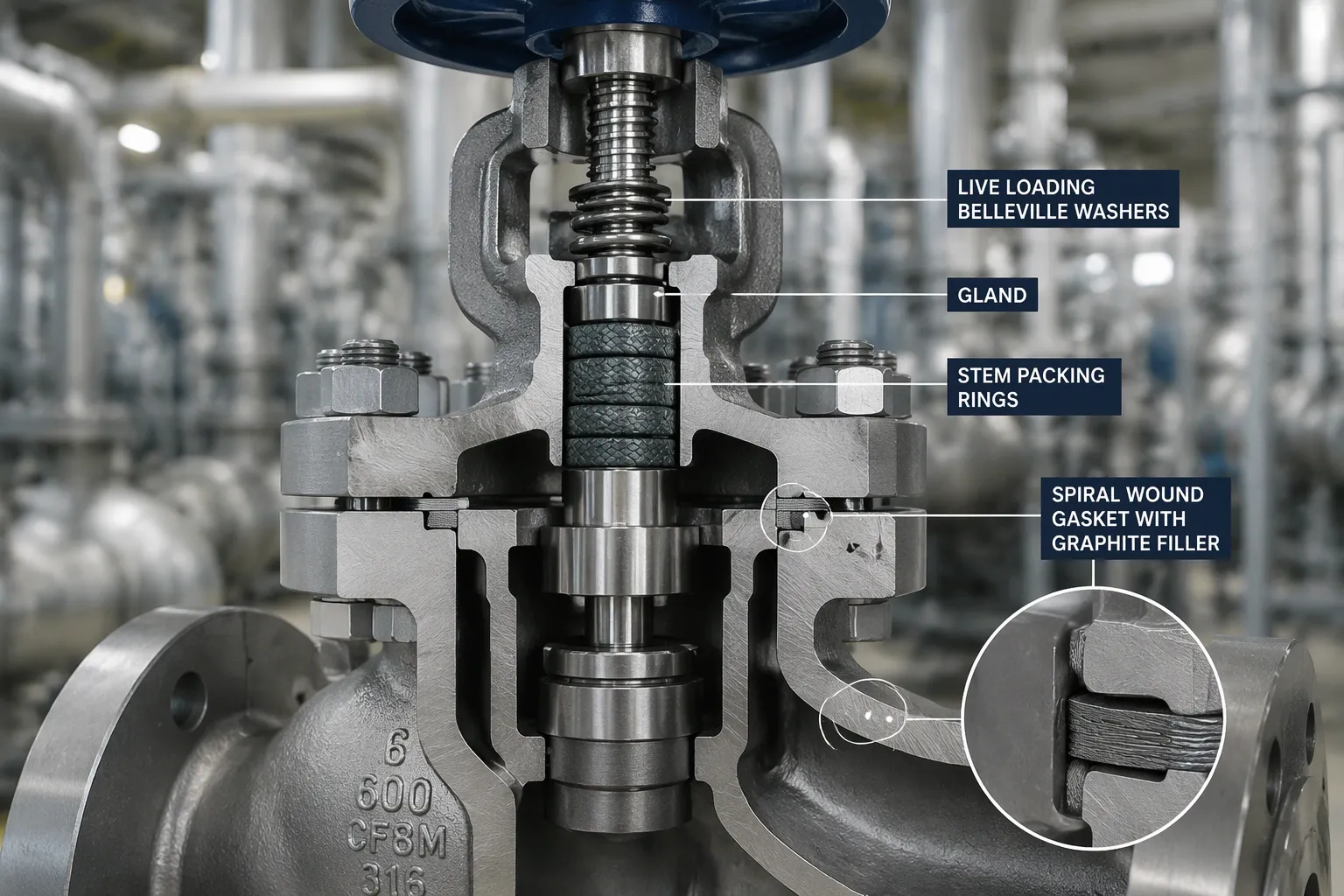
The valve stem packing system is the first line of defense against emissions in any low emission valve design. This assembly seals the gap between the moving stem and the bonnet. It sits at the stem sealing area, where every open and close cycle puts stress on the sealing elements. A strong packing setup keeps process gas inside the valve body and out of the plant air.
Low-E packing is the heart of this system. Test data show that low-E packing can cut emissions up to 96% compared to standard packing. The material resists gas from seeping through and keeps its volume when temperatures change. Graphite-based and PTFE-based grades each fit different temperature and chemical jobs, and the right choice depends on the media and the operating range.
Live loading adds a second layer of protection. Springs or Belleville washers press the packing rings against the stem with a steady force. This pressure makes up for packing wear and thermal movement. The gland keeps the packing compressed without an operator adjusting it, and the stem packing system keeps its sealing performance across many cycles. Live loading also lowers the maintenance burden, since the packing stays tight between scheduled surveys.
Body-Bonnet Sealing and Materials
The body-bonnet joint is the second leak path on the containment boundary. A controlled gasket design closes this path. The gasket material must resist the process media, the pressure class, and the temperature range. Spiral-wound gaskets with graphite filler suit high-temperature service, and PTFE-based gaskets fit lower-temperature chemical jobs. Bolt torque and flange surface finish both affect how well this joint seals over time.
The wedge gate valve design adds mechanical sealing at the seat. A solid wedge fits rigid service and offers simple, sturdy construction. A flexible wedge bends slightly under pressure and follows seat distortion during thermal swings. A split wedge lets each half seat on its own, and this variant handles misalignment well. All three variants use wedging action to press the gate faces against the body rings. This action improves sealing at both the open and closed positions.
These design features work as one system. Strong packing cannot make up for a weak body joint, and a premium gasket cannot fix a rough stem surface. The low emission valve design succeeds only when every sealing path gets equal engineering attention. Buyers who review these elements together get a clear picture of expected performance. A valve that controls voc leakage at the stem and the body joint delivers the emission profile that refineries and chemical plants now require.
Standards and Certification
API 624 and ISO 15848-1
Two test standards lead the low emission valve market. API 624 covers rising-stem valves that use graphite packing. The test opens and closes the valve many times while the packing stays at a high temperature. After each round of cycles, technicians measure how much leaks at the stem seal. A valve passes only if its measured leakage stays below the limit the standard sets.
ISO 15848-1 takes a wider approach. It sets endurance classes based on how many mechanical cycles a valve completes. It also sets temperature classes based on test temperature and tightness classes based on the measured leakage rate. The standard covers many valve types, not just gate valves. A manufacturer can certify a valve to a specific mix of class, temperature, and tightness.
The two methods differ in scope and reporting. API 624 gives one pass or fail result for a set test sequence. ISO 15848-1 reports performance across a matrix of classes, so buyers can compare valves against the exact duty they plan to run.
What Certification Proves
Certification tells buyers that an independent lab has measured the valve under controlled conditions. A certificate confirms that the packing system and body joints kept their seal through thermal cycling and mechanical stroking. This evidence separates a claimed low emission performance from a tested one.
Buyers should read the certificate closely. The document should name the test standard, the tightness class, the temperature, and the cycle count. A certificate for low emission service in a chemical plant means little if the test temperature sits far below the actual process temperature. The same logic applies to voc leakage limits and to any promise of near-zero leakage performance. Certification supports those claims only within the tested envelope.
Selecting Suitable Low Emission Gate Valves
Pressure, Temperature, and Media
Choosing a gate valve starts with the service conditions. The pressure class must match the line rating, and the temperature range must cover normal operation and upset conditions. What the media is made of decides the packing and gasket materials. A graphite packing works for high-temperature service, while a PTFE-based grade fits lower-temperature chemical duty. Buyers should also state the required certification class up front, because the test envelope shapes which valves qualify.
Parameter
What to Confirm
Pressure class
Matches the line rating and any surge margin
Temperature range
Covers normal operation and upset conditions
Media
Drives packing and gasket material choice
Certification class
Sets the tested tightness and temperature envelope
A valve rated for the right pressure but the wrong temperature gives no real protection. The same logic applies to media. A low emission valve built for hydrocarbon gas may not suit a corrosive chemical stream. Buyers who define all four parameters before asking for quotes get offers they can compare and fewer surprises.
Reading Test Documentation
Suppliers should give a test certificate that names the standard, the tightness class, the test temperature, and the cycle count. For API 624, the document reports a pass or fail result for the set sequence. For ISO 15848-1, the certificate lists the endurance, temperature, and tightness classes achieved. Buyers should also ask for the packing and gasket material certificates.
The documents prove that the stem packing system and body joints held their seal under controlled conditions. A certificate with a test temperature far below the process temperature proves little for that duty. Buyers who match the tested envelope to the actual service get a trustworthy picture of sealing performance. That review turns suitable low emission gate valves into a verified choice rather than a hopeful one.
Applications in Refining and Midstream
Refining and Chemical Plants
Petroleum refineries and chemical plants are the main places where low emission gate valves are used. These sites handle light hydrocarbons, hydrogen, and toxic chemicals at high pressure and high temperature. Every isolation point on a process unit can become a leak point. Operators use these valves on feed lines, product rundowns, utility headers, and unit isolation stations.
Rules are strict in this setting. Leak detection and repair programs make plants check valves on a set schedule, tag leakers, and fix them by a deadline. A valve that fails a check becomes a compliance item. Certified low emission valves cut the number of tags a unit gets and keep the site within its permit limits.
Midstream Transmission and Storage
Midstream transmission lines and storage terminals move large amounts of gas and liquid over long distances. Compressor stations, meter runs, and tank farms all depend on gate valves for isolation duty. Leaks at these sites add up fast, because there is a lot of equipment and the gas often has a lot of methane.
Storage terminals face a similar problem. Tank isolation valves sit idle for long periods, and packing that dries out or loses its squeeze can leak when the valve finally moves. Upstream operations share the same worry. Well pads, gathering lines, and separation units run in remote places where a small leak can go unseen for months. In voc service, one chronic leaker can push a facility into a stricter inspection tier. Good voc control starts with valves that keep their seal between checks, and that need now reaches every part of the hydrocarbon chain.
Sealing design, live loading, and controlled body joints are what make low emission gate valves better. Certification turns those features into proof. A certificate from API 624 or ISO 15848-1 testing shows buyers that the valve kept its seal through thermal cycling and stroking. Design alone cannot back up that claim.
Good selection completes the picture. Buyers who match pressure class, temperature, media, and tightness class to the job get valves that cut fugitive emissions every day. That choice helps meet sustainability targets and compliance goals at the same time.
Emission rules keep getting stricter. Project teams that choose certified low emission gate valves early avoid expensive changes later.
FAQ
What makes a gate valve "low emission" in practice?
A low emission gate valve uses better stem packing, live loading, and a controlled body-bonnet gasket. These parts work together to keep process gas inside the containment boundary. Test data show low-E packing can cut emissions up to 96% compared to standard packing. Certification then proves the design works under controlled test conditions.
Can a plant retrofit standard gate valves with low-E packing?
Retrofitting helps in some cases, but results are not always the same. A standard valve may not have the live-loaded gland and tight machining tolerances that low emission service needs. Buyers should check the stem surface condition and body joint design before they expect certified-level performance from a retrofit.
How often does low emission certification need renewal?
Certification is tied to a specific design, packing set, and test envelope. A change in packing material, gasket type, or temperature range can cancel the tested result. Buyers should ask suppliers whether the certificate covers the exact configuration quoted. They should also request updated documents after any design change.
Do low emission gate valves require different maintenance?
Live loading cuts the need for frequent gland adjustments, because springs or washers keep the packing compressed. Operators still include these valves in leak detection and repair surveys. Packing replacement intervals depend on cycle frequency and temperature. Maintenance planners should follow the manufacturer's guidance instead of a fixed schedule.