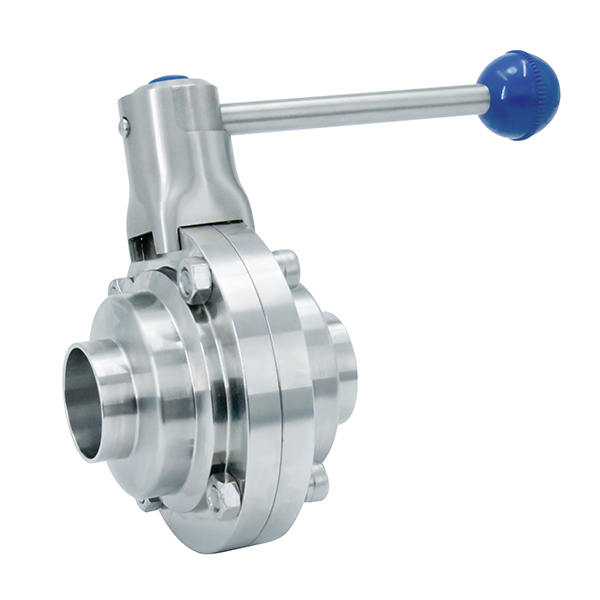
In hygienic processing, a piping system is only as reliable as its weakest connection point. Selecting an inadequate connection for your process lines introduces severe operational vulnerabilities. You risk unscheduled downtime to rectify leaks. Dead legs created by poor fittings harbor dangerous bacterial colonies. Elastomer seals may catastrophically fail under sudden pressure spikes or water hammer events. Furthermore, strict compliance violations regarding 3-A, FDA, or ASME BPE standards can force immediate production halts and product recalls.
Older manufacturing systems frequently relied on threaded fittings to join components. Modern hygienic engineering standards have rendered those threaded joints entirely obsolete due to their inherent contamination risks. Today, process engineers rely on two true industry-standard connection methods for a sanitary check valve: Tri-Clamp mechanical fittings and butt-welded joints. Your selection directly dictates your mandatory cleaning protocols, internal maintenance schedules, and maximum system pressure limits.
Tri-Clamp connections offer rapid disassembly for Cleaning Out of Place (COP) and frequent internal inspections, but introduce potential failure points via elastomer gaskets.
Welded sanitary connections provide superior structural integrity, eliminate gasket degradation risks, and support high-pressure/high-temperature Cleaning In Place (CIP) systems.
The decision hinges on required pressure ratings, frequency of internal valve maintenance, specific valve body styles (e.g., Y-ball vs. spring), and the facility's standardized cleaning protocols.
Improper installation of either type—such as over-torqued clamps or un-passivated welds—negates the hygienic design of the sanitary check valve.
Table of Contents
Toggle
How Connection Types Affect Sanitary Check Valve Performance
A sanitary check valve must perform two critical functions: prevent reverse flow and maintain a hygienic process environment. The connection type directly affects sealing reliability, cleaning efficiency, and long-term system safety.
In food, beverage, pharmaceutical, and biotech applications, the connection must protect the sterile process boundary. It needs to withstand temperature changes, mechanical vibration, and repeated cleaning chemicals without creating contamination risks.
Surface Finish and Hygienic Performance
The internal surface finish of the connection area plays an important role in sanitary performance. Both Tri-Clamp and welded connections require smooth internal surfaces to reduce product buildup and support effective cleaning.
Rough surfaces, scratches, or small gaps can trap product residues and create areas where bacteria may grow. A properly designed connection helps maintain clean flow paths and reduces the risk of cross-contamination between production batches.
Flow Design and Dead Leg Prevention
Connection geometry directly influences fluid flow inside the system. Poor alignment between the pipe and valve body can create dead legs where liquids or product residues remain after processing.
These trapped areas are difficult for cleaning solutions to reach and may affect product quality during the next production cycle. Hygienic valve connections should maintain smooth transitions to ensure consistent flow and effective cleaning.
Cleaning Efficiency and Process Reliability
Sanitary systems rely on sufficient cleaning flow to remove remaining materials from internal surfaces. Connection design should support proper fluid velocity and turbulence during CIP (Clean-in-Place) processes.
A well-designed connection allows cleaning solutions to reach all critical areas, improving sanitation efficiency and helping manufacturers maintain stable production quality.
Key Design Considerations
When selecting a sanitary check valve connection, engineers should evaluate:
Internal surface smoothness
Connection alignment accuracy
Dead leg control
Cleaning efficiency
Compatibility with CIP/SIP processes
Long-term sealing reliability
Choosing the correct connection design ensures better hygiene performance, easier maintenance, and more reliable operation in demanding sanitary applications.
Tri-Clamp Sanitary Check Valves: Design and Applications
Tri-Clamp connections use a simple and hygienic mechanical structure. They consist of two ferrule ends, an elastomer gasket, and a clamp. The clamp compresses the gasket between the ferrules to create a secure, leak-resistant seal. Common gasket materials include EPDM, PTFE, Silicone, and FKM, which should be selected based on chemical compatibility and operating temperature.
Key Advantages of Tri-Clamp Connections
Tri-Clamp designs are widely used in sanitary processing systems because they provide:
Fast installation and removal without welding equipment
Easy cleaning and inspection for COP (Clean-Out-of-Place) procedures
Simple maintenance of internal valve components
Flexible system configuration for complex piping layouts
These features make Tri-Clamp sanitary check valves suitable for food, beverage, pharmaceutical, and cosmetic applications where frequent cleaning and maintenance are required.
Tri-Clamp Installation Steps
A proper installation ensures sealing performance and hygienic operation:
Check ferrule surfaces for damage or contamination.
Select the correct gasket material for the process conditions.
Align the pipes to avoid stress on the connection.
Place the gasket between the ferrules.
Install and tighten the clamp evenly.
Verify proper sealing before operation.
Use a calibrated torque tool to achieve the manufacturer-specified compression rating, preventing gasket extrusion.
Tri-Clamp connections are flexible and easy to maintain but have some limitations. Frequent temperature changes may affect gasket performance, while lower pressure ratings and vibration sensitivity require proper installation and support. They are widely used in dairy, brewing, cosmetics, and food processing industries where frequent cleaning, inspections, and product changeovers are required.
Welded Sanitary Check Valves: Mechanics and Use Cases
Welded installations create a permanent, unified integration into the piping matrix. The butt-weld process requires absolute precision. Modern hygienic facilities mandate automated orbital welding to ensure smooth, crevice-free internal seams. Manual welding introduces unacceptable risks of uneven penetration, oxidation, and contamination traps. Orbital welding utilizes a computer-controlled tungsten electrode that rotates around the pipe joint, delivering a perfectly consistent weld pool protected by inert argon purge gas.
A Welded Sanitary connection delivers unparalleled structural and hygienic benefits:
It creates a permanent, continuous flow path with absolutely zero risk of gasket degradation or extrusion.
The system achieves maximum physical tolerance for high-pressure flows and aggressive thermal shocks during Sterilization In Place (SIP).
It eliminates external crevices entirely, which drastically improves the exterior washdown process and prevents exterior bacterial growth.
It provides superior resistance to hydraulic shock and continuous line vibration without requiring excessive external pipe bracing.
Executing a flawless orbital weld requires rigorous preparation and execution:
Cut the tubing using a specialized cold saw to ensure a perfectly square, burr-free edge.
Face the tube ends using a tube facing tool to achieve exact dimensional tolerances.
Clean the interior and exterior of the weld zone with high-purity isopropyl alcohol.
Align the valve and tubing in the orbital weld head, ensuring zero gap between the mating surfaces.
Establish a continuous internal argon purge to displace all oxygen and prevent sugaring.
Execute the automated weld program based on the specific wall thickness and material grade.
Perform a borescope inspection of the internal weld bead to verify full penetration and smoothness.
Despite these structural strengths, welded connections introduce rigid operational constraints. Installation demands highly specialized labor, specifically certified orbital welders, alongside expensive precision equipment. Internal valve inspection or component replacement becomes highly complex. You must physically cut the valve out of the line to service the internal spring or disc. Some facilities mitigate this severe limitation by utilizing a hybrid top-entry bonnet design. Furthermore, fully welded lines strictly limit the system to CIP and SIP cleaning protocols, as manual internal scrubbing is physically impossible.
These permanent connections serve as the absolute standard for biopharmaceutical manufacturing. They are mandatory for Water for Injection (WFI) loops, active pharmaceutical ingredient (API) processing, and high-purity chemical manufacturing. In these critical environments, breaking the sterile envelope introduces unacceptable contamination risks.
Technical Evaluation Dimensions: Tri-Clamp vs. Welded
CIP vs COP: Choosing the Right Cleaning Method
Your facility's standard operating procedures dictate the ideal connection methodology. A Tri-Clamp setup supports facilities requiring frequent visual verification of internal cleanliness. Operators can dismantle the line swiftly for manual scrubbing and direct protein swab testing. Conversely, welded sanitary lines are mandated for continuous, highly aggressive CIP and SIP loops. In these automated systems, manual disassembly introduces an unacceptable contamination risk from the surrounding environment. Compliance standards treat these connections differently. 3-A Sanitary Standards outline specific geometric criteria for removable joints versus permanent welds to ensure hygienic integrity across all cleaning methods.
How Pressure, Temperature, and Fluids Affect Connection Selection
Mechanical clamps simply cannot match the pressure-holding capabilities of full-penetration welds. High-pressure systems, such as those utilizing homogenization equipment, demand welded joints to prevent catastrophic joint blowouts. Standard heavy-duty clamps might hold up to 500 psi at ambient temperatures, but that rating drops significantly as temperatures rise during SIP cycles. Welded joints maintain their structural integrity up to the burst pressure of the tubing itself, often exceeding 1000 psi.
Thermal expansion and contraction also impact joint performance heavily. Tri-Clamp gaskets expand and contract differently than the surrounding stainless steel, risking seal failure during rapid cooling phases. Welded joints expand uniformly, maintaining complete structural integrity regardless of temperature swings. Fluid characteristics matter significantly as well. High-viscosity fluids or particulate-heavy media can interfere with clamp gaskets. Abrasive particulates may lodge in the microscopic gap between the gasket and ferrule flange, compromising sterility and slowly degrading the elastomer.
Choosing the Right Valve Design for Your Application
The internal mechanical design of the valve influences your connection choice. A concentric inline spring check valve often functions exceptionally well as a permanent welded fixture, provided the internal components are rated for the life of the surrounding piping. A Y-ball check valve typically requires at least one removable port to access the heavy internal ball mechanism for inspection or replacement. Hybrid approaches offer a highly practical middle ground for process engineers. You might specify a valve body that is butt-welded directly into the pipeline but features a Tri-Clamp top-entry port. This hybrid configuration allows for rapid internal maintenance without severing the primary pipeline.
Maintenance Costs and Long-Term Requirements
Resource allocation differs vastly between the two installation methods. Tri-Clamp systems demand continuous, ongoing maintenance hours. Your maintenance team must regularly inspect, remove, and replace elastomer gaskets to prevent failure. The manual labor required for COP adds significant operational hours to your weekly production schedule, requiring dedicated personnel. Welded connections require absolutely zero routine maintenance at the joint itself. However, they demand intense upfront labor hours from certified orbital welders. When a fully welded valve eventually fails, the replacement process consumes substantial production downtime, requiring pipe cutting, re-welding, and extensive re-passivation procedures before production can resume.
Technical Feature
Tri-Clamp Connection
Welded Connection
Installation Methodology
Rapid, mechanical clamp assembly
Slow, requires automated orbital welding
Supported Cleaning Protocols
COP (Manual teardown) and CIP
Strictly CIP / SIP automated cycles
Maximum Pressure Tolerance
Moderate (dependent on clamp style)
Maximum (matches pipe burst rating)
Maintenance Accessibility
Immediate internal component access
Requires cutting pipe (unless hybrid design)
Primary Contamination Risks
Gasket degradation, thermal extrusion
Poor weld penetration, internal sugaring
Vibration Resistance
Low to Moderate (requires bracing)
Exceptionally High
Conclusion
Tri-Clamp connections remain optimal for processes requiring frequent teardowns, manual cleaning verification, and rapid internal component replacement. Conversely, welded connections are absolutely essential for high-pressure, permanent, CIP-dedicated lines where breaking the sterile envelope is strictly prohibited by regulatory bodies. Use a simple engineering decision matrix: if COP is required, use Tri-Clamp fittings. If system pressure exceeds standard clamp ratings or you process highly sensitive WFI, choose fully welded joints.
Take these immediate next steps to optimize your hygienic piping system:
Audit your facility's current cleaning capabilities and verify if COP is legally or operationally mandatory for your specific product lines.
Calculate your maximum system pressure spikes and peak SIP temperatures to ensure they fall safely within your current elastomer gasket limits.
Inspect existing Tri-Clamp connections for any signs of gasket extrusion, degradation, or fluid weeping during your next scheduled maintenance window.
Implement a standardized torque-wrench policy for all maintenance personnel handling mechanical sanitary clamps to prevent overtightening.
FAQ
Q: Can a Tri-Clamp sanitary check valve be cleaned in place (CIP)?
A: Yes, you can clean them in place provided the system is designed for adequate flow velocity. The gaskets must be specifically rated for the CIP chemicals and peak temperatures used in your facility. However, many operators still prefer COP for these connections to allow for visual verification.
Q: What is the maximum pressure rating for a welded sanitary check valve?
A: The maximum pressure depends entirely on the tube wall thickness and the specific valve body design. Generally, welded connections match the burst pressure of the surrounding piping itself. This tolerance far exceeds the capabilities of mechanical clamps.
Q: Why are threaded connections no longer recommended for a sanitary check valve?
A: Threaded connections create deep, microscopic crevices that inherently harbor bacteria. You cannot reliably clean these threads via standard CIP or COP methods. Using them violates strict 3-A and FDA hygienic design standards required in modern processing facilities.
Q: How often should Tri-Clamp gaskets be replaced on a check valve?
A: Replacement frequency depends heavily on thermal cycling, chemical exposure, and total operational hours. You should establish a strict preventative maintenance schedule based on manufacturer guidelines. Regular visual inspections during COP cycles will help determine the exact degradation rate for your specific process.
Q: Do welded sanitary connections meet 3-A standards?
A: Yes, they fully comply with 3-A standards provided they meet strict installation criteria. The welds must be fully penetrated and orbitally welded to specific Ra finishes. Afterward, they must be properly passivated to prevent corrosion and restore the sterile envelope.
Q: How do you repair a welded sanitary check valve if the internal spring fails?
A: If the valve features a fully welded, inline body, you must cut the entire unit out of the piping system to replace it. To avoid this downtime, many facilities install hybrid valves. These feature welded pipeline connections but utilize a top-entry Tri-Clamp bonnet for internal component access.