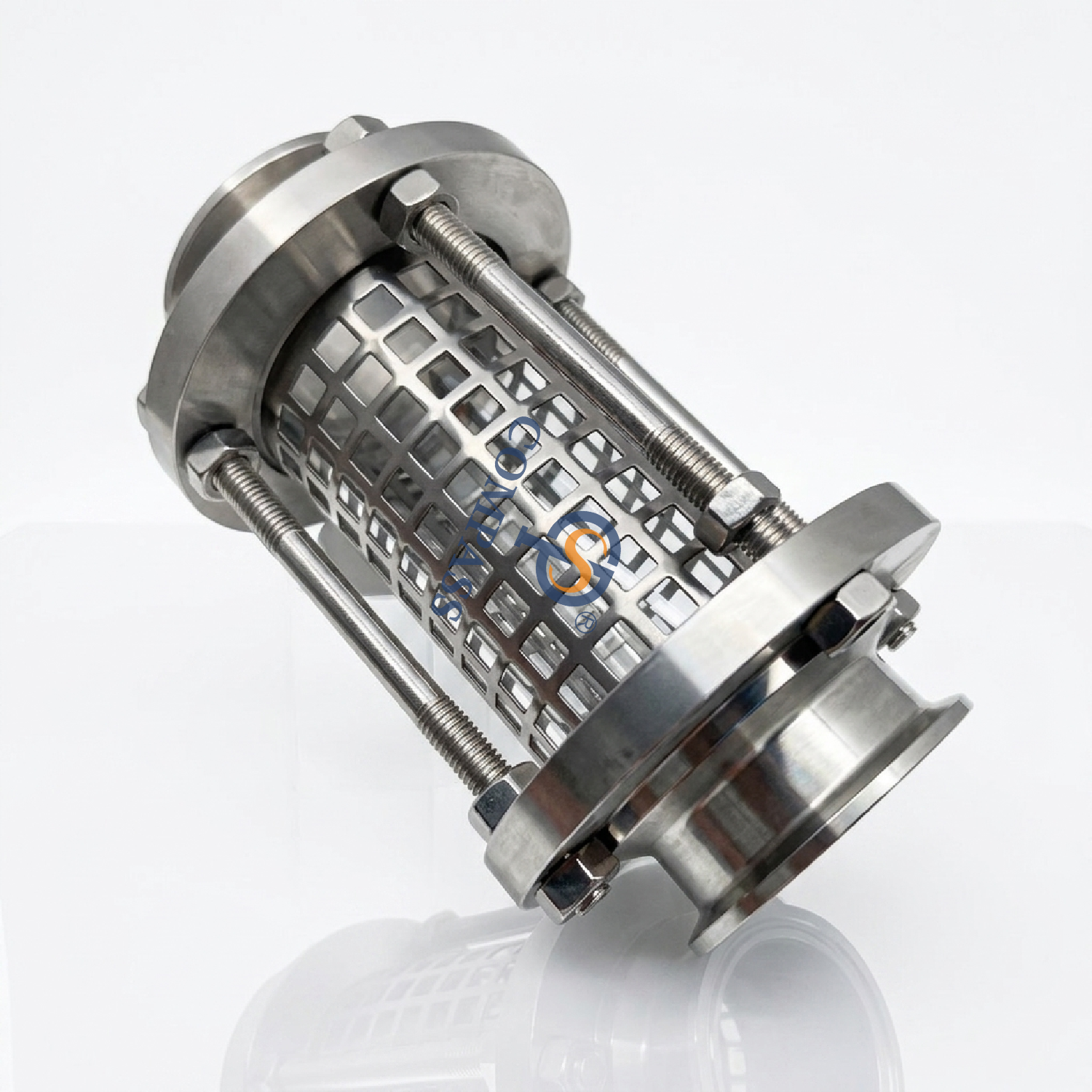
Backflow in high-purity environments introduces severe operational and financial risks. Reverse flow causes cross-contamination, triggers complete batch rejection, and damages expensive process equipment like sanitary pumps and membrane filters. Standard industrial check valves cannot solve this problem. They harbor bacteria in crevices, dead legs, and internal threads. These conventional designs fail strict sanitary requirements and compromise system sterility.
Improperly specified sanitary valves introduce their own set of process failures. They cause excessive pressure drops, induce mechanical chattering, or fail to drain completely during cleaning cycles. Selecting the correct non-return valve requires a precise engineering balance. You must align fluid dynamics, including viscosity, flow rate, and media type, with stringent cleanability standards and material compliance. This guide provides a comprehensive framework for evaluating, sizing, and specifying the exact hygienic check valve required to protect your sanitary process lines.
Application Dictates Design: Spring-loaded floating disc valves are optimal for clean liquids and gases, while ball check valves are necessary for viscous media, slurries, or fluids with particulates.
Cleanability is Non-Negotiable: True Sanitary Check Valves for CIP must feature crevice-free internals and self-draining geometries to prevent microbial growth.
Orientation Impacts Performance: The choice between horizontal and vertical installation directly affects valve selection, cracking pressure requirements, and drainage capabilities.
Compliance Drives Material Selection: Wetted parts and elastomers must align with specific industry standards (3-A, EHEDG, FDA, USP Class VI) based on the end product (food, dairy, or biopharma).
Table of Contents
Toggle
How Sanitary Check Valves Protect Hygienic Processing Systems
A sanitary non-return valve carries a strict dual mandate. It must reliably prevent reverse flow while maintaining absolute sterility. It must also ensure complete cleanability during automated washing cycles. If a valve stops backflow but traps bacteria, it fails its primary purpose in a high-purity system.
You must distinguish check valves from active isolation or control valves. Operators use butterfly, diaphragm, or ball valves for active flow regulation or manual line isolation. A check valve operates entirely automatically. It relies solely on fluid pressure differentials to open and close. It prevents backflow instantly without any operator intervention or external actuation.
The structural differences between hygienic and industrial designs are absolute. Industrial valves utilize threaded connections, flat gaskets, and cast bodies with rough internal surfaces. Hygienic designs eliminate all internal threads. They utilize sanitary clamp ends, such as Tri-Clamp fittings, or orbital weld connections. Manufacturers polish all internal wetted surfaces to strict roughness averages to prevent microbial adhesion.
These specialized valves protect overall system integrity. They shield sensitive upstream equipment from sudden pressure spikes. They also prevent the disastrous mixing of raw process media with aggressive cleaning chemicals during automated wash cycles. For example, if a transfer pump fails during operation, the check valve slams shut immediately. This action keeps the fluid column from draining backward and dead-heading the pump upon restart.
Types of Sanitary Check Valves and Their Applications
Spring-Loaded Disc Check Valves: Features and Applications
Spring-loaded disc check valves use a guided disc and spring mechanism to control flow direction. They open when forward pressure pushes the disc away from the seat and close quickly when flow stops. These valves are suitable for low-viscosity fluids such as clean water, gases, and beverages, but they are not ideal for fluids containing particles that may block internal components.
Sanitary Ball Check Valves
Sanitary ball check valves use a free-moving ball to control fluid flow. They provide a larger flow path and are suitable for high-viscosity fluids, thick liquids, and products containing suspended particles. They are commonly used in dairy, food, and beverage applications, but they usually require proper installation direction for reliable closing.
Sanitary Swing Check Valves for High-Flow Applications
Sanitary swing check valves use a hinged disc that opens with forward flow and closes when flow reverses. They are suitable for large pipelines and high-flow applications because they create low pressure loss. However, the internal hinge structure requires careful hygienic design and proper certification to ensure effective cleaning and prevent contamination.
Key Factors When Choosing a Sanitary Check Valve
How to Select the Right Valve Size and Pipe Diameter
Proper valve sizing dictates system efficiency. Sanitary valves are available in standard fractional and whole sizes, ranging from 1/2-inch up to 3 inches and larger. You must match the valve exactly to the existing pipework dimensions. Oversized or undersized valves create immediate flow restrictions and pressure imbalances.
Pipe diameter directly influences fluid velocity. Velocity is critical for two distinct operational phases. During production, the velocity must remain high enough to keep the valve fully open, preventing premature wear. During cleaning, the system requires high-velocity turbulent flow to scrub the internal valve surfaces effectively. A common field mistake involves upsizing the valve to reduce pressure drop. This causes the internal disc to flutter because the flow velocity is not high enough to hold it open.
Clean-in-Place (CIP) and Sterilize-in-Place (SIP) Compatibility
Specifying Sanitary Check Valves for CIP requires precise flow dynamic calculations. The system must generate sufficient CIP fluid velocity to fully open the valve mechanism. If the cleaning fluid cannot fully unseat the disc or ball, the internal contact points will harbor bacteria. Standard practice dictates a minimum CIP velocity of 1.5 to 2.0 meters per second.
Self-draining geometries are mandatory for CIP compatibility. The valve body must not allow fluid to pool after the wash cycle completes. Engineers must select eccentric designs or specify exact installation angles to eliminate all internal dead legs and ensure complete gravity drainage.
Cracking Pressure and Pressure Drop (Cv)
Cracking pressure determines the minimum pressure needed to open the valve. The spring force must match the system requirements to ensure smooth flow and reliable closing. The correct Cv value helps maintain proper flow capacity, avoid pressure loss, and prevent the valve from limiting system performance.
Vertical vs Horizontal Installation: How to Choose
Installation direction affects valve performance and drainage. Vertical installation allows gravity to help valve closing, especially for ball check valves. Horizontal installation requires suitable valve designs, such as spring-assisted or self-draining structures, to ensure reliable operation and prevent fluid buildup during cleaning.
Choosing the Right Materials and Surface Finish
316L Stainless Steel and Surface Finish Requirements
Material selection dictates the lifespan of the valve. Standard 316L stainless steel serves most food, beverage, and dairy applications. However, highly corrosive CIP chemicals, abrasive slurries, or high-chloride environments require higher alloys. Engineers specify AL-6XN or Hastelloy C-22 to prevent pitting and stress corrosion cracking in these aggressive environments.
Surface finish directly impacts microbial control. Manufacturers measure surface roughness in microinches (µin) Ra. Standard food and beverage applications require a 32 µin Ra finish. Pharmaceutical and bioprocessing applications demand a stricter 15-20 µin Ra finish. Electropolishing further reduces bacterial adhesion by stripping away microscopic surface peaks and creating a passive, chromium-rich layer.
How to Choose the Right Valve Seal Material
Selecting the correct elastomer prevents catastrophic batch contamination. The seal material must withstand both the process media and the aggressive chemicals used during cleaning cycles.
Elastomer Material
Best Applications
Temperature Limit
Limitations
EPDM
Water, steam, mild CIP chemicals, dairy.
Up to 275°F (135°C)
Degrades quickly when exposed to oils or animal fats.
FKM (Viton)
Aggressive acids, high temperatures, oils.
Up to 400°F (204°C)
Poor resistance to hot steam and certain strong caustics.
PTFE (Teflon)
Extreme chemicals, aggressive SIP cycles.
Up to 450°F (232°C)
Lacks elasticity; requires specific seating designs to seal properly.
Silicone
High-purity pharma, extreme temperature ranges.
Up to 400°F (204°C)
Low physical tear strength; unsuitable for abrasive slurries.
Mismatched elastomers present severe operational risks. Incorrect seals will swell, degrade, or shed particulate matter directly into the final product. You must evaluate seal compatibility against maximum SIP temperatures and peak CIP chemical concentrations.
Sanitary Check Valve Standards and Certifications
Sanitary components must comply with strict standards to ensure product safety and hygiene. 3-A standards focus on cleanability and sanitary design for food and dairy applications, while EHEDG guidelines provide stricter requirements for preventing bacterial contamination. For pharmaceutical and high-purity applications, materials must also meet FDA CFR Title 21 and USP Class VI requirements to ensure wetted parts are safe, non-toxic, and suitable for sensitive products.
Conclusion
A hygienic check valve operates as a critical safeguard for process sterility and expensive equipment protection. Specifying the wrong valve guarantees contamination, pressure drops, and maintenance failures. Follow a strict shortlisting logic based on media characteristics, line size, flow requirements, and material compliance.
Take these actionable next steps to secure your process line:
Consult with a dedicated valve sizing engineer to verify your fluid velocity calculations and prevent chattering.
Request and review flow curve data and Cv charts for your specific application to ensure adequate pump sizing.
Verify all material test reports (MTRs) and FDA/USP certificates before authorizing procurement to guarantee compliance.
Establish a preventive maintenance schedule based on your specific CIP chemical concentrations and SIP thermal cycles.
FAQ
Q: What is the difference between a sanitary check valve and a standard check valve?
A: Sanitary check valves feature a crevice-free design to prevent bacterial growth. They utilize sanitary Tri-Clamp connections instead of threads. Their internal surfaces are highly polished to specific Ra values. These features ensure the valve is fully cleanable during automated CIP cycles, unlike standard industrial valves.
Q: Can a hygienic check valve be installed horizontally?
A: Yes, but with strict limitations. Spring-loaded disc valves can operate horizontally. However, they require specific eccentric body designs or precise installation angles. This ensures the valve is fully self-draining and prevents fluid pooling after cleaning cycles.
Q: What is the best check valve for viscous fluids like yogurt or syrup?
A: Sanitary ball check valves are the optimal choice for viscous fluids. They feature an unobstructed flow path that easily handles thick media and suspended particulates without clogging. They do not have internal springs that can trap heavy dairy or syrup products.
Q: How do I choose the right cracking pressure for Sanitary Check Valves for CIP?
A: You must balance the spring tension. The spring must be strong enough to close the valve quickly against reverse flow. However, it must be light enough to allow full forward flow without causing an excessive pressure drop or starving downstream pumps.
Q: Why is my sanitary check valve chattering?
A: Chattering usually occurs when the valve is oversized for the system flow rate, or the spring tension is too high. This prevents the internal disc from seating firmly in the open position, causing it to bounce rapidly in the fluid stream.
Q: How often should elastomers in a sanitary check valve be replaced?
A: Replacement intervals depend entirely on your process parameters. High SIP temperatures and aggressive CIP chemicals degrade seals faster. You must perform routine inspections during scheduled downtime to determine the wear rate and establish a preventive replacement schedule before failure occurs.