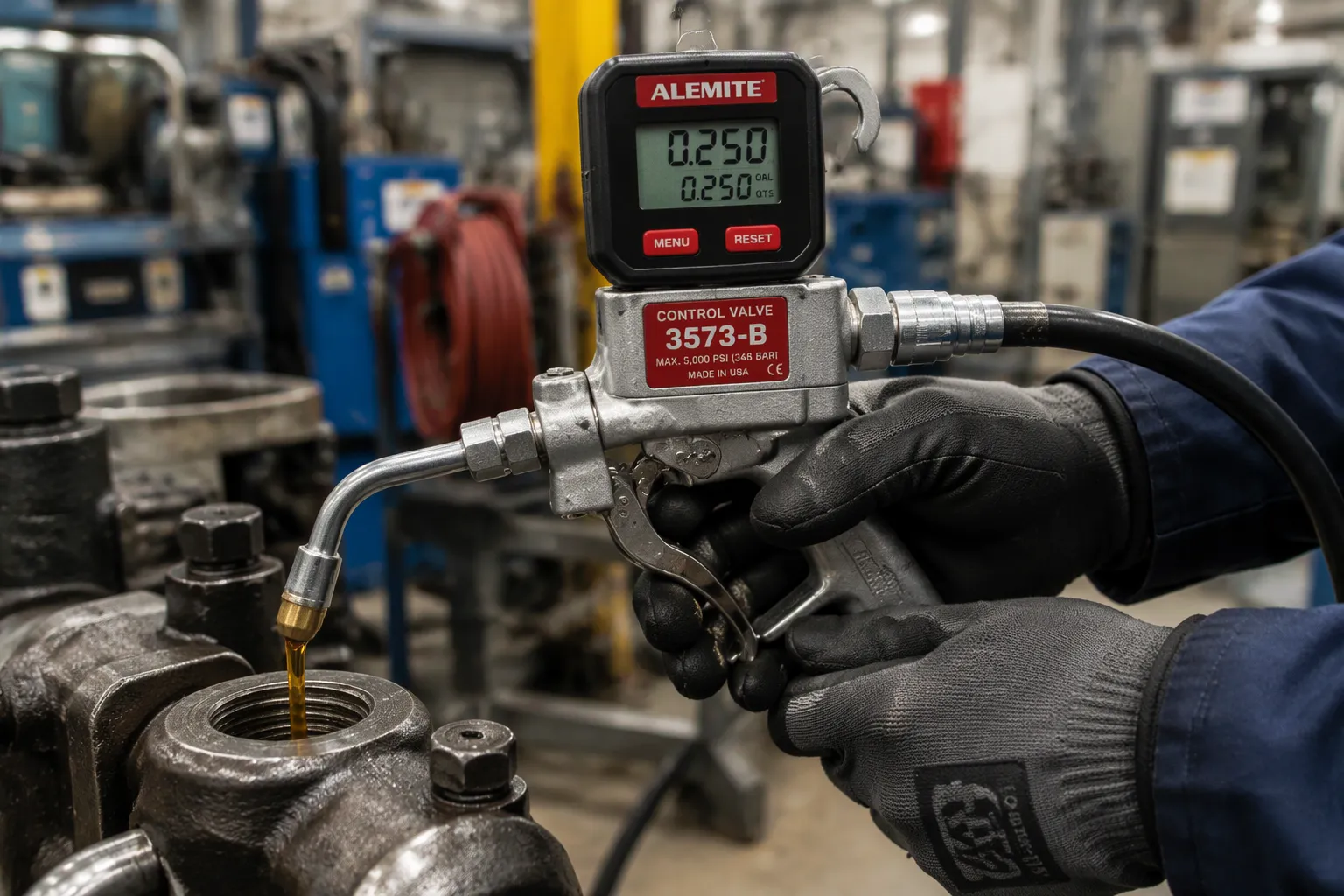
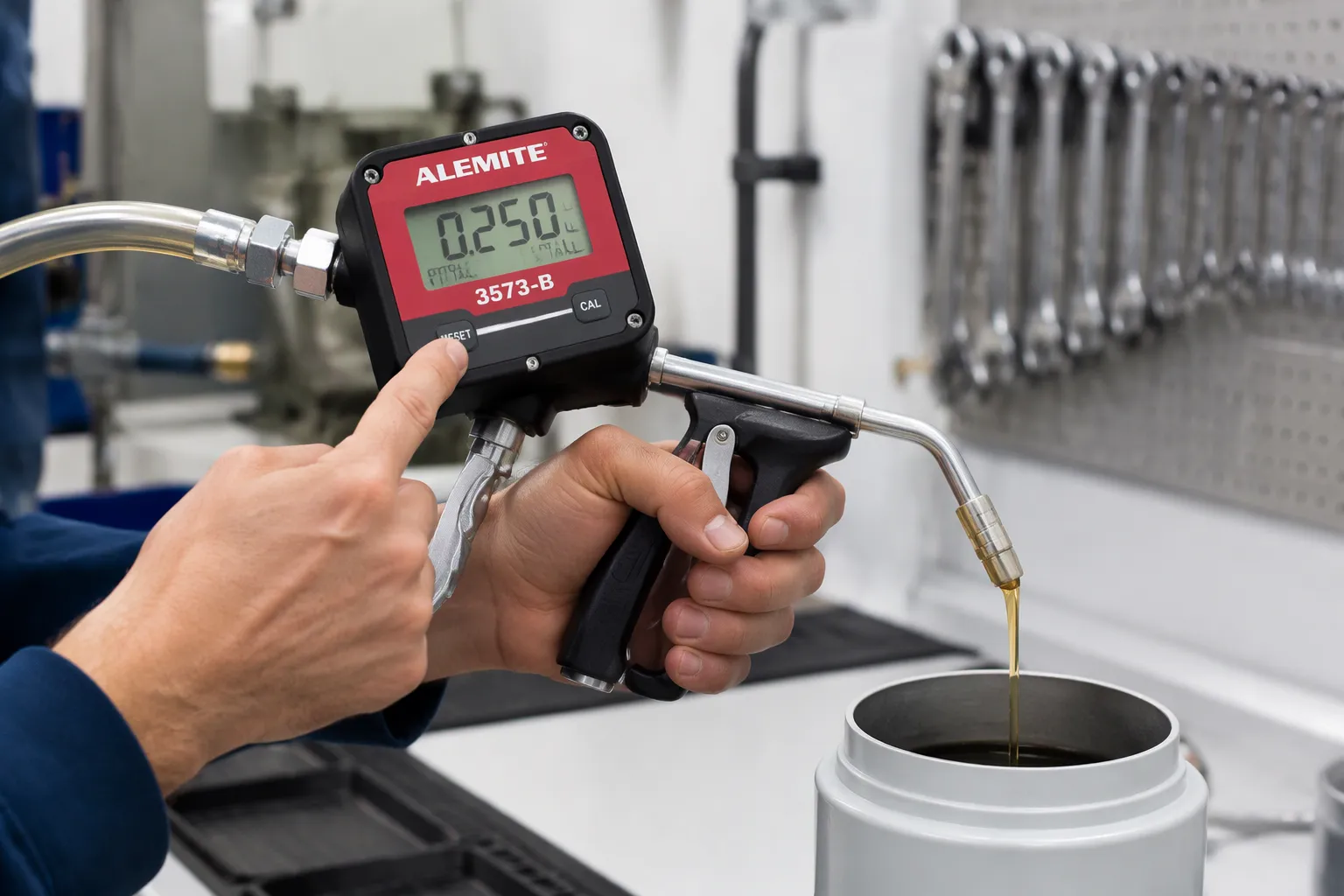
The Alemite Control Valve with Digital Meter Model 3573-B is a high-flow dispensing tool with an electronic meter. A technician holds this control valve at the end of a hose. The valve measures lubricant volume right where it comes out. The digital meter helps track amounts precisely, and the valve moves fluid fast, up to 16 GPM (60 LPM). Industrial dispensing meters usually hold an accuracy rating of plus or minus 0.5 percent when properly calibrated. That mix of speed and measurement helps technicians log every job with confidence. This meter suits demanding shops that need both fast transfer and reliable records from their dispensing tools.
Key Takeaways
The Alemite 3573-B has a high-flow valve and a digital meter together. This lets it dispense lubricants fast and measure them accurately.
The digital display shows the exact amount of fluid given out, which helps with keeping records and tracking inventory.
This tool works well for moving oil in large amounts, filling engine oil, and lubricating in mining and manufacturing settings.
Regular care, like cleaning the tip and checking the battery, keeps the meter accurate and the valve working reliably.
The 3573-B is a smart buy for busy shops that need fast fills and exact records, but basic mechanical meters may work better for people who use less.
What Is the Alemite Control Valve 3573-B
The Alemite Control Valve 3573-B is a high-flow control valve with a digital electronic meter for precise lubrication metering. Technicians use it to move lubricants fast and to record the exact amount they dispense. This hand-held tool does two jobs at once: it controls the flow and it counts what goes through.
Key Features and Metal Construction
The 3573-B handles up to 16 GPM (60 L/min). That flow covers small service bays and large transfer jobs alike. A strong metal body protects the inside parts in tough jobs, like busy shops and plant floors. The metal housing also stands up to the bumps that come with daily handling at the end of a hose.
The 3573-B comes as a flexible unit with a semi-auto non-drip tip. The non-drip tip keeps fluid off the floor when the operator lets go of the trigger. Current listed pricing appears below.
Model #
Description
Price
3573-B
Flexible, 16 GPM, Semi-Auto Non-Drip Tip
$722.48
Digital Meter Display and Controls
A digital display sits on the body of the valve, close to the operator's hand. The screen shows the amount of fluid that has passed through the metering mechanism. Technicians can watch the count go up during a fill and stop at the target amount. This digital readout takes away the guesswork that comes with eyeballing a container.
The controls are simple by design. A few buttons let the operator switch modes, check totals, and reset the count between jobs. Each reset clears the screen for the next task, so records stay clean. The digital meter unit stores the running total until someone clears it. That feature helps a shop track usage across a shift or a single work order.
A precision digital meter like this one supports job records without extra paperwork. The operator reads the number, writes it down, and moves on. No separate measuring step is needed. The digital dispensing valve therefore saves time at the point of dispense.
Industrial digital dispensing meters often serve as the record-keeping layer in a lubrication program. The 3573-B fits that role well. Its meter reports volume at the terminal end of the line, where the oil actually leaves the tool. That placement gives the most useful measurement for billing and inventory. The display stays readable in normal shop light, and the readout updates as flow continues. Together, the control valve and its meter give technicians a fast, accurate way to dispense and to document every job.
How the Digital Meter Works
The digital meter on this tool is an active part of the dispensing process. It sits in the operator's hand and measures volume at the terminal end of the line. That placement matters. A meter at the supply tank counts what leaves the drum. A meter at the nozzle counts what actually reaches the target. The second number is the one a technician needs for job records.
Control Valve Operation and Flow Path
Fluid travels a short, direct path through this tool. Supply pressure pushes the oil from the hose into the inlet of the control valve. The operator squeezes the manual trigger with digital tracking to start the flow. Inside the body, an oval gear metering mechanism spins as fluid passes. Each turn of the gears moves a fixed volume of liquid. The meter counts those turns and converts them into a volume figure. Fluid then exits through the non-drip tip and lands in the target container.
The trigger lets the operator control the flow rate directly. A light squeeze gives a slow stream for small fills. A full squeeze opens the valve for fast transfer at the rated flow. The metering mechanism keeps counting in both modes. This design allows precise volumetric measurement without a separate measuring step.
Reading and Resetting the Meter
The digital readout faces the operator during a fill. Numbers go up in real time as fluid moves through the tool. The display shows the current batch total, and the operator watches it get close to the target amount. Digital readings take away the guesswork of watching a sight glass or guessing at a container level.
The meter keeps a running total until someone clears it. A short press of the reset control sets the count back to zero for the next job. Technicians write down the final number before resetting. That habit builds a clean log of every fill, and the log helps with billing, inventory checks, and usage tracking across a shift.
These features make the 3573-B one of the practical precision dispensing tools. The meter turns a simple fill into a documented event. Operators of all experience levels get the same measurement from the same tool. That consistency is the real value of digital tracking on a hand-held dispensing valve.
Oil and Fluid Applications
The 3573 series meters many kinds of fluids. These valve assemblies dispense engine oils and hydraulic oils. That range covers the common oil types a shop or plant handles every day. A technician can go from a drum of engine oil to a hydraulic reservoir without switching tools. The same fluid dispensing valves handle both jobs well.
Bulk Oil Transfer and Engine Oils
Bulk oil transfer is a main job for this tool. A shop gets oil in large drums or totes. The technician needs to move that oil into smaller containers or right into equipment. The 3573-B moves oil at up to 16 GPM (60 L/min). That speed cuts the time spent on every fill. The meter tracks each gallon that passes through the valve. The operator reads the total and logs it for inventory.
Engine oil fills also work well with this valve. A technician puts fresh oil into an engine and watches the meter count up to the target volume. The digital readout means no guessing and no separate measuring container. This makes the tool one of the practical precision oil meters for daily service work. The operator controls the flow with the trigger, so small top-offs and full fills both work well.
Mining and Manufacturing Use Cases
Mining operations run heavy equipment that needs constant lubrication. A single haul truck or loader may take many gallons of oil at each service. The 3573-B handles that volume quickly. The meter gives the maintenance team a record of every fill. That record helps track oil use across a fleet. It also supports planned maintenance schedules.
Manufacturing plants use this valve for machinery lubrication and hydraulic top-offs. A plant may have dozens of machines that each need a measured amount of oil. The technician carries the valve to each machine and dispenses the exact volume. The digital meter stores the running total until someone resets it. That feature lets a plant track fluid use across a shift. The metal body stands up to the demands of a busy plant floor. For both mining and manufacturing, the mix of fast flow and precise measurement keeps equipment running and records clean.
Comparing Metering Valve Options
Buyers really have to choose between digital and mechanical metering valves. Each design works well for different needs. A fair comparison helps a shop pick the right tool for its work.
Digital vs. Mechanical Metering
A digital meter shows the volume on an electronic screen. The operator reads a number and writes it down for job records. A mechanical meter uses a dial or counter instead. Both designs measure fluid volume as it moves through the valve. Both work with standard dispensing setups.
Feature
Digital Meter
Mechanical Meter
Readout
Electronic display
Dial or counter
Record-keeping
Easy to log and reset
Manual note-taking
Power source
Battery
None needed
Best fit
Documented jobs, tracking
Simple fills, low maintenance
Digital metering tools are great when record-keeping matters. A technician reads the screen, writes the number, and resets for the next job. Mechanical units need no battery and suit shops that want simple operation. Neither option is better in every case. The right pick depends on the job.
Matching the Valve to the Job
A shop that tracks oil use across many work orders gains from a digital meter. The screen helps with billing and inventory checks. A busy plant with dozens of machines gets the same benefit. Precise lubrication metering and clean records come together in one tool.
A smaller shop may like a mechanical unit better. Fewer parts mean less to maintain. The operator reads the dial and moves on. Both designs give reliable service when matched to the task. A buyer should think about fluid type, volume, and record needs before choosing. The control valve and its meter should fit the workflow, not fight it. Either path works well when the tool matches the job.
Maintenance and Troubleshooting
Routine Care and Calibration
A clean valve works well and lasts longer. After every shift, technicians should wipe the body and remove dried oil from the non-drip tip. A soft cloth and mild cleaner keep the metal finish in good shape. Operators should never soak the digital meter in solvent. Wiping the outside with a damp cloth keeps the display clear without hurting the electronics. They should also check the tip for wear and replace it when the seal gets weak.
Calibration checks keep the measurements accurate. A technician dispenses a known volume into a graduated container and compares it to the digital readout. If there is a small difference, recalibrate the meter following the service manual. Battery care matters too. The display dims when power runs low, so keep a spare battery in the toolbox. A weak battery can freeze the readout in the middle of a fill. Checking both the meter and the battery every month keeps the tool ready for work.
Common Issues and Fixes
Slow flow is a common complaint. A clogged tip or a partly closed supply valve usually causes it. The fix is simple: clear the tip and open the supply all the way. Inaccurate readings often come from air in the line or a meter that needs calibration. Bleeding the line removes trapped fluid, and a calibration check solves most cases. Operators should also watch for leaks at the inlet fitting. A loose fitting lets air in and throws off the count.
Issue
Likely Cause
Quick Fix
Slow flow
Clogged tip, closed valve
Clear tip, open supply
Inaccurate count
Air in line, drift
Bleed line, recalibrate
Blank display
Dead battery
Replace battery
Safety comes first during any repair. The technician should release line pressure before opening the valve. Gloves and eye protection guard against fluid spray. They should never force a stuck trigger; a gentle inspection finds the cause faster. A simple log of each service visit helps a shop spot repeat problems early. A dispensing tool that gets regular care delivers steady results for years.
Is the 3573-B Worth It
Cost, Durability, and Efficiency
The 3573-B is listed at $1,208.16. That price gets you a metal-bodied tool with a digital meter, a 3/4" NPTF fluid inlet, and a top operating pressure of 1000 psi (70 bar). A buyer should compare that cost to the tool's flow rate and metering accuracy. The valve moves up to 16 GPM (60 L/min), so it fills containers quickly. The digital meter records each volume, which saves time on paperwork. For busy shops, those two traits often make up for the upfront price.
Durability also affects the value. The metal housing stands up to daily bumps at the end of a hose. The unit usually ships in one or two weeks, and the maker backs it with a warranty. All sales are final unless the item shows up defective, so a buyer should check the fit before ordering. A shop that does high-volume oil transfer every day will likely get a strong return. A low-volume user may find a simpler mechanical option more economical.
Choosing the Right Valve
The right choice starts with the fluid and the job site. A technician should match the valve to the pipe size and connection type. A mismatch causes leaks, pressure loss, or flow limits. Seal material matters too. BUNA-N works for petroleum-based fluids, while FKM handles fuels, oils, and solvents well. EPDM works for water-based solutions, and PTFE offers strong chemical resistance. The wrong seal can swell, crack, or fail early.
Flow rate and pressure needs guide the final pick. A shop must figure out its typical and maximum flow needs. An undersized valve creates pressure drops and extra wear. An oversized valve costs more and lowers control precision. For high-pressure systems above 3,000 psi, the valve must handle extreme conditions safely. The 3573-B fits jobs that need fast dispensing and clean records. A lubrication specialist can confirm the match for a specific application.
The Alemite Control Valve Model 3573-B puts a high-flow valve and a digital meter together in one hand-held tool. The valve controls flow at up to 16 GPM (60 L/min). The readout counts each unit of fluid that passes through. Together, they give technicians fast transfer and precise records right where the fluid comes out.
This tool works for bulk oil transfer, engine oil fills, mining fleets, and manufacturing plants. Operators get accurate fluid tracking and quick fills on every job. The design fits demanding shops that need both speed and clean job records. A lubrication specialist can confirm the right setup for a specific application. Check the specifications before ordering.
FAQ
What flow rate does the 3573-B deliver?
The valve moves up to 16 GPM (60 L/min). A shop should match the flow rating to its largest expected fill. Faster transfer shortens every job and keeps a busy bay moving.
Which fluids can this valve meter?
The 3573 series handles engine oils and hydraulic oils. Technicians use it for bulk oil transfer, engine fills, and machinery lubrication. Seal choice matters for other fluids. BUNA-N suits petroleum-based oils, while FKM covers fuels and solvents. EPDM works with water-based fluids, and PTFE resists harsh chemicals.
How accurate is the digital meter?
Industrial dispensing meters typically hold an accuracy of plus or minus 0.5 percent when properly calibrated. A technician confirms that figure with a graduated container and a calibration check. Regular checks keep the readout trustworthy for billing and inventory records.
Does the meter need a battery?
Yes. The electronic display runs on a battery. The screen dims when power runs low, so keep a spare on hand. A weak battery can freeze the readout mid-fill. A monthly battery check keeps the tool ready for work.
What pressure and connection does the valve use?
The 3573-B has a 3/4" NPTF fluid inlet and a top operating pressure of 1000 psi (70 bar). A buyer should confirm the pipe size and connection type before ordering. A mismatch causes leaks, pressure loss, or flow limits.