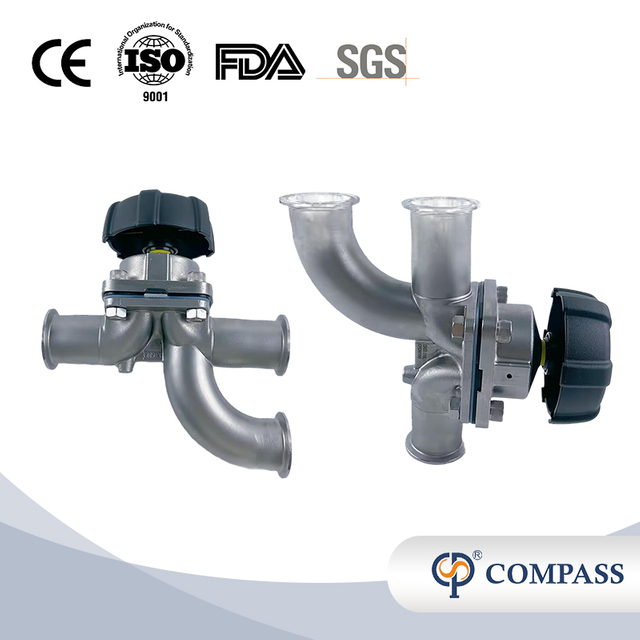
You want a sanitary valve that matches your needs. Pick a sanitary butterfly valve if you want easy cleaning. It costs less and weighs less. It is small and fits bigger pipes. Choose a ball valve if you need a tighter shutoff. It has less chance of leaking. It lowers pressure drop and handles higher pressure. Butterfly valves are common in food, drink, dairy, brewery, and medicine making. The medicine industry uses over 35% butterfly valves. Food uses about 30%. Drinks use around 25%. You should pick based on hygiene, cleaning, shutoff, leak risk, pressure, fixing, and price.
Industry Segment | Percentage Share |
Pharmaceutical | Over 35% |
Food | Around 30% |
Beverage | Approximately 25% |
Key Takeaways
Pick butterfly valves if you want easy cleaning and lower cost. They are not heavy and fit bigger pipes. This makes them good for food and drink companies.
Use ball valves if you need a strong shutoff and almost no leaks. Ball valves work better with high pressure. They are best for small pipes.
Think about how much care the valve needs. Butterfly valves are simple to take apart and clean. This saves you time and work in clean places.
Look at what your process needs. Butterfly valves are good if you clean them a lot. Ball valves are better when you need high pressure.
Always choose the right valve for your job. Think about things like cleanliness, pressure, and space before you pick one.
Direct answer
You want to pick the right valve for your process. The main rule is simple: choose butterfly valves when you need easy cleaning, lower cost, lighter weight, and larger pipe sizes. Pick ball valves when you need a tight shutoff, less leakage, and higher pressure handling. Both types work well in sanitary systems, but each has clear strengths.
Here is a quick comparison to help you decide:
Feature/Criteria | Ball Valves | Butterfly Valves |
Pressure Handling | Best for high pressure; excellent sealing | Good for low to medium pressure |
Pipe Diameter | Suited for small pipes (less than 6 inches) | Ideal for large pipes (over 2 inches) |
Media Type | Works with liquids and gases | Best for water and non-corrosive fluids |
Pigging Requirement | Suitable for piggable systems | Not suitable for pigging |
Cycle Times | Handles fast cycling | Less suitable for frequent cycling |
Leakage and Sealing | Tight shut-off, minimal leakage | May leak at high pressure |
Installation Space | Needs more space, heavier at large sizes | Compact, lighter even in big sizes |
Maintenance | More complex, higher cost | Simple, easy, and less expensive |
Cost | Higher initial cost | Lower setup cost |
When butterfly valves win
You should choose butterfly valves if you want a valve that is easy to clean and maintain. These valves have a simple design. You can open and close them quickly. You will find them lighter and easier to install, even in big sizes. If you work in food, beverage, or dairy, you will like how fast you can clean these valves. You do not need much space for installation. The cost is lower, especially for large pipes. In many cases, you can save 30–60% on the purchase price compared to ball valves. Butterfly valves are best for water and non-corrosive fluids. You will find them perfect for low to medium pressure jobs. If you need to open and close the valve often, butterfly valves work well for moderate cycles.
Tip: If you want to keep your cleaning time short and your costs down, butterfly valves are the smart choice.
When ball valves win
You should pick ball valves when you need a tight shutoff. These valves give you the best seal. They work well when you want zero leakage. Ball valves meet strict standards for sealing, like Class VI, which means almost no leaks. If you handle high pressure or need to stop all flow, ball valves are the best. You can use them for both liquids and gases. Ball valves fit small pipes well, usually less than 6 inches. If your system needs pigging, ball valves are the right pick. They also handle fast cycling better than butterfly valves. You will find that ball valves cost more and are heavier, but they give you peace of mind when leaks are not an option.
Note: If your process cannot risk leaks and needs a tight seal under high pressure, ball valves are the safest bet.
You should always match the valve to your process needs. Butterfly and ball valves both have strong points. Think about what matters most: cleaning, cost, shutoff, or pressure.
Sanitary butterfly valve basics
Disc valve operation
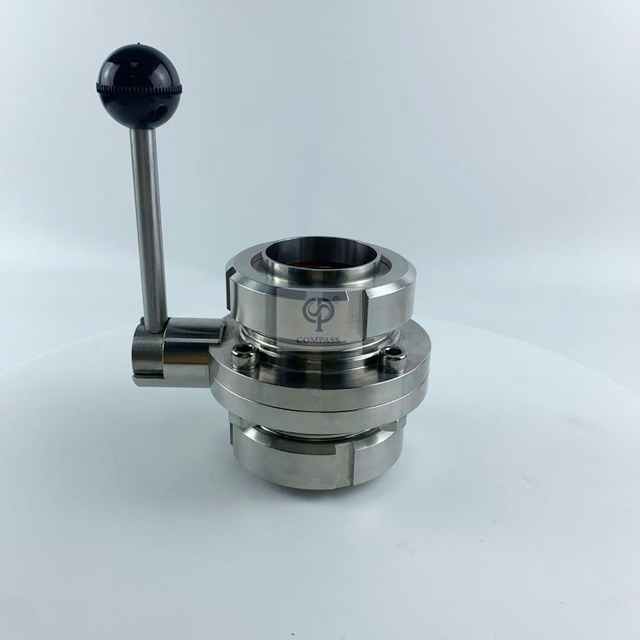
A sanitary butterfly valve is easy to use and clean. It has a round disc inside the valve. You turn the handle, and the disc moves a quarter turn. If the disc stands up, it blocks the flow. If you turn it flat, product can move through the pipe.
The disc’s shape and material help keep things clean. The rounded disc does not trap much product. This makes cleaning simple and lowers the chance of germs. Most discs are made from stainless steel. Stainless steel keeps your product safe. It also works with many liquids, even thick ones.
Tip: Cleaning a butterfly valve is fast because the disc has no hidden spots.
Here is a table that shows how the disc design helps with cleaning and flow:
Feature | Impact on Cleanability | Impact on Product Flow |
Rounded disc shape | Stops product from building up | Lets product flow smoothly |
Stainless steel material | Keeps things clean and safe | Works with thick or thin liquids |
You also need to pick the right seal material. Two common types are BUNA-N and EPDM. Each one has good and bad points:
Material | Primary Characteristics | Common Chemical Compatibility | Benefits | Drawbacks |
BUNA-N | Good with oils and some chemicals, okay with heat | Works with fats and mild chemicals | Cheap and seals well | Breaks down in high heat, not for strong chemicals |
EPDM | Handles heat and steam very well | Works with hot water and cleaners | Good for high heat, safe with many chemicals | Not for oils, costs more |
Ball valve operation
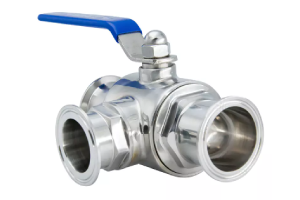
A ball valve is best when you need a tight shutoff. Inside, there is a round ball with a hole. When you turn the handle, the ball turns too. If the hole matches the pipe, product flows through. If you turn the ball, the solid part blocks the flow.
Ball valves seal very well. They are great when you do not want leaks. You can use them in high-pressure systems. Ball valves open and close quickly. You see them where you must stop flow all the way and keep product safe.
Here is a table that compares ball valves and butterfly valves for shutoff and pressure:
Feature/Criteria | Ball Valves | Butterfly Valves |
Shutoff Performance | Seals tightly with almost no leaks | Might leak if pressure is high |
Pressure Handling | Good for high-pressure jobs | Used for low or medium pressure |
Application Context | Best when you need a perfect shutoff | Good for places needing lots of cleaning |
Note: Pick a ball valve if you need no leaks and high pressure. Pick a butterfly valve if you want easy cleaning and quick fixes.
Key differences that matter
Hygiene and cleanability
It is important to keep your sanitary process clean and safe. Cleanliness is very important in food, drink, or medicine work. Butterfly valves and ball valves are different in how easy they are to clean. Both use stainless steel. This helps stop rust and keeps things clean. Butterfly valves have smooth designs with no cracks. These designs help stop germs from getting in. Ball valves also have smooth inside parts. This makes them easier to clean and helps stop germs.
You can see the main hygiene features in this table:
Feature | Butterfly Valves | Ball Valves |
Material | Stainless steel for corrosion resistance and hygiene | Stainless steel to meet hygiene standards |
Design | Smooth, crevice-free designs with food-grade seats | Full-bore design minimizes pressure drop |
Cleaning | Easy to disassemble or compatible with CIP systems | Smooth internal surfaces for easy cleaning |
Sealing | Food-grade elastomer or PTFE seats for tight seal | Sanitary seals made from PTFE or other food-grade materials |
You can take butterfly valves apart fast. This helps you clean them by hand or with a CIP system. Ball valves are also easy to clean. Sometimes, the ball part can trap product inside. You need to check for trapped stuff to keep things clean. Both valves use food-safe seals. Picking the right seal lowers your risk of germs.
Tip: Pick a sanitary butterfly valve if you want the fastest cleaning and the least risk of product hold-up.
Shutoff and leakage
You need to stop leaks in your process. Butterfly valves and ball valves are different when it comes to shutoff and leaks. Ball valves close very tightly. They do not let anything leak, even with high pressure. This makes ball valves the best for sealing. Butterfly valves can leak if the pressure is too high. They work best with low or medium pressure.
Here is a table that shows how each valve performs:
Feature | Ball Valves | Butterfly Valves |
Seal | Provides a tight seal with zero leak-through | More potential for leakage at higher pressures |
Operating Conditions | Suitable for high pressure applications (up to 1000 PSI) | Typically operates at a lower maximum pressure range |
Flow Control Needs | Complete shutoff with zero leakage tolerance | Flow rate throttling acceptable, some turbulence |
You should pick a valve that fits your shutoff needs. If you need a tight shutoff, ball valves are best. You can trust them for high-pressure jobs. Butterfly valves are good for flow control and okay shutoff. You might see leaks if you use them with too much pressure.
Note: Choose ball valves for tight shutoff and no leaks. Use butterfly valves for simple flow control and easy cleaning.
Flow and pressure drop
You want your product to move easily through the pipe. Butterfly valves and ball valves are different in how they affect flow and pressure drop. Butterfly valves have a disc that stays in the way. This disc makes the flow rough and causes more pressure drop. Ball valves have a full opening. When open, there is almost no pressure drop. Your product moves straight through.
You can compare the pressure drop here:
Valve Type | Pressure Drop Characteristics |
Butterfly Valve | Creates turbulence and pressure drop due to disc design |
Ball Valve | Typically has no pressure drop when fully open |
Another way to see the difference:
Valve Type | Pressure Drop Explanation |
Butterfly Valve | Greater pressure drop due to the disk remaining in the flow path |
Ball Valve | Minimal pressure drop when in fully open position |
You should use ball valves if you want the lowest pressure drop and smooth flow. Butterfly valves are fine if you do not mind some rough flow and want simple control. Both valves let you control flow, but ball valves make your system work better.
Tip: Use ball valves for high flow rates and low energy loss. Pick butterfly valves for basic flow control and easy maintenance.
Pressure and temperature
Pressure capability
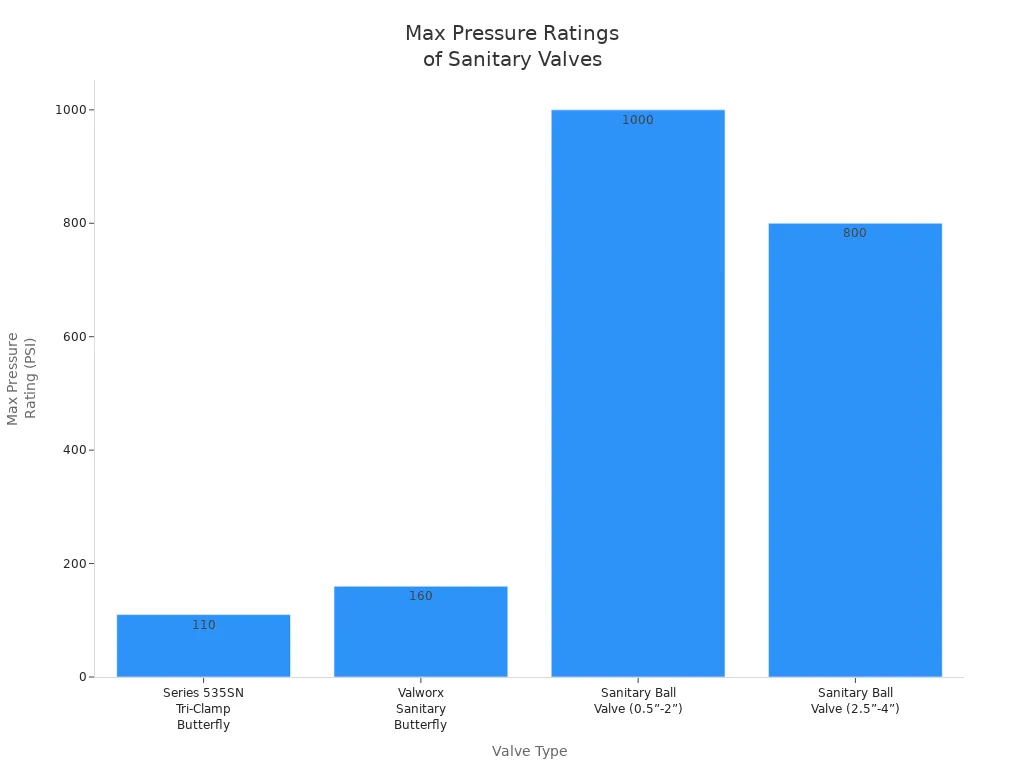
You need to know how much pressure your valve can handle. Sanitary ball valves give you the highest pressure ratings. For small sizes (0.5” to 2”), these valves can handle up to 1000 PSI. Larger ball valves (2.5” to 4”) still manage up to 800 PSI. Sanitary butterfly valves work best at lower pressures. Some models, like the Series 535SN, handle 110 PSI at 200°F. Others, such as the Valworx, reach up to 160 PSI. You can see the difference in this chart:
Here is a quick table for reference:
Valve Type | Maximum Pressure Rating | Temperature |
Series 535SN Tri-Clamp Butterfly | 110 PSI @ 200°F | 200°F |
Valworx Sanitary Butterfly | 160 PSI | N/A |
Sanitary Ball Valve (0.5”-2”) | 1000 PSI | N/A |
Sanitary Ball Valve (2.5”-4”) | 800 PSI | N/A |
If you need a valve for high-pressure jobs, you should pick a ball valve. For most food and beverage lines, a butterfly valve gives you enough strength for safe flow control.
Temperature limits
You must check the temperature range for your process. Sanitary butterfly valves usually work from 15°F to 248°F. Ball valves have a wider range. The temperature limit depends on the seat material. For example, EPDM seats handle -40°C to 135°C, PTFE seats go from -200°C to 260°C, and FKM seats work from -20°C to 200°C. This means you can use ball valves for both hot and cold flow control jobs.
Valve Type | Temperature Range |
Sanitary Butterfly Valve | 15°F to 248°F |
Valve Type | Material | Temperature Range |
3-Piece Stainless Steel Ball Valve | EPDM | -40°C to 135°C (CIP 95°C, SIP 121°C) |
| PTFE | -200°C to 260°C (SIP up to 134°C) |
| FKM | -20°C to 200°C (SIP 134°C) |
You should always match the valve material to your cleaning and sterilization needs.
Throttling vs isolation
You need to decide if you want to control the flow or just stop it. Butterfly valves work well for both flow control and isolation. You can use them to adjust how much product moves through the line. Ball valves give you the best shutoff. They do not work well for flow control because they can wear out if you leave them partly open.
Feature | Butterfly Valve | Ball Valve |
Throttling | Good | Poor |
Isolation | Good | Excellent |
You should pick a butterfly valve if you want to adjust flow rates often. Ball valves are best when you need a strong seal and only want on/off service. For most sanitary systems, butterfly valves give you more options for flow control.
Size and installation
Weight and footprint
You want a valve that fits your space and does not add too much weight to your piping. Sanitary butterfly valves weigh less than ball valves. The disc design uses less metal, so you can lift and install them with less effort. You will also notice that butterfly valves have a smaller footprint. This means you can fit them into tight spots or crowded process lines. Ball valves use a solid ball inside, which adds weight. You may need extra support for larger ball valves. If you want to keep your system light and easy to handle, butterfly valves are the better choice.
Valve Type | Typical Weight | Footprint Size |
Butterfly Valve | Lighter | Compact |
Ball Valve | Heavier | Larger |
Tip: Choose butterfly valves if you want to save space and reduce lifting strain during installation.
Large line sizes
You need to match your valve size to your pipe. Both sanitary butterfly valves and ball valves come in a wide range of sizes. Most common sizes range from 1/2 inch up to 4 inches. GW Kent, for example, offers many ball valve sizes for industrial use. You can find the right fit for your process, whether you run a small line or a large production system.
Butterfly valves often handle larger pipes more easily. You will see them used in big tanks and main lines. Ball valves work well for smaller pipes but can also be found in larger sizes for special needs.
Space around the valve
You must think about how much room you have for installation and maintenance. Butterfly valves need less space around them. You can fit them between pipes with little clearance. This makes them a good pick for tight areas or when you want to add more equipment nearby. Ball valves need more room. The body is bigger, and you need extra space to turn the handle or remove the valve for cleaning.
If you work in a crowded plant or have limited access, butterfly valves make your job easier. You can install and service them without moving other equipment.
Note: Always check your available space before choosing a valve. A compact valve can save you time and trouble during setup and repairs.
Operation and automation
Manual operation
You can open and close both sanitary butterfly valves and ball valves by hand. Butterfly valves are lighter and smaller than ball valves. You only need to turn the handle a quarter turn to use them. Ball valves are heavier and take up more space. You also turn their handle a quarter turn, but the ball inside adds weight. Ball valves are easier to turn when the pressure is high. Butterfly valves get harder to move if the pressure goes up. Ball valves cost more, especially if you need a big one. Butterfly valves are cheaper and do not trap product when closed. Ball valves can trap product inside when you shut them.
Feature | Butterfly Valves | Ball Valves |
Weight | Lighter | Heavier |
Size | Relatively smaller | Larger |
Cost | Less expensive, especially at larger sizes | More expensive as size increases |
High Pressure Operation | More difficult to operate under high pressure | Easier to operate under high pressure |
Media Trapping | Do not trap media in the “off” position | Known to trap media inside the port when closed |
Reliability in High Pressure | Less reliable | More reliable |
Tip: Pick butterfly valves if you want something easy to turn and that does not trap product.
Actuator fit
You can add actuators to both types of valves. Actuators let you control the valves from far away or with a control system. There are three main actuator types: electric, pneumatic, and hydraulic. Electric actuators use electricity and give you exact control. You can open or close the valve from another place. Pneumatic actuators use air and work fast. They are good for places where safety is important. Hydraulic actuators use liquid pressure. They are best for high-pressure jobs but cost more and need extra parts.
Actuator Type | Description | Pros | Cons |
Electric | Converts electrical energy into mechanical motion to control the valve. | Precise positioning, remote control. | Slower than other options. |
Pneumatic | Uses compressed air to create mechanical motion for valve operation. | Fast response times, safe in explosions. | Requires air supply infrastructure. |
Hydraulic | Utilizes hydraulic pressure to generate motion for valve control. | Ideal for high-pressure applications. | Higher cost and complexity. |
Note: Choose your actuator based on what your process needs, how fast you want it to work, and how safe it must be.
On off control
Both butterfly and ball valves can be used for simple on and off jobs. Butterfly valves are good for quick shutoff and are easy to clean. Ball valves close tighter and work better with high pressure. You can use actuators to open and close both types from far away. You can use a switch or a control system. Ball valves are best if you do not want any leaks. Butterfly valves are better if you need to clean often and want fast use.
Butterfly valves: Easy to clean, quick to use, good for basic on/off jobs.
Ball valves: Strong shutoff, work well with high pressure, best for no leaks.
Tip: Use butterfly valves for easy manual or automatic use in low-pressure systems. Pick ball valves for strong shutoff and automatic use in high-pressure lines.
Maintenance and cleaning
Disassembly needs
You want to know how easy it is to take apart your valve. Butterfly valves stand out for their simple design. You can remove the handle and disc quickly. This makes it easy to check for wear or clean the parts. You do not need special tools for most butterfly valves. Ball valves have more parts inside. You may need to unscrew the body and remove the ball. This process takes more time. You might need wrenches or other tools. If you want to save time during maintenance, butterfly valves give you an advantage.
Tip: Choose butterfly valves if you want fast disassembly and less downtime.
Seal replacement
You need to replace seals to keep your valve working well. Butterfly valves use a single seat or seal around the disc. You can reach this seal easily after removing the disc. This makes seal replacement quick. Ball valves use seats on both sides of the ball. You must take out the ball to reach these seals. This step adds time and effort. Some ball valves have special seat designs that make replacement easier, but most still take longer than butterfly valves.
Here is a quick comparison:
Valve Type | Seal Replacement Difficulty | Typical Time Needed |
Butterfly Valve | Easy | Short |
Ball Valve | Moderate to Hard | Longer |
Cleaning effort
You want your valve to stay clean, especially in food or dairy plants. Butterfly valves have smooth, crevice-free surfaces. This design stops food or bacteria from building up. You can clean these valves quickly. In dairy applications, this feature helps you meet strict hygiene rules. Ball valves need regular cleaning to prevent contamination. If you use a Clean-in-Place (CIP) system, you can clean ball valves without taking them apart. If you do not have CIP, you must disassemble the valve for deep cleaning. Ball valves can trap product inside the cavity, so you need to check them often.
Note: Butterfly valves make cleaning simple and fast. Ball valves need more attention, especially if you do not use CIP.
Sanitary service concerns
Product hold up
You want your process to move product smoothly. Butterfly valves help you reduce product hold-up. The disc sits in the flow path, but the design keeps surfaces smooth. You see less product sticking to the valve. Ball valves can trap product inside the ball cavity. When you close the valve, some product stays behind. This can cause waste and make cleaning harder.
Valve Type | Product Hold-Up Risk |
Butterfly Valve | Low |
Ball Valve | Moderate to High |
Tip: Choose butterfly valves if you want less product left behind after each batch.
Dead spots and drainability
Dead spots are places where product gets stuck and does not drain. You want to avoid these in sanitary systems. Butterfly valves have fewer dead spots. The disc and body shape let product drain easily. Ball valves create more dead spots. The ball cavity can hold product, especially when the valve is closed. This makes draining harder and can lead to contamination.
Butterfly valves: Better drainability, fewer dead spots.
Ball valves: More dead spots, harder to drain.
Trapped media risk
Trapped media means product stays inside the valve after you finish processing. You want to minimize this risk. Butterfly valves have a simple design. You see fewer places for product to hide. Ball valves have a ball cavity. Product can get trapped inside and stay there until you clean the valve. This increases the risk of bacteria and makes cleaning more important.
Note: You lower your risk of trapped media when you use butterfly valves.
CIP and SIP use
You need to clean your valves often. CIP (Clean-In-Place) and SIP (Sterilize-In-Place) protocols help you keep your system safe. Butterfly valves work well with CIP and SIP. The polished stainless steel and crevice-free surfaces make cleaning easy. You do not see residue build-up. Ball valves are less suitable for CIP and SIP. The ball cavity can trap residues. You may need to take the valve apart to clean it fully.
Butterfly valves resist aggressive cleaning agents. They keep their shape and strength during cleaning cycles. You find them ideal for large pipelines and frequent cleaning. Ball valves do not offer the same advantages. You spend more time and money cleaning them.
Tip: Pick butterfly valves for systems that need frequent CIP or SIP cleaning. You save time and keep your process hygienic.
Cost and value
Purchase cost
You want to know how much you will spend on a valve. The price depends on the type and size. Ball valves cost more than butterfly valves. For example, a 1-inch sanitary ball valve costs $395.40. A 3-inch ball valve costs $1,428.00. A 4-inch ball valve costs $2,543.00. Butterfly valves for large sizes cost 30–40% less than ball valves. You save money when you choose butterfly valves for big pipes. Here is a table that shows the price difference:
Valve Type | Size | Price |
Sanitary Ball Valve | 1" | $395.40 |
Sanitary Ball Valve | 3" | $1,428.00 |
Sanitary Ball Valve | 4" | $2,543.00 |
Sanitary Butterfly Valve | 4"+ | 30-40% less than ball valves |
Tip: If you need flow control for large lines, butterfly valves help you cut costs.
Installation cost
You also need to think about installation. Butterfly valves weigh less and take up less space. You can install them faster and with less effort. Ball valves are heavier and need more support. You spend more time and money putting them in place. If you want easy flow control and quick setup, butterfly valves make your job easier. You do not need special tools for most butterfly valves. Ball valves may require extra fittings and labor.
Butterfly valves: Lower installation cost, simple setup, less labor.
Ball valves: Higher installation cost, more support, extra fittings.
Lifecycle value
You want your valve to last and work well. Butterfly valves need less maintenance. You clean them faster and replace seals easily. Ball valves last longer in high-pressure jobs, but you spend more time cleaning and fixing them. If you use flow control often, butterfly valves save you money over time. Ball valves give you strong shutoff and work best when you need tight seals. You should pick the valve that fits your flow control needs and budget.
Note: Think about the total cost, not just the purchase price. The right valve gives you value for years.
Best fit by industry
Food and beverage
You work in food processing. You need valves that keep your product safe and clean. Butterfly valves give you fast cleaning and easy maintenance. You can use them for juice, water, or soft drinks. These valves fit large pipes and help you save money. Ball valves give you a tight shutoff. You use them when you cannot risk leaks. For syrup or thick liquids, ball valves work well. You see both types in food plants. You choose based on your cleaning needs and how much pressure you use.
Tip: Use butterfly valves for easy cleaning in large lines. Pick ball valves for thick products or when you need zero leaks.
Dairy and brewery
You handle milk, cream, or beer. You want valves that keep your process clean and fast. Butterfly valves help you clean lines quickly. You find them in milk tanks and beer transfer lines. These valves work well for high-volume brewing operations. You can open and close them often without much wear. Ball valves give you strong shutoff. You use them for yeast dosing or when you need to stop all flow. Both valves meet strict rules for sanitary applications. You pick the one that matches your cleaning and flow needs.
Pharma processing
You work with medicine or health products. You need the highest level of cleanliness. Butterfly valves give you smooth surfaces and easy cleaning. You use them in lines that need frequent washdowns. Ball valves give you the best seal. You use them when you must stop all flow and prevent leaks. Both valves use stainless steel and special seals. You choose based on your process risk and how often you clean. In pharma, you often see both types in different parts of the plant.
Valve Type | Best Use in Pharma |
Butterfly Valve | Frequent cleaning, main lines |
Ball Valve | Critical shutoff, sampling |
Which valve to choose
Choose butterfly valve if
You want easy cleaning and fast maintenance. You work with large pipes and need a lightweight valve. You care about saving money on purchase and installation. You run a process that needs frequent cleaning, like food, beverage, or dairy. You want a sanitary butterfly valve for systems that use CIP or SIP. You do not need tight shutoff or high-pressure isolation. Butterfly valves help you avoid product hold-up and dead spots. You can install them in tight spaces and remove them quickly.
Tip: Pick butterfly valves when you need simple operation and quick cleaning.
Choose ball valve if
You need a strong shutoff and zero leakage. You handle high-pressure jobs and want reliable isolation. You work with small pipes or need to control both liquids and gases. Ball valves give you the best seal and lowest leakage risk. You want a valve that works well with pigging systems. You use ball valves for fast cycling and tough conditions. You need a valve that meets strict standards for sealing. Ball valves fit best in pharmaceutical, chemical, or critical process lines. You accept higher cost and heavier weight for better performance.
Reason to Choose | Ball Valves |
Tight shutoff | ✅ |
High pressure | ✅ |
Pigging system | ✅ |
Fast cycling | ✅ |
Small pipes | ✅ |
Common selection mistakes
You might pick the wrong valve if you do not check your process needs. You may choose butterfly valves for high-pressure jobs and see leaks. You may use ball valves in large lines and face high costs and heavy installation. You might forget about cleaning effort and trapped media. You may ignore space limits and struggle with maintenance. You should always match the valve to your sanitary process. Ask yourself about cleaning, shutoff, pressure, and cost before you decide.
Note: Avoid mistakes by reviewing your process and choosing the right valve for your needs.
Quick comparison table
Butterfly valve vs ball valve
You want to know how butterfly valves and ball valves are different. This table makes it easy to see the main differences.
Feature | Butterfly Valve | Ball Valves |
Shutoff | Good, may leak at high pressure | Excellent, tight shutoff |
Cleanability | Easy to clean, few dead spots | Harder to clean, can trap media |
Pressure Handling | Low to medium | High |
Weight | Light | Heavy |
Installation | Compact, fits tight spaces | Needs more space |
Pipe Size | Large pipes | Small pipes |
Maintenance | Simple, quick seal change | More parts, longer maintenance |
Cost | Lower purchase and install cost | Higher cost |
Flow Control | Good for throttling | Best for on/off, not throttling |
Product Hold-Up | Minimal | Can trap product |
This table helps you compare the most important features. Butterfly valves are best if you want easy cleaning and fast fixes. Ball valves are better if you need a strong shutoff and high pressure.
Note: Pick a butterfly valve if you want less product left behind and easy cleaning. Choose a ball valve if you need no leaks and must handle high pressure.
You should always pick the valve that matches your process. Ball valves seal tightly and work well. Butterfly valves are simple and cost less. Both types are used in food, drink, dairy, and medicine plants. Ball valves stop leaks and keep your system safe. Butterfly valves let you clean fast and keep things running smoothly.
Ball valves are good for pigging systems and fast opening and closing. Butterfly valves are great for lines that need cleaning often and easy repairs. Ball valves are strong and meet tough rules. Butterfly valves are best for lines that get washed down a lot.
You can trust ball valves for jobs with high pressure. Butterfly valves give you more options and save money in big lines. Ball valves keep your product safe from leaks. Butterfly valves help you save time and money.
You should pick a sanitary butterfly valve if you want cleaning to be easy. It costs less and does not weigh much. It fits in small spaces and works for big pipes. Choose a sanitary ball valve if you need a tight shutoff. Ball valves seal better, drop less pressure, and handle higher pressure.
Think about what your process needs. If you clean a lot and want quick fixes, butterfly valves are best. If you need a strong shutoff and cannot have leaks, ball valves are the right pick.
FAQ
What makes a sanitary butterfly valve easier to clean?
You can clean a butterfly valve quickly because the disc has smooth surfaces. The design leaves fewer places for product to hide. You spend less time scrubbing and rinsing.
Can you use ball valves for high-pressure jobs?
Yes, you can use ball valves for high-pressure jobs. Ball valves handle strong pressure and give you a tight shutoff. You get less risk of leaks.
Which valve costs less for large pipes?
Valve Type | Cost for Large Pipes |
Butterfly Valve | Lower |
Ball Valve | Higher |
You save money with butterfly valves when you work with big pipes.
Do butterfly valves trap product inside?
Butterfly valves trap less product. The disc sits in the flow path, but the design keeps surfaces smooth. You see less product sticking to the valve.
Can you automate both valve types?
You can automate both butterfly and ball valves. You add electric or pneumatic actuators. Automation helps you control the valves from far away.