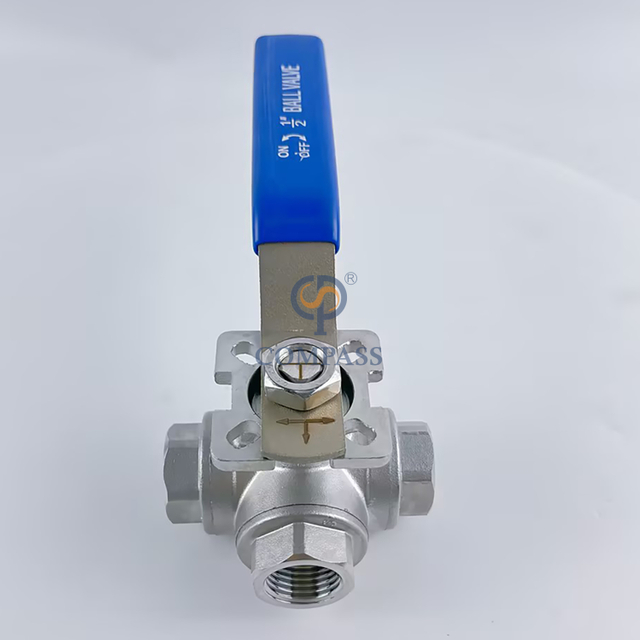
Ball valves are made for hazardous locations with explosion-proof and anti-static designs. They also use fire-safe construction and hazardous-area certifications like ATEX and IECEx. Careful installation and maintenance are part of the design too. A standard ball valve can become an ignition source. Static discharge, sparks inside an enclosure, or a failed seal may release process fluid into explosive atmospheres. Adapted ball valves in hazardous areas counter these risks with bellows seals and blow-out proof stems. Fire-safe construction also holds a leak long enough for operators to respond. Specifiers who match each ball valve to the area classification and process conditions protect safety in hazardous locations. Certification, materials, and actuation choices all shape that match.
Key Takeaways
Explosion-proof enclosures and anti-static grounding stop sparks from forming in hazardous areas.
Fire-safe seats and blow-out proof stems stop leaks and keep workers safe during fires.
Pick materials and seals that fit the process fluid and the temperature range.
Make sure the whole valve assembly has the correct certification for the site.
Connect the valve to the ground the right way and check it often to keep it safe.
Why Standard Ball Valves Fail in Hazardous Locations
How Hazardous Locations Are Classified
Hazardous location classifications describe how likely flammable or explosive atmospheres are and how long they last. In North America, the Class, Division, and Zone system groups sites by the type of material present. Classes separate gases and vapors from dusts and fibers. Divisions and Zones describe how often the hazard exists. IEC 60079 provides the international framework for explosive gas atmosphere zones. These systems help engineers select equipment not certified for hazardous locations with care.
A site may hold flammable gases, combustible dust, or both. Each condition demands different protection methods. A ball valve that suits a dust environment may fail in a gas zone. Specifiers must read the classification before choosing any hardware.
Three Ignition Risks of Standard Valves
Standard ball valves in hazardous areas carry three main ignition risks. First, static discharge can build on an unbonded valve body. A spark may then ignite surrounding vapors. Second, an electric actuator without explosion-proof housing can spark internally. That spark escapes into the surrounding atmosphere. Third, a failed seat or seal releases process fluid. The leak creates a local explosive atmosphere near the valve.
These failures can lead to fires, explosions, and toxic releases. A standard ball valve lacks the grounding, enclosure, and sealing features that contain such events. Adapted ball valves in hazardous areas address each risk directly. Anti-static devices drain charge safely. Explosion-proof enclosures contain internal sparks. Fire-safe seats and bellows seals limit leakage. Together, these features protect people and equipment in potentially explosive atmospheres.
Key Features of Ball Valves for Hazardous Locations
Explosion-Proof and Anti-Static Design
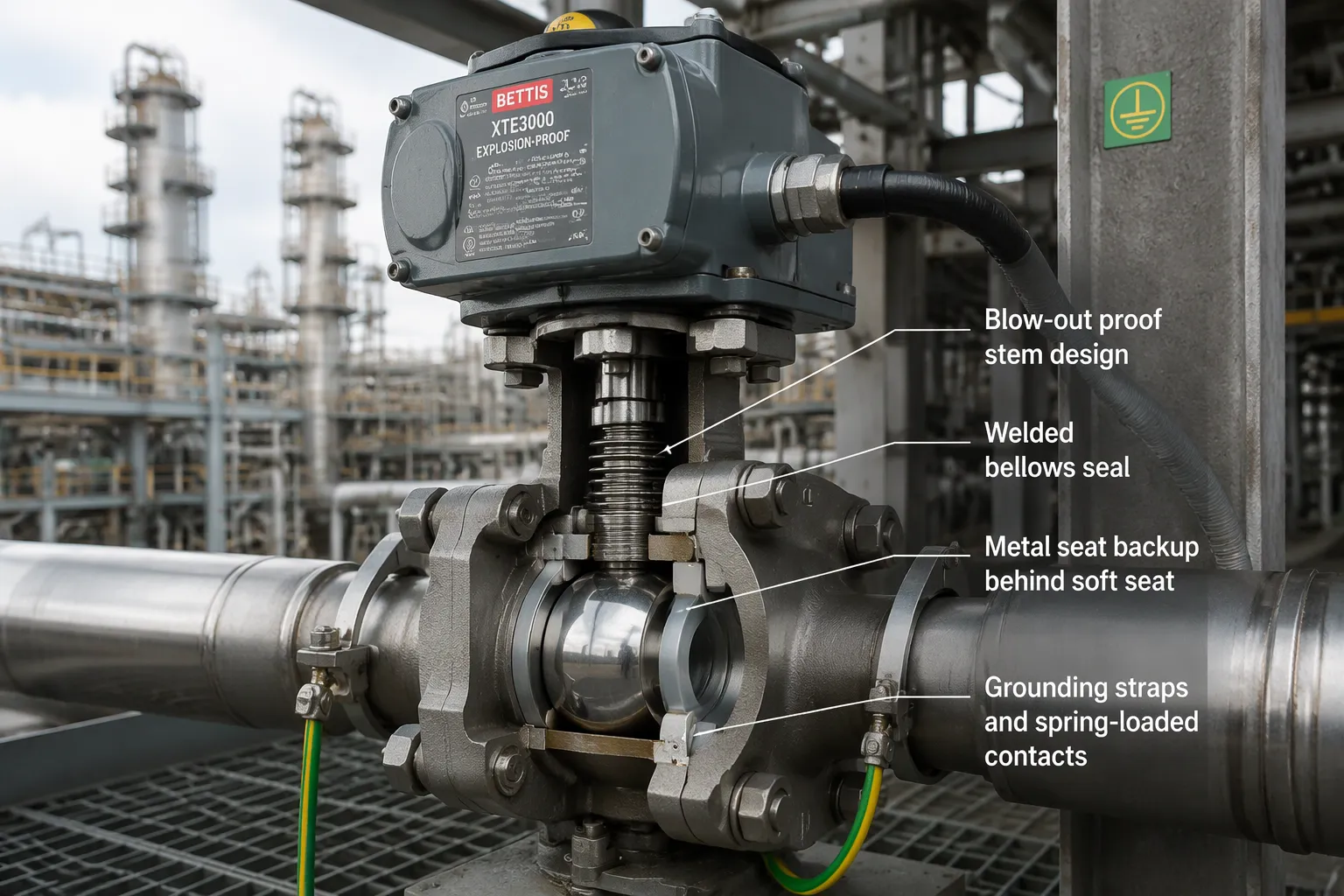
The key features of ball valves for hazardous locations begin with keeping every possible spark inside. An explosion-proof enclosure wraps around the electric actuator and its wiring. The housing is strong enough to hold an internal ignition. It also cools hot gases as they escape through tight joints. A flame inside the box cannot reach the explosive atmospheres around it. This explosion-proof design protects the plant even when a fault happens inside the actuator.
Anti-static devices handle the second risk. A static charge can build on a floating ball, stem, or body as media flows. A spark from that charge may ignite flammable gases near the valve. Ball valves in hazardous areas therefore use a grounding path from the ball through the stem to the body. Spring-loaded contacts or conductive seats complete the circuit. The valve body then bonds to the plant grounding grid. This path drains charge before it can reach spark energy. Together, the enclosure and the grounding path stop ignition sources at the two most common points.
Fire-Safe and Blow-Out Proof Construction
Fire-safe ball valves limit the damage when a seal fails during a fire. A fire-safe design uses a metal seat backup behind the soft seat. The soft seat may melt in a fire. The metal backup then keeps the valve tight against the line pressure. This containment buys time for operators to shut down the process. Fire-safe ball valves meet recognized fire test standards, and the certificate names the exact test the design passed.
Bellows seals add a second barrier on the stem. The bellows forms a welded metal barrier between the process fluid and the atmosphere. Process fluid stays inside the bellows even if the stem packing fails. This arrangement suits toxic or highly flammable media.
A blow-out proof stem prevents ejection under pressure. The stem carries a shoulder that sits inside the body bore. Line pressure pushes the stem outward, and the shoulder stops it. The stem cannot leave the body even with the packing removed. This ball valve explosion-proof detail protects technicians during maintenance.
These features work as a system. The enclosure and grounding path prevent sparks. The fire-safe seat, bellows seal, and blow-out proof stem contain leaks. Each layer covers a different failure mode in hazardous area applications. Explosion-proof ball valves combine all of them in one body. Specifiers who review the key features of ball valves for hazardous locations can match each layer to the site classification. Explosion-proof constructions also extend to the actuator, the junction box, and the cable glands. A gap at any of these points weakens the whole protection scheme. Explosion-proof construction therefore covers the complete valve and actuator assembly, not the valve body alone.
Material and Sealing Choices for Hazardous Locations
Stainless Steel, Carbon Steel, and Alloy Options
The body material decides how well ball valves in hazardous locations resist corrosion and how strong they are. Stainless steel works for many process fluids, like mild corrosives and clean media. It fights rust and keeps a tight seal over a long service life. Carbon steel gives high strength at a lower cost. It works for dry gas, oil, and other non-corrosive service where the plant controls moisture. Alloy grades, like duplex or nickel-based alloys, handle harsh chemicals and streams full of chloride. Each option fits a different job. Specifiers match the body metal to the fluid, the pressure, and the local climate.
Material choice also affects grounding. Conductive body metals carry static charge to the plant grid. A coated carbon steel body needs a clean bonding point at the flange. Stainless steel and alloy bodies bond with standard lugs. So the material decision supports the anti-static path described earlier.
Seat Materials and Thermal Compensation
Seat material controls how well a valve seals across the temperature range. PTFE seats seal tightly at moderate temperatures. Reinforced PTFE grades add strength for higher pressures. PEEK seats hold their shape at higher temperatures than standard PTFE. Metal-to-metal sealing surfaces suit extreme heat, abrasive media, and fire exposure. A metal seat also backs up a soft seat in fire-safe ball valves. The metal ring keeps the valve tight after the soft seat breaks down.
Thermal expansion changes clearances inside the valve. A seat that fits at ambient temperature may bind when hot or leak when cold. Thermal compensation mechanisms absorb this movement. Spring-loaded seats press against the ball across the temperature swing. Slotted seat carriers allow controlled expansion. These designs keep torque stable and sealing reliable in explosive atmospheres. Specifiers should confirm the seat and compensation design against the full process temperature range in hazardous areas.
Certifications and Compliance of Ball Valves for Hazardous Locations
ATEX, IECEx, and NEC Requirements
Certifications and compliance of ball valves for hazardous locations depend on three sets of rules. ATEX controls equipment sold in the European Union. IECEx is an international certification program that many countries accept. The NEC, or National Electrical Code, sets the rules for North American installations. Each system sorts sites by zone or division and assigns equipment protection levels. A valve marked for one system may not meet another. Specifiers must check that the marking matches the jurisdiction and the site classification.
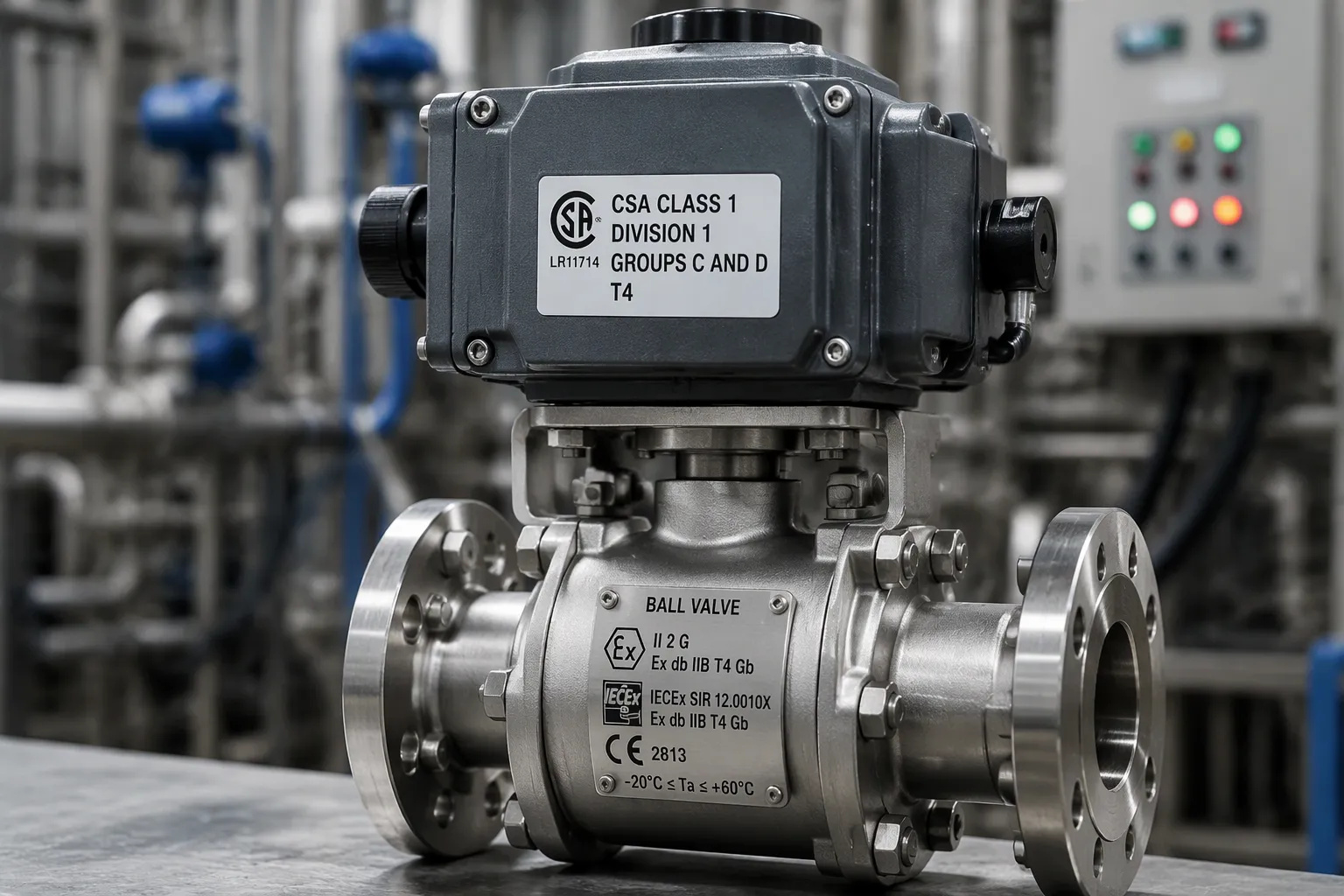
ATEX ball valves carry a marking that lists the equipment group, category, and gas or dust group. The marking also shows the maximum surface temperature. IEC 60079 provides the technical standards behind these markings. IEC 60079-0 covers general requirements, and IEC 60079-1 addresses flameproof enclosures. A certificate from an accredited body confirms the design passed the relevant IEC 60079 tests. The NEC uses Class, Division, and Zone language instead. Equipment listed for Class 1, Division 1 fits areas where flammable gases or vapors exist under normal conditions.
Testing and Actuation Options
Certification testing pushes the hardware past normal service. Flameproof enclosures go through an internal ignition test. The housing must hold the explosion and keep hot gases below the ignition temperature of the surrounding explosive gas atmosphere. Impact and ingress tests follow. The certificate records every test the design passed.
Actuation and control systems for ball valves for hazardous locations must carry their own approval. A common example pairs hazardous-location electric actuators with stainless steel flanged ball valves. The assembly meets CSA Class 1, Division 1, Groups C and D T4 and Class 2 standards. Groups C and D cover the common industrial gases, and T4 caps the surface temperature. This combination fits refineries and chemical plants across North America.
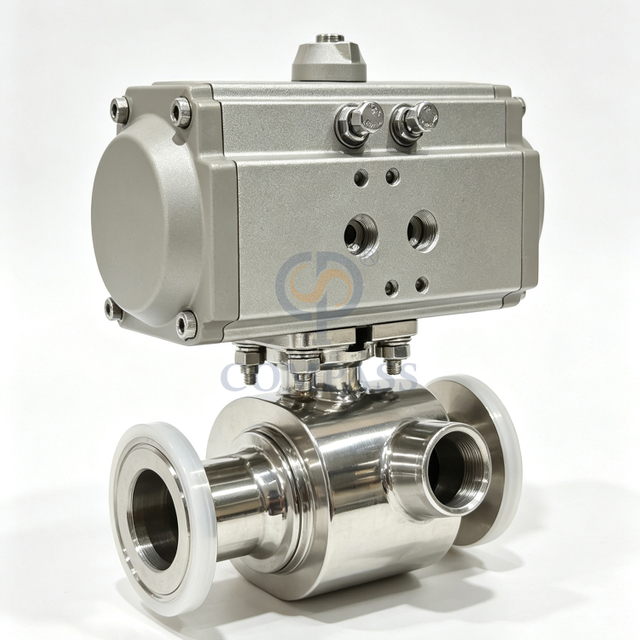
Pneumatic ball valves work well in hazardous or explosive environments. Compressed air brings no electrical energy into the valve, so the actuator cannot spark. Explosion-proof electric actuators remain the choice where plant air is not available. Intrinsically safe electric actuation offers another path. The circuit limits energy to a level too low to ignite flammable gases, even under a fault. This approach keeps the wiring simple and the enclosure light. Actuation and control systems for ball valves for hazardous locations therefore range from air-driven to energy-limited electric designs. Each option fits a different plant infrastructure and risk profile.
Explosion-proof ball valves tie these threads together. The valve body, the actuator, and the wiring all carry matching hazardous area certification. A missing certificate at any point breaks hazardous location compliance. Specifiers should collect the certificate for the complete assembly, not just the valve. This step confirms the explosion-proof construction holds across the whole unit.
Installing and Maintaining Ball Valves in Hazardous Areas
Grounding, Bonding, and Installation
Correct installation starts with the grounding path. The installer connects the valve body to the plant grounding grid with a dedicated wire. Flange bolts alone do not always make a low-resistance path, especially on coated carbon steel bodies. A clean bonding lug at the flange removes paint and exposes bare metal. The installer then checks continuity from the ball through the stem to the body and on to the grid. This step confirms the anti-static circuit works before the line goes into service.
Installation also protects the enclosure. Cable glands must match the actuator housing thread and carry the same certification. Unused entries need certified plugs. The installer tightens gland nuts to the maker's specification and inspects the flamepath joints for damage. A scratched flamepath weakens the explosion-proof housing. Piping alignment matters too. A valve forced into misaligned flanges carries stress that can distort the seat and open a leak path into explosive atmospheres.
Inspection and Maintenance Routines
Routine inspection keeps ball valves in hazardous areas compliant over time. Technicians check the grounding continuity at each scheduled outage. They inspect flamepath surfaces, cable glands, and enclosure seals for corrosion or damage. They also verify that the actuator marking still matches the area classification. Any replacement part must carry the same certification as the original.
Maintenance routines cover the process side as well. Technicians cycle the ball valve and record operating torque. A rising torque trend points to seat wear or media buildup. They test the stem packing and bellows seal for leakage and confirm the blow-out proof stem stays seated. Records of each inspection support the site's compliance file. A documented schedule shows auditors that the hardware still meets its certification conditions. This discipline keeps ball valves in hazardous locations safe across a long service life.
Explosion-proof construction, anti-static grounding, fire-safe seats, and blow-out proof stems work together as one protective system. Material and seat choices extend that protection across the process temperature range. Certification confirms the design meets ATEX, IECEx, or NEC rules. Correct grounding and routine inspection keep the hardware compliant after startup. Together, these layers deliver safety in hazardous locations.
Specifiers should match each adaptation to the actual area classification and process conditions. A generic "hazardous area" label tells them very little. Ball valves for explosive atmospheres need features tied to the specific gas group, temperature class, and duty.
Verification closes the loop. Confirm certifications, documentation, and maintenance schedules before installation and again afterward. This discipline keeps ball valves reliable in hazardous areas over the full service life.
FAQ
What makes a ball valve suitable for a classified site?
A suitable valve has explosion-proof enclosures, an anti-static grounding path, fire-safe seats, and a blow-out proof stem. It also has certification that matches the site's gas group and temperature class. Each layer covers a different ignition or leak risk.
Does an approved valve body guarantee a compliant installation?
No. The actuator, junction box, and cable glands must have matching certification. Unused entries need certified plugs, and flamepath joints must stay undamaged. A gap at any point breaks compliance for the whole assembly.
How often should technicians verify grounding continuity?
Technicians check continuity at each scheduled outage. They also inspect flamepath surfaces, glands, and seals for corrosion. Any replacement part must have the same certification as the original. Written records support the site's compliance file.
Which actuation option suits an explosive atmosphere best?
Pneumatic actuation brings no electrical energy into the valve, so it cannot spark. Explosion-proof electric actuators fit plants without available air. Intrinsically safe electric designs limit circuit energy below ignition levels. Each option matches a different infrastructure and risk profile.
Can a standard valve be upgraded for hazardous areas?
Rarely. Anti-static paths, flameproof housings, and fire-safe seats are built into the design, not added later. Specifiers should pick ball valves certified for the specific classification instead of changing general-service units.