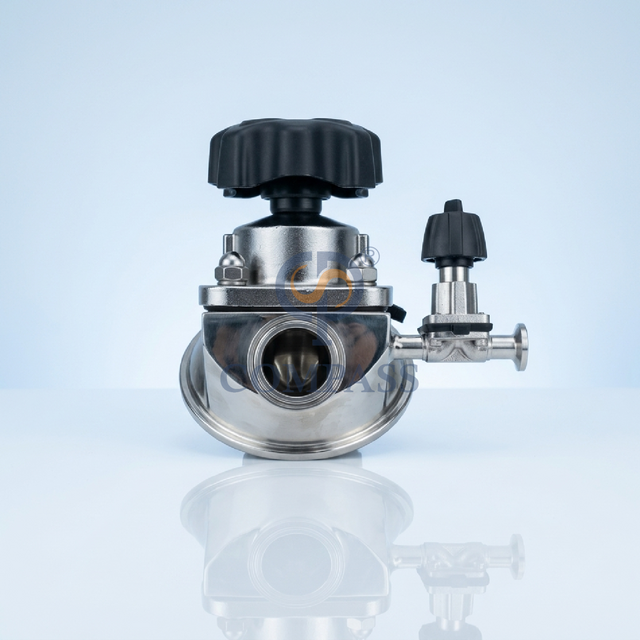
A sanitary check valve is a two-port device that lets flow go only one way. It stops backflow in clean processing lines. This valve keeps products pure and stops contamination in food, beverage, dairy, and drug systems. It works on its own, using mechanics. Fluid flow opens and closes the valve. You do not need outside power or a person to run it. You count on this part to keep your sanitary systems clean. This article explains how the sanitary check valve works, the types you can get, and key factors for choosing one. Backflow can spoil a whole batch and bring in dangerous germs. Picking the right valve stops these costly problems and keeps products safe.
Key Takeaways
A sanitary check valve stops backflow on its own. It keeps your product clean and safe.
The valve uses the pressure of flowing liquid to open and close. It does not need electricity or a person to operate it.
Pick ball check valves for fluids that have solids in them. Pick spring check valves for any mounting angle.
Pick valve materials that fit your product and how you clean it. This stops contamination and makes the valve last longer.
Choose a valve you can fix easily without tools. This saves time and cuts down on downtime.
What Is a Sanitary Check Valve
Definition and Core Purpose
A sanitary check valve is a special valve with two ports. It has one opening for fluid to enter and one for it to leave. This design makes fluid flow only one way. It also stops reverse flow, which people call backflow. You will see this valve in many industries. Food and drink plants use it a lot. Drug making also relies on it. The valve keeps products safe and pure. It works as a trusted backflow stop in these important lines.
The main job of this valve is simple. It keeps your product clean while making it. Any dirt can ruin a whole batch. A sanitary check valve stops that from happening. For example, a dairy plant puts this valve after the final filter. This stops product from dirtying the filter and air pipes. You get safe, clean products every time.
Key Design Features for Hygienic Service
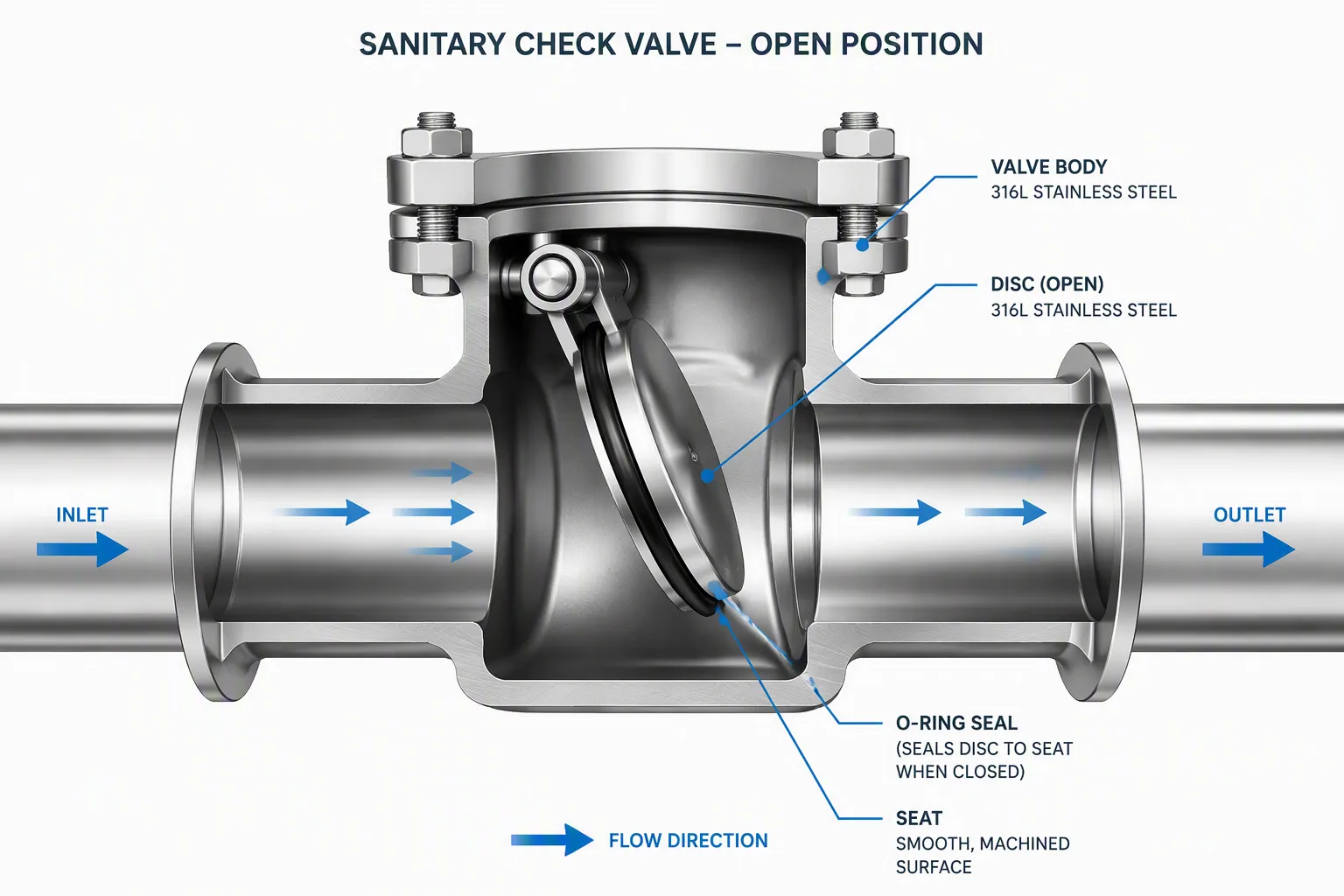
Builders make these valves with cleanliness in mind. They use clean materials like 316L stainless steel. The inside surfaces are smooth and shiny. This smoothness stops bacteria from hiding and growing. An O-ring seal gives a tight close. The valve also works with clean-in-place (CIP) systems. You can clean it without taking it apart.
Surface finish matters a lot for hygiene and CIP use. Different jobs need different roughness levels. Here are the common standards:
For ASME BPE uses, surfaces that touch product need a finish of 20 µ-inch Ra (0.5 µm) or better. This is checked with a calibrated profilometer and listed on the material test report.
Standard surface finish: Ra 0.6 µm for general food and drink processing.
Improved surface finish: Ra 0.4 µm for drug, dairy, and high-purity uses.
Electropolished finish: Ra less than 0.4 µm for biopharma and the highest cleanliness needs.
These features keep your clean systems safe. They also lower the chance of dirt in every batch you make.
How Sanitary Check Valves Work
Automatic, Mechanically Operated Flow Control
A sanitary check valve operates as a self-acting safety device. It responds directly to the fluid moving through your pipe. The valve does not need a person to open or close it. It also requires no electrical power or compressed air. Flow direction and pressure drive every action.
Here is how the process works. Fluid enters the valve from the inlet side. The pressure of this forward flow pushes the internal closing part away from the seat. This action opens the valve. Product passes through to the outlet. When the flow stops or tries to reverse, the closing part moves back to its resting position. It presses against the seat and blocks the passage. No fluid can travel backward through the valve.
You do not need to monitor the valve during production. It watches the flow and acts on its own. This makes it a low-maintenance part of your system.
Understanding how sanitary check valves work helps you see why they matter. The valve uses simple mechanics. You install one and trust it to do its job for a long time. Fewer things can break or fail.
A sanitary check valve gives automatic protection without manual work. The valve's sensitivity to flow changes is a key feature. Even a small drop in forward pressure triggers the closing sequence. This quick response stops backflow before it can start. You avoid mixing products or pulling dirty fluid into clean lines.
The Role of the Seat, Disc, and O-ring in Sealing
Three main parts work together inside the valve. These are the seat, the disc, and the O-ring. Each one plays a specific role in creating a reliable seal.
The seat is a machined surface inside the valve body. It provides a flat or tapered area where the disc makes contact. Builders make this surface smooth and precise. Any imperfection can cause a leak. The seat must match the disc shape exactly.
The disc is the moving part that opens and closes the valve. In a ball check valve, the disc is a sphere. In a spring check valve, it looks more like a flat plate or poppet. Forward flow lifts the disc off the seat. When flow stops, the disc returns to its closed position. Gravity, spring force, or reverse pressure helps it settle back.
The O-ring sits in a groove on the disc or the seat. This rubber ring creates the final seal. When the disc presses against the seat, the O-ring compresses. It fills any tiny gaps and stops leakage. This seal is what makes preventing backflow possible. Without a good O-ring, product can seep past the valve and cause problems.
Material choice for the O-ring matters. Common options include EPDM, silicone, and PTFE. Each one works with different products and cleaning methods. You must pick the right material to avoid contamination. A bad seal lets bacteria enter your process. It can spoil an entire batch.
The design of these three parts determines valve reliability. A worn seat or damaged O-ring leads to leaks. Inspect these components during maintenance. Replace O-rings at scheduled intervals. Keep sealing surfaces clean and damage-free.
Understanding these three parts gives you practical knowledge about valve operation. You know what happens inside the valve during every cycle. This helps you choose the right design. It also helps you spot problems before they cause product loss.
Types of Sanitary Check Valves
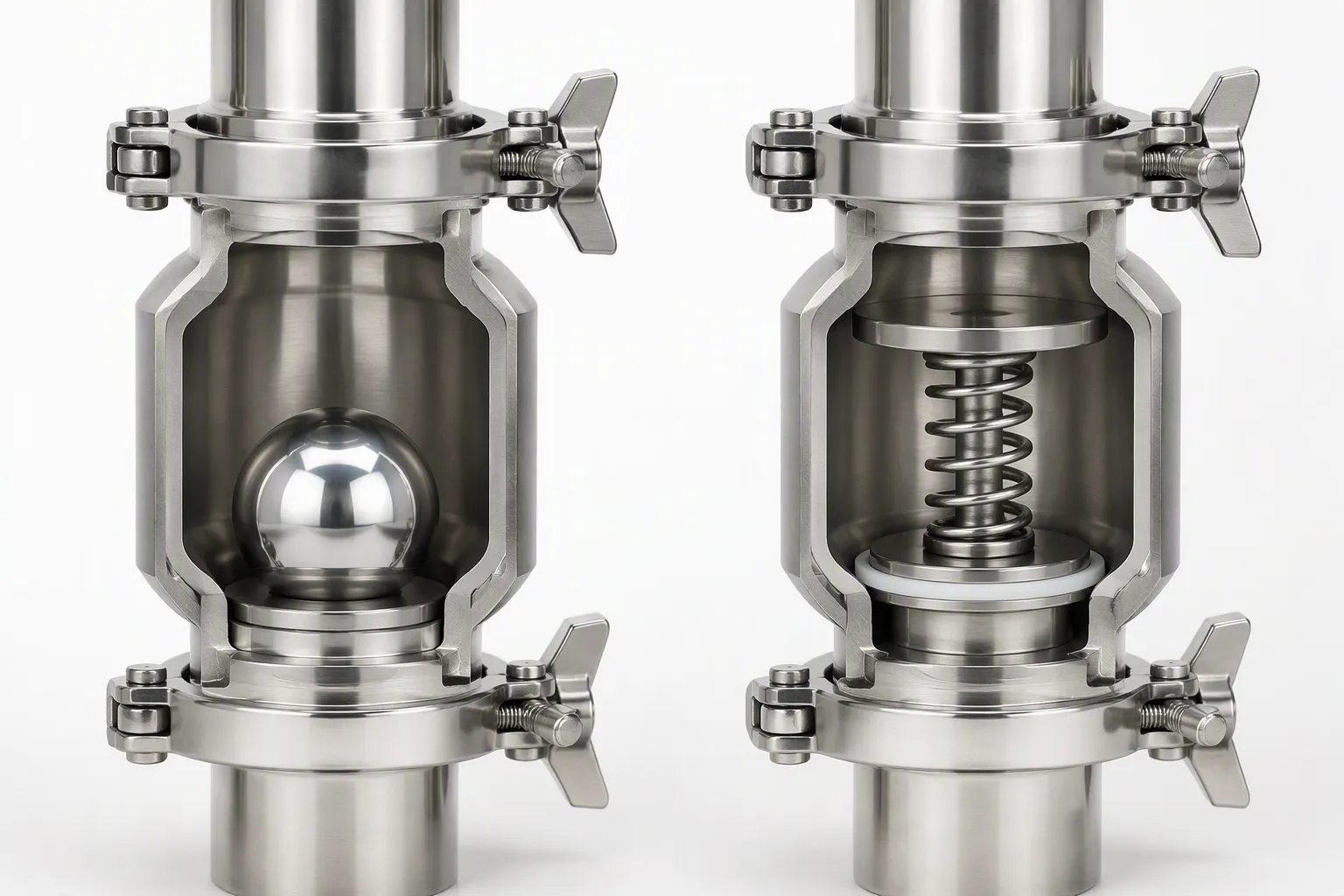
You will find two main types of sanitary check valves in clean processing: ball check valves and spring check valves. Each type suits different jobs. Your choice depends on your fluid, your flow rate, and your installation position. Understanding both designs helps you pick the right sanitary check valve for your line.
Ball Check Valves
A ball check valve uses a simple sphere as its moving part. Forward flow pushes the ball away from the seat. The ball rolls or lifts to let product pass. When flow stops, the ball drops back onto the seat. Gravity pulls it down and creates a seal. No spring or external force is needed.
This design handles solids well. The ball moves out of the way for particles in your product. It also creates a low pressure drop. Your pump does not work as hard to push fluid through. This saves energy and reduces wear on your system.
You can choose from two subtypes. A Y-ball design places the ball at an angle. A concentric ball design keeps the ball in line with the pipe. Both work well in many sanitary applications. The Y-ball style often fits tight spaces. The concentric style gives you a straight flow path.
Ball check valves work best in vertical lines with upward flow. Gravity helps the ball return to its seat. In horizontal lines, you need a spring-assisted version for reliable closing. You can service these valves without special tools. A simple clamp or threaded connection lets you open the body and inspect the ball.
Spring Check Valves
A spring check valve adds a spring behind the disc. The spring pushes the disc toward the seat. Forward flow must overcome spring force to open the valve. When flow stops, the spring snaps the disc shut. This action gives you a reliable seal every time. The spring force also stops the disc from fluttering during low-flow conditions.
The spring design works in any installation orientation. You can mount it vertically, horizontally, or at an angle. The spring does not rely on gravity. This makes performance consistent across different setups. You get the same closing force no matter how you install the valve.
Two subtypes exist here as well. A concentric spring design centers the disc in the flow path. An eccentric spring design offsets the disc to one side. The eccentric style helps with fluids that contain some solids. The offset path lets particles pass without getting stuck.
These valves cost a bit more than ball designs. The extra part adds complexity. However, the reliable sealing often justifies the price.
Swing check valves are common in general service. They use a hinged disc that swings open with flow. However, you will rarely see swing check valves in sanitary applications. Their internal hinges and pockets trap product and resist cleaning. Lift check valves offer another general-service option. They use a disc that lifts vertically off the seat. These valves often fail to meet hygienic design standards.
For clean processes, stick with ball or spring designs. They drain fully, clean easily, and meet the strict rules for hygiene. Your product stays safe and your system stays clean.
Key Specifications and Performance Ratings
Temperature, Pressure, and Flow Rate Ranges
Sanitary check valves work well in many different conditions. Temperature and pressure ratings depend on the specific materials and valve design. Always look at the manufacturer's datasheet for your exact model.
Flow rate plays a big role in valve sizing and selection. A valve that is too small blocks flow and causes pressure drop. A valve that is too large may not seal well at low flow rates. You must match the valve size to your system's flow needs. Think about both normal flow and peak demand when you pick a valve.
Materials of Construction and CIP Compatibility
You will see 316L stainless steel as the standard body material for sanitary check valves. This alloy fights corrosion and handles repeated cleaning cycles. Seal materials change based on what your application needs.
Elastomer
Temperature Range
Key Strengths
Limitations
EPDM (Peroxide-Cured)
-45°C to +150°C
Great steam resistance for SIP cycles; strong resistance to acids and alkalis
Weak resistance to oils and fats
Silicone (VMQ)
-60°C to +230°C
Best range for extreme temperatures; clear grades let you watch visually
Weak tear strength; not for superheated steam above 121°C
FKM (Viton)
-25°C to +200°C
Highest chemical resistance; resists oils and fats
Steam-resistant grades needed for SIP use
These seals must follow FDA rules under 21 CFR 177.2600 for direct food contact. Surfaces that touch product need a finish of Ra ≤ 0.8 µm. This smooth finish helps with effective cleaning and sterilization. It also stops contamination from hiding in pits or crevices. Picking the right material protects hygiene and makes valve life longer.
Selecting the Right Sanitary Check Valve
Matching Valve Type to Application and Fluid Properties
The qualities of your fluid guide every decision you make. Thin liquids like water or milk move easily through most valve designs. Thick products like yogurt, sauces, or syrups need extra care. These thick fluids fight against flow and can block small passages. You must choose a valve with a wide flow path to stop clogs. A full-bore design with little flow restriction keeps product moving smoothly.
Think about these things when you match a valve to your application:
How thick the fluid is and whether it has solids
The flow rate and pressure you need
How you will install it (up or sideways)
Whether it works with CIP/SIP cleaning
Thick products like yogurt need valves with no dead spots. Residue builds up in small gaps and traps bacteria. This buildup hurts hygiene and causes contamination. A valve with smooth surfaces, no corners, and good drainage fixes this problem. For yogurt lines that use pigging systems, the valve must be full-bore. This lets the pig pass freely and stops buildup.
Thick products such as sauces, syrups, and jams need valves with wide flow paths to stop clogging.
Maintenance, Field Serviceability, and Compatibility Checks
Good care of sanitary check valves starts with smart choosing. Look for valves you can take apart and fix without special tools. A simple clamp connection lets you open the body, check the disc, and swap the O-ring fast. Check O-ring replacement times in your manual. Worn seals cause leaks and product loss.
Material compatibility protects your process and your valve. For dairy jobs, 316L stainless steel with molybdenum stands up to the strong alkaline and acid washes used in cleaning. This choice is a must for yogurt lines. It keeps the valve from rusting and makes it last through frequent CIP/SIP cycles. You must also make sure your seal material matches your product, cleaning agents, and process temperature. When picking the best sanitary check valve, confirm that every wetted part meets FDA rules for food contact.
A sanitary check valve stops backflow automatically. Forward flow opens the valve. Gravity or spring force closes it. You choose between ball and spring designs. Ball valves handle solids well. Spring valves seal in any direction. Your choice depends on your fluid and process. Match materials to your product and cleaning agents. Check flow rates and pressure limits. Pick a valve you can service without tools. Ask your supplier for advice. The right valve protects your product safely.
FAQ
What happens if you install a ball check valve in a horizontal pipe?
Ball valves rely on gravity to close. Horizontal installation may prevent the ball from sealing properly when flow stops. You need a spring-assisted ball valve or a spring check valve for horizontal lines.
Can you use a sanitary check valve with thick fluids like yogurt or sauce?
Yes. Choose a valve with a wide, full-bore flow path. Ball check valves handle solids better because the ball moves out of the way. Avoid designs with dead spots that trap product.
How often should you replace the O-ring?
Check your valve manual for specific replacement intervals. Inspect the O-ring during routine maintenance. Replace it at the first sign of wear, cracking, or leakage. A worn seal causes product loss.
Do you need special tools to service a sanitary check valve?
No. Most valves use simple clamp connections. You can open the body, inspect the disc, and replace the O-ring without tools. This makes field service fast and lowers downtime.