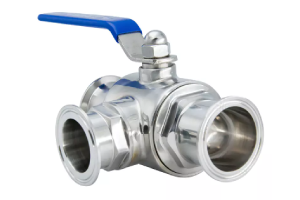
Xusheng(Sanicompass)'s Sanitary angle seat valves are widely applicable medium in water, neutral gas, liquid, alcohol, oil, organic solvent, water vapor, weak acid, weak alkali solution. It can be used in fluid medium pipeline equipment such as pharmaceutical equipment, food equipment, dairy equipment and chemical equipment.
Our valves have the following outstanding functions:Simple structure, light weight and low flow resistance. It adopts industrial plastic sealing or hard sealing material with good sealing performance. Using compressed air as the power source, it is highly efficient, easy to operate, simple in structure and minimal maintenance. The noise generated by the non-hydraulic system during standby can save power consumption and reduce production costs. And our valves can choose different styles of angle seat valves according to the temperature of the medium. The sealing is made of PTFE, the valve body material is made of stainless steel 304/316L, and pressure range is between PN0-PN25.
Xusheng(Sanicompass) can produce sanitary angle seat valves as per customers' design drawing and requirement.
Selecting the optimal sanitary valve is essential for maintaining product purity, preventing batch contamination, and avoiding costly downtime in hygienic processing. By understanding process parameters, flow coefficients, and material compatibility—such as 316L stainless steel and proper elastomer seals—facilities can streamline automated CIP/SIP operations. Choosing between butterfly, ball, and diaphragm configurations based on specific viscosity and cleanliness standards ensures long-term operational efficiency, regulatory compliance, and seamless integration into modern fluid handling systems.
Specifying hardware for hygienic processing environments demands extreme precision to prevent batch contamination and regulatory failure. Common engineering mistakes include confusing tube dimensions with pipe sizes, selecting improper surface finishes, and misintegrating a sanitary valve. By prioritizing accurate sizing, strict material traceability, chemical-compatible elastomers, and industry standards like 3-A or ASME BPE, processing plants can safeguard product purity, minimize operational downtime, and ensure long-term system compliance.
Specifying the right hygienic fluid handling equipment is critical for avoiding product contamination, batch losses, and costly operational downtime. By systematically evaluating fluid viscosity, system head, and shear sensitivity, engineers can select optimal sanitary pumps and valves tailored to specific processing conditions. Adhering to stringent 3-A, EHEDG, and FDA compliance standards ensures seamless CIP/SIP cleanability, robust cross-contamination protection, and long-term process reliability across food, beverage, and biopharmaceutical production lines.

Selecting the right sanitary valve is essential for maintaining biological purity and preventing batch contamination in hygienic processing lines across food, pharmaceutical, and consumer chemical industries. Unlike standard industrial options, true sanitary valves utilize 316L stainless steel, polished low-Ra surface finishes, and crevice-free architectures compatible with automated CIP/SIP protocols. By evaluating key valve designs—including ball, butterfly, and diaphragm types—against specific process demands and verifying manufacturer quality control, process engineers can eliminate dead legs, safeguard product integrity, and ensure long-term operational reliability.
Learn how ASME BPE standards ensure sterility in biopharma fluid handling, covering material traceability, surface finishes, and sanitary valves.
**Learn how sanitary valve surface finish (Ra) impacts hygiene, seal wear, and compliance with 3-A and ASME BPE standards. Optimize your specs.** (141 characters)
An engineering guide to choosing sanitary valve seals. Compare EPDM, PTFE, Silicone, and FKM for FDA/USP compliance and CIP/SIP durability.
Choose the right hygienic stainless steel (304, 316L) for flow equipment to prevent contamination, ensure compliance, and avoid costly downtime.
Select the right sanitary valves for dairy processing to ensure hygienic compliance, prevent contamination, and maximize continuous plant uptime.
Compare DIN, SMS, and 3A sanitary fittings. Understand mechanical differences, pressure ratings, and how to select the right hygienic connection.
You should choose a pump based on how thick your liquid is. Think about how fast you want to move the liquid. You also need to know what pressure your process needs. The temperature of the liquid matters too. If there are solids in the fluid, that is important. You should also consider how gentle th
Multi-port flow control is no longer a luxury in hygienic processing—it is a necessity. Whether you are diverting raw milk to one of two pasteurizers, rerouting CIP solution back to a recovery tank or switching between product and water phases in a bioreactor suite, a single 3 way sanitary butterfly