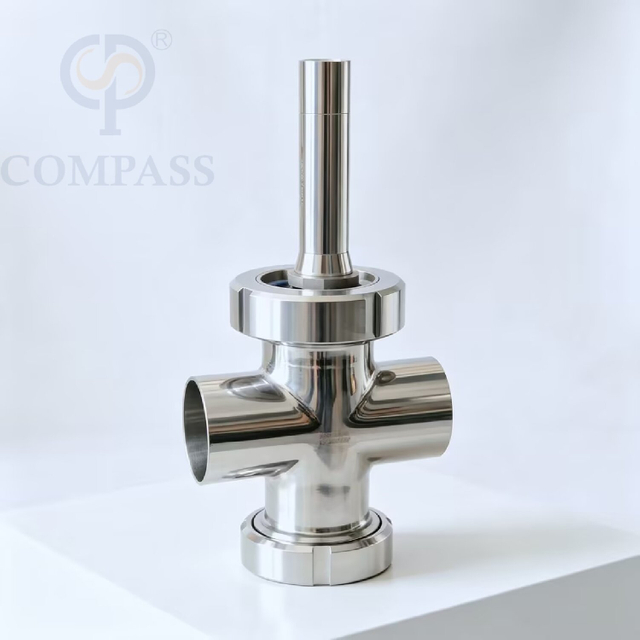
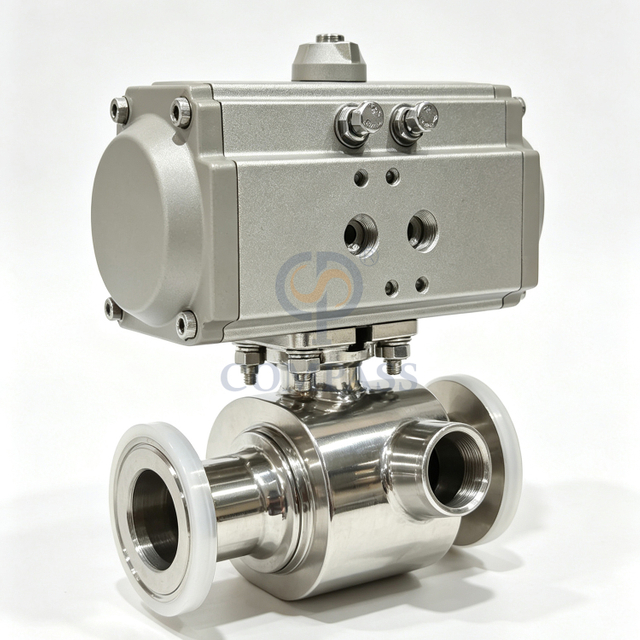
Sanitary check valves are used in clean processing systems. They let fluid flow one way and stop it from flowing back. Their insides are smooth, have no crevices, and are easy to clean. Standard check valves are used for general industrial flow control. They focus on pressure and temperature performance instead of hygiene. This difference is very important. Product safety depends on stopping bacterial growth inside the valve. Operational uptime depends on fast, effective cleaning. Regulatory compliance depends on meeting strict design and material rules. A sanitary check valve vs standard check valve comparison shows key differences in design, materials, applications, cleaning methods, and industry standards. Choosing the wrong valve type raises contamination risks, increases downtime, and may cause failed inspections.
Key Takeaways
Sanitary valves have smooth insides that drain on their own. This stops bacteria from growing and makes cleaning quick.
Standard valves are made for pressure and cost, but their rough insides can trap fluid and cause contamination.
Sanitary valves are made of 316L stainless steel and FDA-approved rubber, but standard valves are made of brass, cast iron, or plastic.
Sanitary valves are used in food, drink, and drug lines, while standard valves deal with water, oil, and gas.
Sanitary valves use CIP systems to clean without removing them, but standard valves need manual cleaning and cause more downtime.
Sanitary Check Valve vs Standard Check Valve: Design
The comparison between a sanitary check valve and a standard check valve begins with shape. Both valve types let flow go one way and stop it from going back. Both have two openings. But their insides are shaped in ways that matter for cleanliness.
Sanitary Valve Design
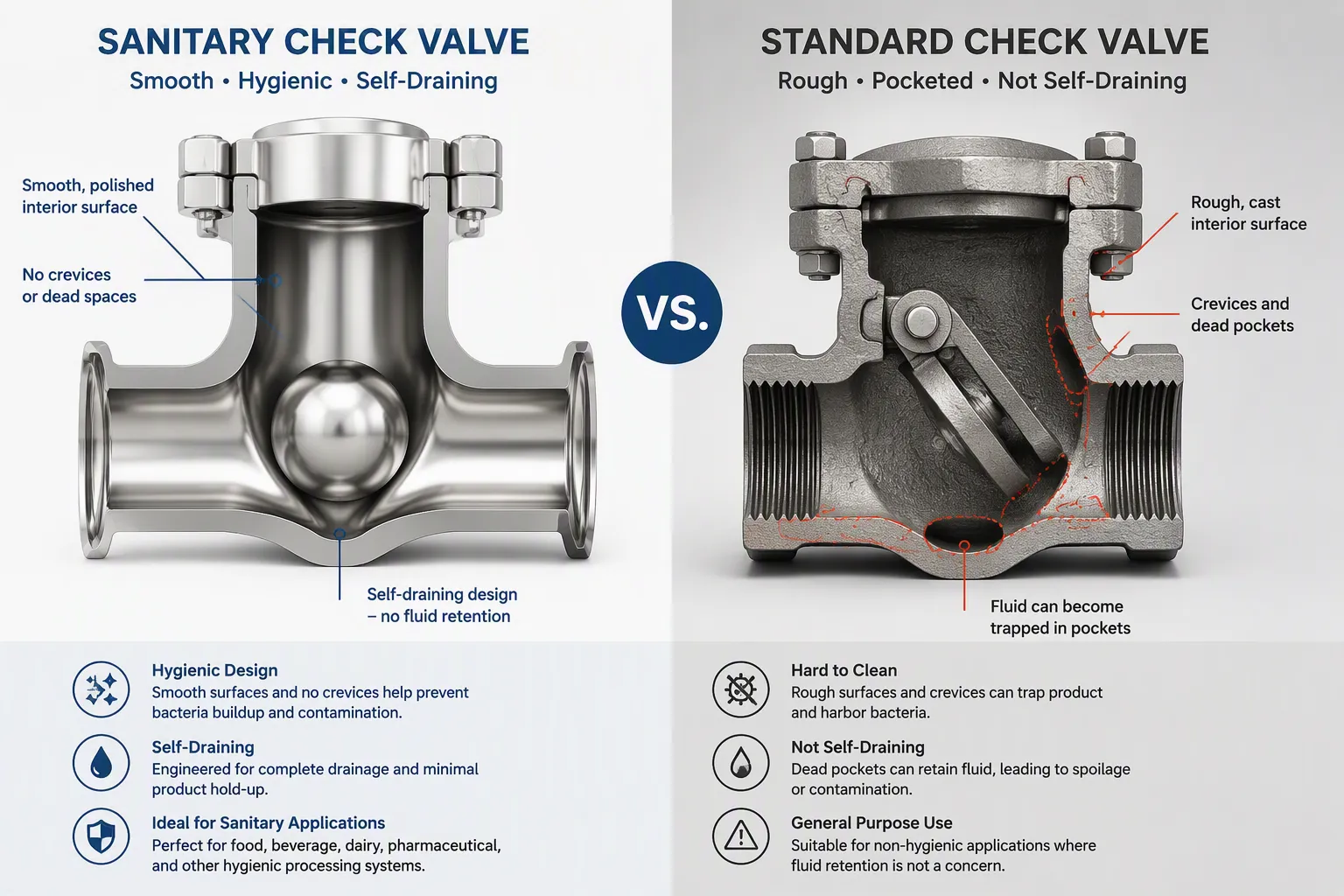
Sanitary valves have an inside with no cracks or crevices. Every part that touches the fluid is smooth and polished. The valve body lets all liquid drain out by gravity. No fluid stays inside after the process stops. This self-draining shape gives bacteria no place to grow.
A smooth inside does more than look clean. It stops bacteria from growing and makes cleaning faster. Biofilm cannot stick to a mirror-like surface. Cleaning fluids reach every wet area without needing special tools.
For sanitary valves used in dairy processing, the inside surface finish should be Ra (Roughness Average) 0.8 micrometers or less. This rule applies to all sanitary valves, including check valves. The document does not say different types have different rules. The super-smooth surface stops biofilm from sticking to wet parts. Those parts must be 316L stainless steel so they resist damage from dairy acid washes.
Sanitary check valves also avoid sharp corners and dead pockets. A ball check valve in a clean line uses a smooth ball and a matching seat. A silent check valve for clean use has a spring-loaded disc with a smooth shape. These designs keep product moving and leave nothing behind.
Standard Valve Design
Standard valves focus on pressure performance and cost. Their inside shape often has sunken areas, threaded connections, and rough cast surfaces. These features trap fluid and particles. Bacteria can grow in those pockets and resist normal cleaning.
A standard swing check valve, for example, has a hinged disc inside a cast body. The hinge area and the body cavity create spaces where fluid sits after shutdown. A standard ball check valve may have a machined seat with small gaps around the ball. Those gaps hold leftover fluid.
Standard valves still work well for water, oil, and gas. They handle high pressures and temperatures. Their design simply does not aim at cleanliness. A rough inside raises the chance of contamination in food or drug use. That contamination can ruin a whole batch.
Both valve families have two openings and let flow go one way. Only sanitary valves are built for cleanliness from the inside out. The table below shows the design gap.
Design Feature
Sanitary Check Valve
Standard Check Valve
Internal surface
Polished, no crevices
Cast or machined, may have sunken spots
Drainability
Drains itself
Fluid may stay inside
Wetted material
316L stainless steel
Brass, cast iron, carbon steel, plastic
Hygiene goal
Stops bacteria growth
Handles pressure and flow
Sanitary designs cost more at first. They pay back that cost by having fewer rejected batches and faster cleaning times. Standard designs save money on simple pipes where cleanliness does not matter. Matching the design to the job is still the key choice.
Check Valve Materials Compared
The material you choose makes sanitary and standard check valves different. It changes how well they resist rust, how easy they are to clean, and if they meet rules. A sanitary check valve uses stainless steel and FDA-approved rubber materials. A standard check valve uses brass, cast iron, carbon steel, or plastic.
Sanitary Valve Materials
Sanitary check valves use 316 or 316L stainless steel for all parts that touch the fluid. The 3-A Sanitary Series needs this grade for the body. Springs use 316 stainless steel as standard, but you can also get Hastelloy C-276. Seats and seals come in 3-A approved elastomers. These include EPDM, Viton, silicone, Kalrez, and AFLAS. USP Class VI versions also exist for drug use. The inside surface finish is 32 Ra or smoother, and 15 Ra is available if you ask.
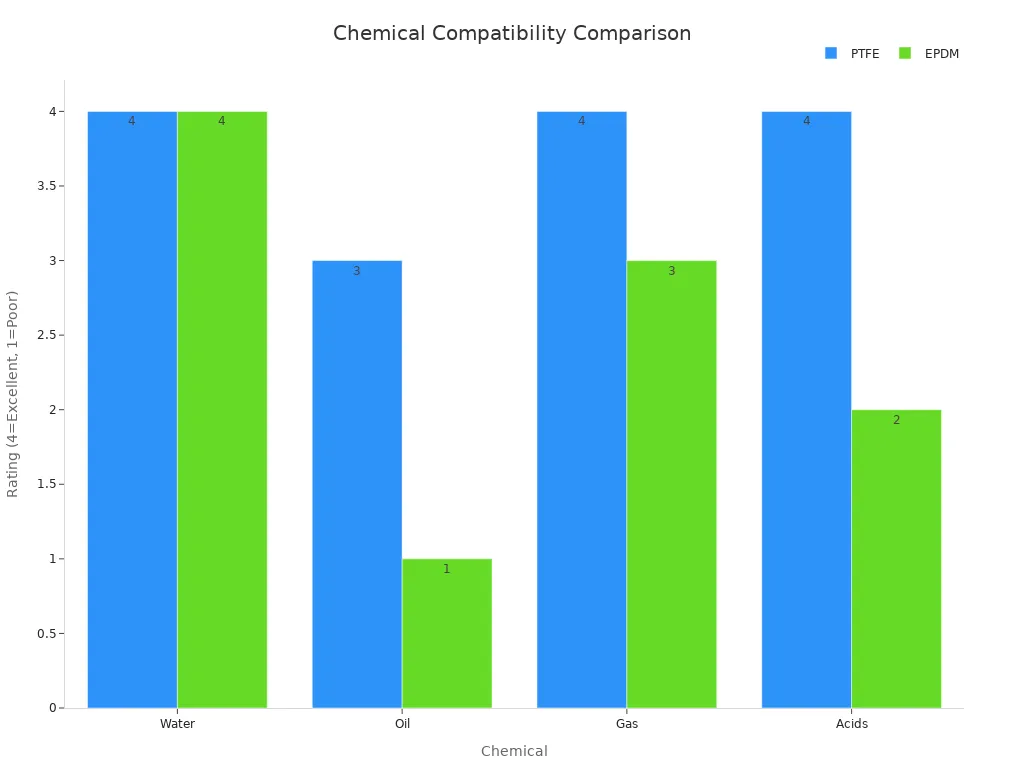
The choice of elastomer depends on the fluid. EPDM works well with water, steam, and harsh cleaning solutions. PTFE gives very good chemical resistance and works at many temperatures. But PTFE is not very stretchy, so it can be hard to seal in big sizes. All elastomers that touch food or drugs must meet FDA rules, like 21 CFR 177.2600 for EPDM.
EPDM is one of the most common elastomers for sanitary gaskets. It offers great chemical resistance, good heat properties, and a low price for drug, personal care, and food uses. Its biggest weakness is oil-based products. They cause swelling and shape changes that can break the seal.
PTFE is worth talking about mainly because it is not an elastomer. PTFE is a plastic with little stretch and memory. It does not have much "squish factor" or compression, so it is hard to seal, especially in big sizes. Still, PTFE works with many chemicals and at many temperatures very well.
Elastomer
Temperature Range
Key Chemical Compatibility & Applications
EPDM
-40°C to +150°C
Excellent resistance to caustic CIP solutions; suited for food, dairy, and beverage service.
PTFE
-200°C to +260°C
Virtually universal chemical resistance; used for aggressive chemicals and steam service.
Standard Valve Materials
Standard check valves use brass, cast iron, carbon steel, and plastic. These materials handle pressure and flow well. They resist rust in common factory settings. But they do not meet clean standards. Their surfaces may hold bacteria and cause contamination in clean processes. Material choice here looks at cost and strength, not how clean they are or FDA rules.
Check Valve Applications
The job a valve has to do decides which type works best. A sanitary check valve keeps products pure in clean processes. A standard check valve controls flow in general industrial systems. Each type works in a different setting.
Sanitary Applications
Sanitary check valves are used wherever a product must stay free of bacteria and dirt. Food plants use them on milk, yogurt, juice, and sauce lines. Breweries put them on beer transfer pipes. Beverage makers install them on syrup and fizzy drink systems. Drug companies depend on them for medicine solutions, vaccines, and sterile water. Biotech labs use them in fermentation and cell culture equipment.
These valves stop one batch from contaminating another. A silent check valve with a spring-loaded disc shuts fast and stops backward flow when pumps stop. That quick closing keeps one product from mixing with another. It also stops cleaning fluids from getting into product lines. In critical processes, one dirty batch can cost thousands of dollars and hurt consumers. Sanitary check valves stop that from happening.
Standard Applications
Standard check valves handle water, oil, gas, and general plumbing. City systems use them as a backflow preventer on drinking water lines. A backflow preventer stops dirty water from flowing back into the clean water supply. Homes and businesses put them on sump pumps, irrigation lines, and boiler feed pipes. Oil and gas operations use them on fuel lines and hydraulic systems. Factories put them on compressed air and steam lines.
Water and wastewater systems rely on standard valves for steady one-way flow. A water treatment plant uses them to keep treated water from mixing with raw sewage. A backflow preventer on a public water line protects drinking water from chemical or biological contamination. These valves also work in water and wastewater systems at lift stations and drainage systems. They handle dirty fluids well because cleanliness is not the goal.
The table below shows the split between the two valve families.
Industry
Sanitary Check Valve
Standard Check Valve
Food and beverage
Milk, juice, beer, syrup lines
Not used
Pharmaceutical and biotech
Drug solutions, vaccines, sterile water
Not used
Municipal water
Not used
Potable water, backflow preventer
Oil and gas
Not used
Fuel lines, hydraulic systems
General plumbing
Not used
Sump pumps, irrigation, steam
A sanitary check valve vs standard check valve choice comes down to one question: does the process need cleanliness? If yes, only a sanitary valve works. If no, a standard valve saves money and works well. The next section explains how cleaning and maintenance differ between the two types.
Cleaning and Maintenance
How you clean a valve depends a lot on its design. Sanitary check valves clean themselves right inside the pipe. Standard check valves must be taken out and scrubbed by hand. This difference directly affects downtime and labor costs.
Sanitary Valve Cleaning
A sanitary check valve never leaves its pipe to be cleaned. A Clean-in-Place (CIP) system handles all the work. The system pushes hot cleaning fluids through the line at high speed. The smooth, crevice-free inside lets the fluid reach every wetted surface. There are no dead spots where bacteria can hide.
Operators follow a set cleaning recipe. A normal CIP cycle uses a 1–4% caustic solution. This chemical breaks down organic soil on the metal surface. The operator watches the conductivity setpoint during the cycle. A reading between 30 and 50 mS/cm shows the solution is still strong enough to clean. After the caustic wash, a water rinse removes all chemical residue. Sterilization-in-Place (SIP) comes after the rinse. Hot steam kills any microorganisms that are left.
The result is steady cleanliness without touching the valve. Downtime drops to the length of the CIP cycle. Labor stays low. The line goes back to production fast. A well-designed CIP system cleans the valve perfectly every time.
Standard Valve Cleaning
Standard check valves need manual cleaning. The inside design traps fluid and debris in crevices. These pockets block flow and hide bacteria. A simple flush cannot clean them well.
A technician must take the valve offline completely. They unbolt the pipe flanges or unscrew the threaded connections. They remove the valve from the line and carry it to a wash station. Next, they take the body apart. They remove the disc, hinge pin, and seat. They scrub each part with a brush and a cleaning chemical.
This process takes hours. The line stays down the whole cleaning period. Labor costs add up fast. Reassembly risks mistakes. A misaligned part can cause a leak or a mechanical failure.
Trapped debris becomes a source of contamination in the next batch. Even careful scrubbing may miss hidden contamination in a rough casting or a deep pocket. Standard valves work well for dirty fluids. They do not suit processes that demand a guaranteed clean surface with fast turnaround.
Regulatory Standards
Rules help engineers choose and check each valve type. Sanitary valves follow rules for cleanliness. Standard valves follow rules for pressure and strength. Following the rules matters for both choosing and checking valves.
Sanitary Valve Standards
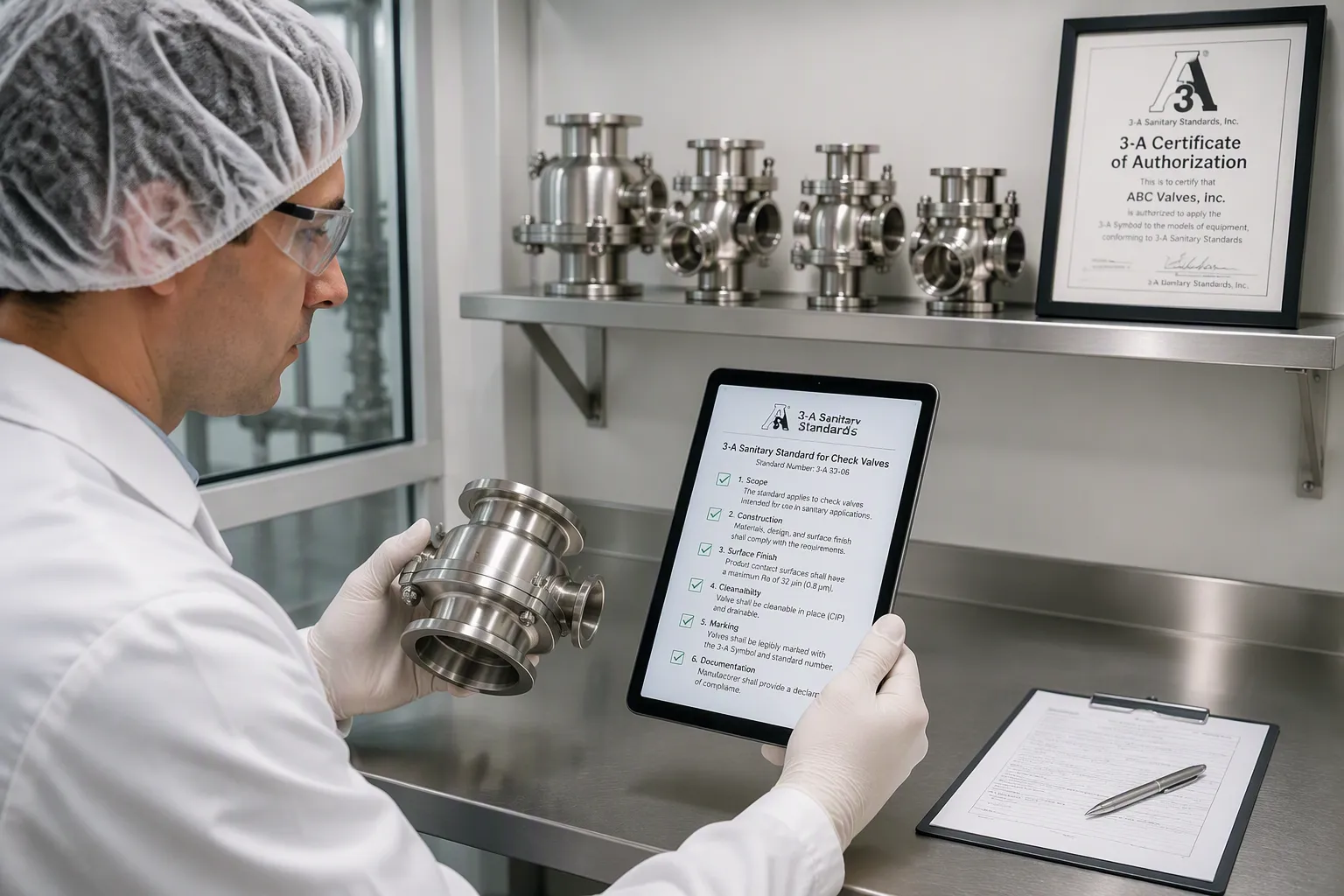
Three groups make the rules for sanitary valves. 3-A Sanitary Standards cover how parts that touch the product are made and finished. The FDA controls materials that touch food and drugs. EHEDG sets European hygiene rules for equipment that must be clean.
Under 3-A Sanitary Standards, all parts that touch the product—including those of check valves—must have a maximum roughness average (Ra) of 0.8 micrometers (32 microinches).
The FDA puts food additives into three groups: direct, secondary direct, and indirect. Indirect food additives may touch food but are not meant to be added to it. These include packaging, containers, and food processing equipment. The main federal rule for rubber and rubber products is 21 CFR 177.2600, called "rubber articles intended for repeated use." Every sanitary valve has an elastomer seal seat, so this rule applies to many valves. Materials that touch the fluid must follow the right parts of CFR Title 21:
FDA 21 CFR 174 – Indirect Food Additives: General
FDA 21 CFR 177 – Indirect Food Additives: Polymers
FDA 21 CFR 178 – Indirect Food Additives: Adjuvants, Production Aids and Sanitizers
FDA 21 CFR 181 – Prior-Sanctioned Food Ingredients
A buyer who ignores these rules risks failing inspections and ruining batches.
Standard Valve Standards
Standard valves follow pressure and mechanical rules instead. API 6D and API 594 cover swing check valves for oil and gas, petrochemical, and power plants. API 6D is the worldwide standard for pipeline valves.
Built 100% to the API 6D standard—the global benchmark for pipeline valves, made by the American Petroleum Institute—this swing check valve meets every need for long-distance oil and gas lines, petrochemical refineries, and power plants.
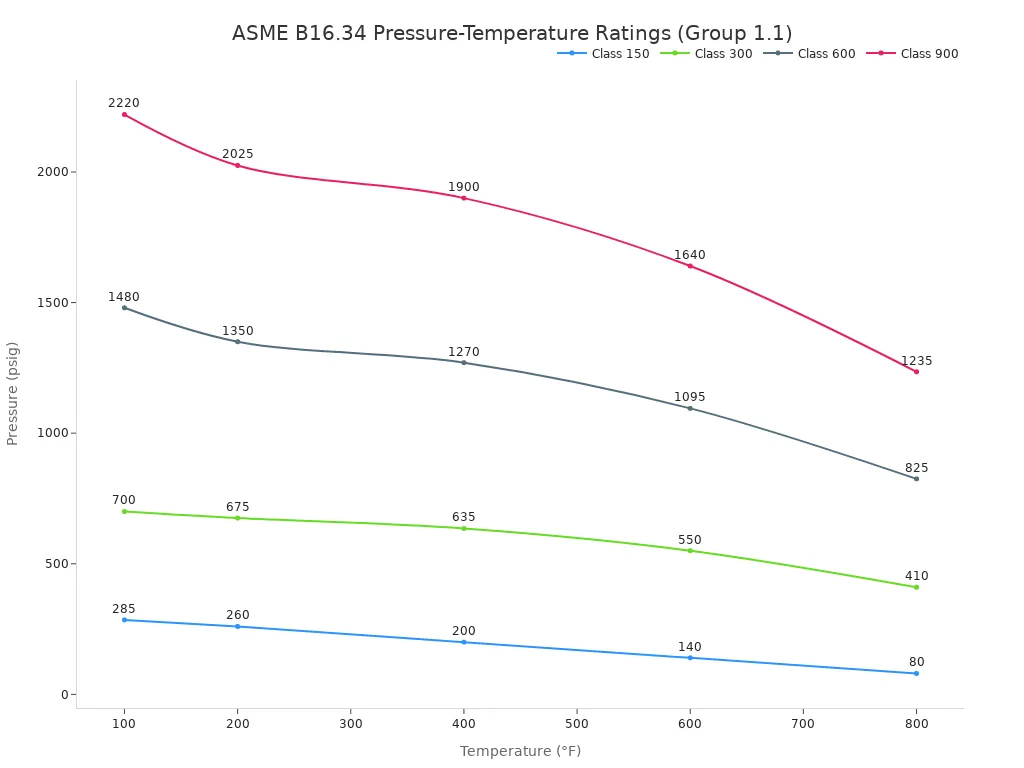
ASME B16.34 sets pressure and temperature limits for flanged, threaded, and welding-end valves, including check valves. The standard shows that as temperature goes up, pressure ratings go down. When fluid gets hotter, valve materials get weaker. Engineers must lower the pressure to keep the valve safe. ASME B16.34 groups materials by makeup and strength, then gives pressure classes like Class 150, 300, 600, 900, 1500, 2500, and 4500.
Temperature (°F)
Class 150 (Group 1.1)
Class 300 (Group 1.1)
Class 600 (Group 1.1)
Class 900 (Group 1.1)
-20 to 100
285 psig
700 psig
1480 psig
2220 psig
200
260 psig
675 psig
1350 psig
2025 psig
400
200 psig
635 psig
1270 psig
1900 psig
600
140 psig
550 psig
1095 psig
1640 psig
800
80 psig
410 psig
825 psig
1235 psig
ANSI standards also set sizes and face-to-face lengths. A standard check valve used in water and wastewater must meet these rules for safe work. A backflow preventer on a drinking water line needs the right certification. A backflow preventer keeps dirty water from getting into clean water. A second backflow preventer may guard a separate pipe. A third backflow preventer often sits at the water meter. A fourth backflow preventer can serve a fire line. Each one keeps dirty water out of the drinking water supply.
The sanitary check valve vs standard check valve comparison boils down to one main question: does the process need cleanliness? Sanitary valves have smooth, self-draining insides. They use 316L stainless steel and FDA-approved rubber parts. Standard valves use brass, cast iron, or plastic. They follow API, ASME, and ANSI rules instead. Sanitary valves work in food, drink, and drug lines. They are cleaned with Clean-in-Place systems. Standard valves handle water, oil, and gas. They need manual cleaning.
Buyers should pick the valve that fits the job. A clean process needs a sanitary check valve to stop contamination. A general factory line can use a standard valve and save money. The wrong choice leads to contamination, downtime, or failed inspections.
FAQ
Can a standard check valve work in a food line?
No. A standard check valve has rough surfaces and small gaps that trap food and bacteria. These conditions cause contamination. Only a sanitary check valve with polished 316L stainless steel and FDA-compliant seals meets food safety rules.
What does Clean-in-Place (CIP) mean for a sanitary check valve?
CIP cleans the valve without taking it out of the pipe. Hot caustic solution flows through the line at high speed. The smooth inside lets the fluid reach every surface. The process kills bacteria and rinses away residue on its own.
Which surface finish does a sanitary check valve need?
The wetted surface must have a roughness average (Ra) of 0.8 micrometers or less. 3-A Sanitary Standards require this finish. A mirror-like surface stops biofilm from sticking and makes cleaning fast and reliable.
How often should someone inspect a sanitary check valve?
Operators should check the valve during every CIP cycle. They verify cleaning settings like temperature and conductivity. Regular visual inspection of seals and seats during maintenance shutdowns catches wear before it causes leaks or contamination.